 look news india

Recently, severe floods and devastation caused by torrential rains and cloud bursts in the neighboring country Nepal have created a wave of concern in the entire subcontinent. The most serious and direct impact of this natural tragedy is now clearly visible on the rivers of India’s neighboring state of Bihar, especially the Gandak River. Due to the sudden release of huge amount of water from the catchment areas of Nepal and the debris flowing from the mountains, the water level of Gandak River has crossed the danger mark, due to which the heartbeats of millions of people living in the coastal areas of the river have increased. In view of the criticality of the situation, excitement has also increased in the political and administrative circles of Bihar. To deal with this disaster and to save the low-lying areas of Bihar from deluge, opposition leaders have started raising their voice, so that proper arrangements can be made in time.
Tejashwi Yadav expressed serious concern, gave warning suggestions to the government
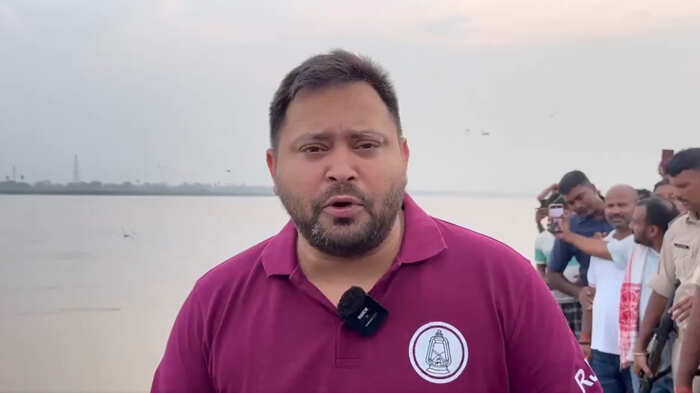
Leader of Opposition in Bihar Assembly and prominent leader of Rashtriya Janata Dal, Tejashwi Yadav has expressed deep concern over the rising water level and possible danger of Gandak River after the flood tragedy of Nepal. Tejashwi Yadav has warned the state government through social media and press statements that if precautionary measures are not taken in time, there may be severe floods in Valmiki Nagar Barrage and its surrounding districts, which may cause huge loss of life and property. He has advised the Bihar Government and the Disaster Management Department to coordinate with the Central Government to continuously monitor the flow of water being released from Nepal and immediately intensify monitoring of sensitive embankments. He says that to deal with such natural disasters, there is a need to work on a war footing on the ground instead of making paper claims.
The looming shadow of flood in the coastal districts connected to Gandak Basin
After this terrible tragedy in Nepal, there is an atmosphere of great panic in the rural areas of dozens of districts situated on the banks of Gandak river including West Champaran, East Champaran, Gopalganj, Siwan and Kushinagar of Bihar. Farmers’ crops, which are yet to be ripe or ready, are in danger of drowning, and people living in low-lying areas have been asked to be prepared to move to safer places. In the last few years too, whenever there has been excessive rainfall in the mountains of Nepal, the Gandak and Kosi rivers have caused huge devastation in the northern parts of Bihar. This is the reason that this time the local administration also seems to be in no mood to be negligent, and teams of engineers have been deployed on sensitive embankments so that immediate action can be taken in case of any emergency.
Public’s eyes fixed on disaster management and administrative preparedness
Amidst this serious situation, the people of Bihar are once again looking towards administrative preparations and flood control measures with hopeful eyes. After the advice given by Tejashwi Yadav to the government, it will now be very important to see how much readiness the administration shows to deal with this challenge. Instructions have been given to arrange flood relief camps, availability of boats and improve health services, but the level of preparedness on the ground will decide the weather of the coming hours and days. Nepal’s tragedy has once again proved how imperative it is to find a long-term and permanent solution in the field of water management and flood control between India and Nepal, so that the lives of the common people can be saved from this cataclysm that occurs every year.