 look news india

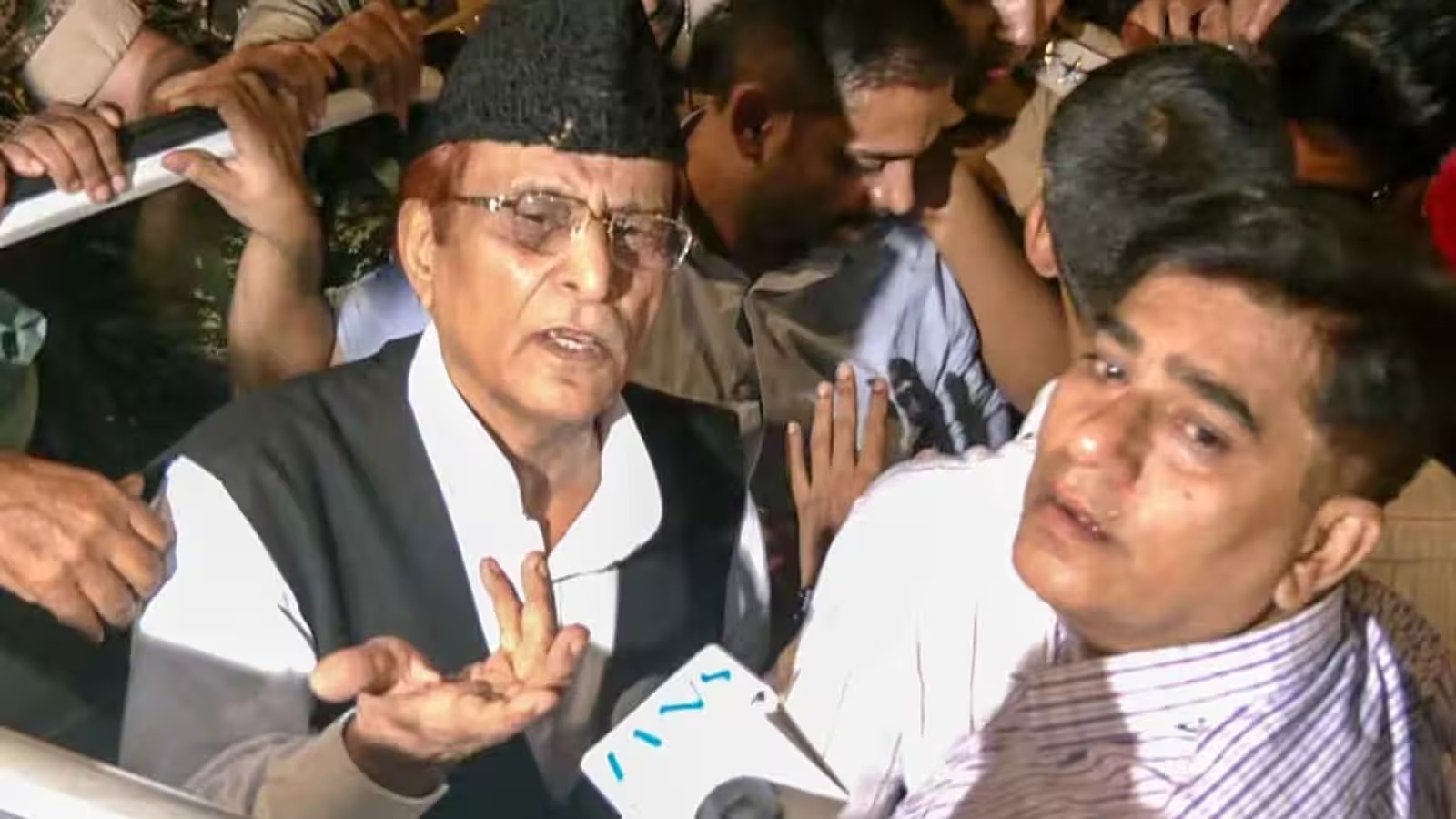
Senior Samajwadi Party leader and former Uttar Pradesh cabinet minister Mohammad Azam Khan has got a big relief from the country’s highest court (Supreme Court) in the case of interim bail granted by Allahabad High Court. The Enforcement Directorate (ED) had approached the Supreme Court to immediately stop the release of Azam Khan and the High Court’s decision. However, the Supreme Court bench rejected the demand of ED, in which it was requested to immediately stop the release of Azam Khan and maintain the status quo.
Justice Joymalya Bagchi, who was part of the three-judge bench of the Supreme Court, made very strong and scathing remarks during the hearing and said that “if he remains out on interim bail, the sky will not fall.” This big stand of the apex court has made it clear that currently the way is clear for Azam Khan to come out of the jail bars and the investigating agency has faced failure in getting the stay order in a hurry.
This whole matter heated up when Allahabad High Court on Tuesday (November 17) granted interim bail to Azam Khan in a much talked about case related to money laundering and Johar Trust. The High Court was of the view that the procedures were not followed properly in the arrest made by ED and prima facie this step appears to be malicious. Against this interim order of the High Court, the very next day on Wednesday, Additional Solicitor General (ASG) S.V. Raju demanded an immediate hearing before the bench of Chief Justice (CJI) Surya Kant, Justice Joymalya Bagchi and Justice V. Mohana, calling the matter very important.
The lawyer appearing for the ED argued in the court that the High Court disposed of the case in a hurry without hearing the complete facts and the investigating agency was not given adequate opportunity to file a counter affidavit (detailed reply). The ASG also claimed that if the Supreme Court does not stay the interim bail or issue a statue or status quo order today itself, the accused leaders will come out of jail. But the apex court bench made it clear that it will not accept this haste of ED and the detailed hearing of the case will be conducted on Thursday as per the prescribed procedure.
The root of this entire legal dispute is the arrest of Azam Khan on October 31, which was done by ED from outside Dasna Jail/Rampur Jail of Ghaziabad, just after he got bail in another case (double PAN card case). Azam Khan’s senior advocate Kapil Sibal had strongly argued in the High Court that under Article 22(1) of the Constitution and Section 19 of the PMLA Act, it is mandatory to provide written grounds of arrest, but the agency did not do so before remand.
On the other hand, ED claims that their officers had tried to hand over the arrest memo and written reasons to Azam Khan, but he refused to take the documents. However, the Allahabad High Court admitted that no video or concrete record in this regard was presented before the court, which could prove that the rules were followed. Considering it a violation of legal rights, the High Court had given interim relief to Azam Khan on two sureties and sureties, which now the Supreme Court has also refused to cancel with immediate effect.
The case basically pertains to the investigation of alleged financial irregularities, acquisition of government lands and money laundering related to Maulana Mohammad Ali Jauhar University (Rampur) and Jauhar Trust. ED has been pursuing its investigation against this trust and its honorary chancellor Azam Khan for a long time. ED’s application will now be heard in the Supreme Court on Thursday (November 19), in which the lawyers of the Central Government and ED will argue on the removal of the observations made by the High Court and the bail plea.
However, this clear message from the Supreme Court of the country is an important example for the administrative and investigative agencies. The court made it clear that a hasty request by the agency alone is not enough to deprive an accused of personal liberty or impose an immediate stay on interim relief, but there should be solid legal grounds for the same.