 look news india

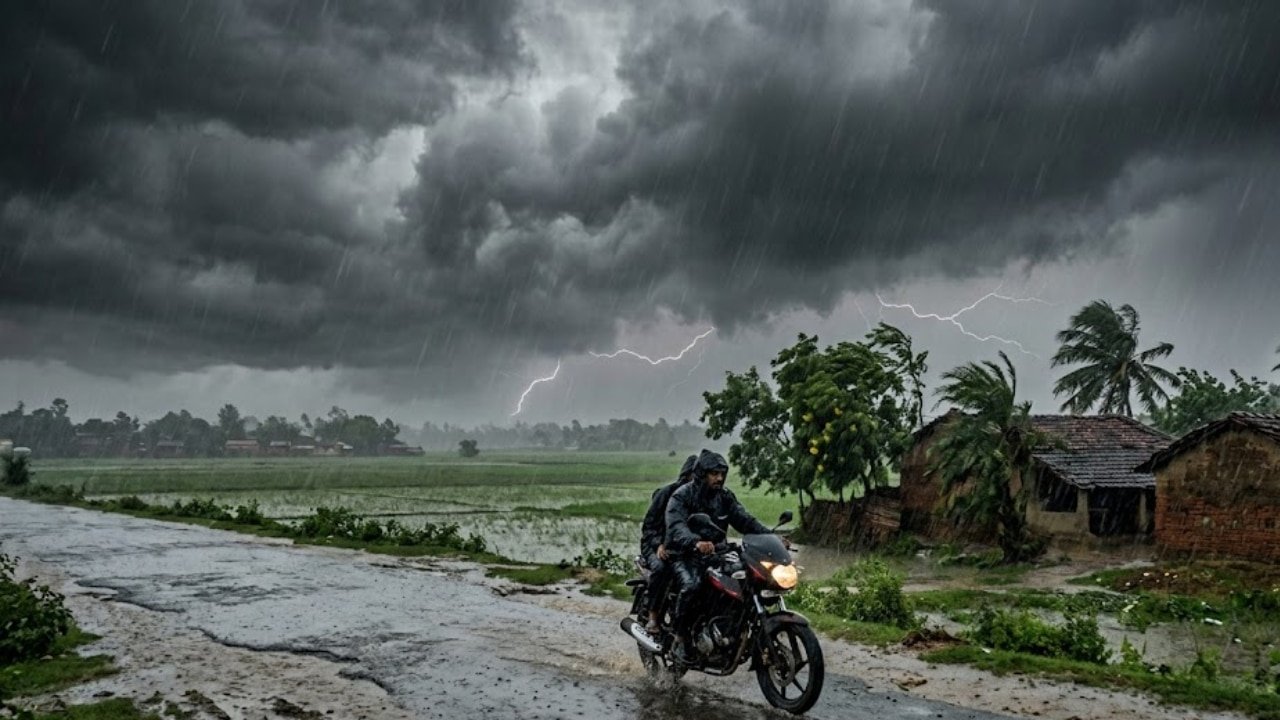
Once again a big and widespread change is being seen in the weather of Bihar. Meteorological Center Patna (IMD Patna) and State Disaster Management Department have issued severe warning of torrential rain, severe thunderstorm and lightning (thunderstorm/thunderstorm) across the state for the next 72 hours (next 3 days). According to meteorologists, there has been heavy accumulation of moisture in the atmosphere due to the deep low pressure area formed in the Bay of Bengal and the active monsoon trough line passing through North Bihar. Along with this, moist cold winds coming from the Terai and Eastern Himalayan regions of Nepal are colliding with the plains of Bihar, due to which dense cumulonimbus clouds have been formed. Due to the impact of this weather system, there is a strong possibility of heavy to very heavy rainfall in most of the districts of North Bihar during 6 September to 8 September 2026. The Meteorological Department has clarified that today, especially in the districts of North Bihar, strong gusty winds will blow at a speed of 40 to 50 kilometers per hour and there will be the highest risk of lightning.
According to the special bulletin issued by the Meteorological Center, Patna, the most severe form of rain and storm will be seen in the Terai and border districts of North Bihar. The department has issued an ‘orange alert’ of rain for the districts of West Champaran (Bettiah), East Champaran (Motihari), Gopalganj, Siwan and Saran (Chhapra). Extremely heavy rainfall of more than 115 mm with severe thunderstorms may be recorded at some places in these districts. Whereas ‘Yellow Alert’ of moderate to heavy rainfall is effective in Sitamarhi, Shivhar, Muzaffarpur, Vaishali, Darbhanga, Madhubani, Samastipur, Supaul, Araria, Kishanganj, Madhepura, Saharsa, Purnia and Katihar districts. Meteorologists say that in these areas, sudden storm winds of up to 50 km per hour accompanied by thunder and lightning can damage kutcha houses, tin sheds, trees and electric poles. Due to continuous rains, the situation of waterlogging in many low lying urban and rural areas of Seemanchal and Mithilanchal may become dire.
In Bihar, lightning (thunderstorm) has proved to be the most deadly natural disaster during monsoon. The Meteorological Department has today issued a special warning for the farmers and laborers working in the open in North Bihar. Due to the humidity level in the atmosphere reaching above 90 percent and a slight increase in temperature during the afternoon, very heavy thunder clouds are being formed at the local level, which cause severe thunderstorms within a few minutes. The Disaster Management Department has instructed all the District Magistrates to disseminate warnings at the Panchayat level in rural areas. Farmers have been clearly told not to go out to water the paddy fields, graze cattle or do agricultural work until the thunder in the sky subsides. Disaster experts say that during a thunderstorm, do not under any circumstances take shelter under a big tree or electric pole standing alone, because most of the deaths are recorded due to standing under the trees.
For North Bihar, this rain has not only brought waterlogging but also the double threat of floods. Due to continuous heavy rains in the hilly areas and catchment areas of Nepal, the water level of major rivers of Bihar is rising rapidly. Gandak, Budhi Gandak, Kosi, Bagmati, Kamla Balan, Adhwara group and Mahananda rivers are flowing near or beyond the danger mark at many places. Due to release of lakhs of cusecs of excess water from Valmikinagar Barrage and Kosi Barrage (Birpur), flood water has started spreading in the coastal areas of West Champaran, Gopalganj, Supaul, Saharsa and Khagaria and Diara area. The Water Resources Department has ordered 24-hour patrolling and continuous monitoring on all embankments. Engineers of Flood Control Division have been instructed to keep flood fighting material (sand bags, boulders) ready at sensitive dams so that any untoward situation can be dealt with.
While there will be a storm and heavy rain in North Bihar, the weather pattern will also change in the districts of South Bihar – capital Patna, Gaya, Nalanda, Nawada, Jehanabad, Aurangabad, Rohtas, Kaimur, Buxar, Bhojpur, Munger, Jamui and Banka. Today in the capital Patna, the sky will be densely cloudy throughout the day and several spells of light to moderate rain with strong thunderstorms can be seen between afternoon and evening. Due to the rain, the maximum temperature in Patna will be recorded between 30 to 32 degrees Celsius, which will provide a big relief to the people from the sticky, humid heat that has been prevailing for the last several days. However, the rising water level of river Ganga from Buxar to Patna, Mokama and Bhagalpur has increased the concern of the administration. Security has been beefed up at the coastal ghats of Ganga and warning boards have been installed to prevent people from bathing in deep water.
In view of the bad weather in the coming 3 days, Bihar State Disaster Management Authority (BSDMA) has issued necessary guidelines for the safety of citizens:
-
Use Damini App: Rural and urban citizens should download the Government of India’s ‘DAMINI’ app or ‘Mausam’ app on their mobile phones, which gives audio and text warning 20 to 30 minutes before lightning strikes in your area.
-
Take shelter in a permanent house only: If you are on the road or in a field during a severe thunderstorm, immediately move to a permanent house or safe shelter. Stay away from tin sheds, kutcha huts or iron railings.
-
Distance from Electric Gadgets: Switch off heavy electrical appliances (TV, computer, fridge) even when inside the house. Do not use wired telephones or mobile phones that are charging.
-
Caution in road travel: Due to heavy rains, there is a risk of potholes not being visible due to reduced visibility and waterlogging on the roads. Two-wheeler drivers should drive slowly and do not try to cross swollen causeways or culverts.
-
Important advice for farmers: Do not spray any kind of pesticide or fertilizer in the fields for the next 72 hours. Maintain proper drainage system in crop fields so that water does not accumulate.