 look news india

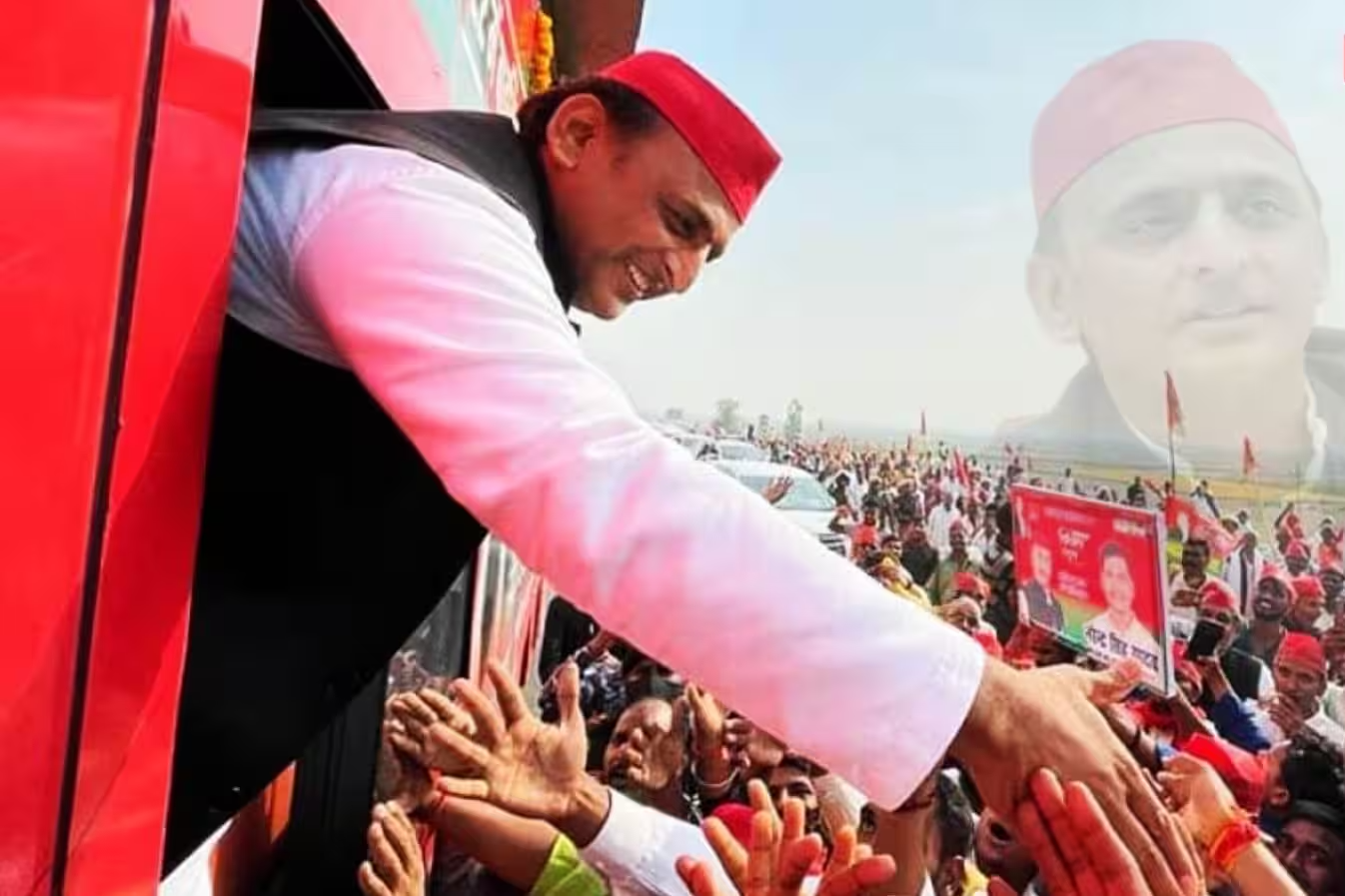
To deal with the changing equations of Uttar Pradesh politics and the upcoming electoral battle, Samajwadi Party National President Akhilesh Yadav has made a masterstroke which has already created a stir in the political corridors of the state. Samajwadi Party, which till now only talked about backward classes, Dalits and minorities i.e. PDA equation, has taken a step forward and taken a strategic decision that in the coming elections, the party will not be limited to reserved seats only, but will also field capable Dalit candidates on upper caste dominated and general seats. The main objective behind this revolutionary decision is not just to practice electoral mathematics, but to break the traditional social structure under which Dalit castes were considered limited to reserved constituencies only. Along with this, the most interesting aspect in this entire strategy is that instead of the old and worn out faces, the party will give priority to the young and educated faces of today’s generation i.e. Gen-G, who can defeat the opponents through social media, modern management and aggressive election campaigns. In today’s detailed and in-depth analysis article, we are going to tell you in detail about every aspect of this new Dalit card and PDA formula of Akhilesh Yadav.
In Indian politics, caste statistics have always played the most important role in deciding victory and defeat, and in the most politically sensitive state like Uttar Pradesh, this equation becomes even more complex. The Samajwadi Party has now made a big and bold step to implement on the ground the basic mantra of ‘PDA’ i.e. connecting backward people, Dalits and minorities, which has been made the main basis of its politics for some time now. There is a well-thought-out strategy behind making influential and militant leaders of the Dalit community as candidates even on general or unreserved seats, which will not only bring down the caste walls in the upper caste dominated seats, but will also send a strong message to that section of Dalit voters who for a long time felt themselves confined to a particular political circle. Political analysts believe that if SP successfully implements this plan at the grassroots level, it can prove to be a huge gamechanger in the electoral history of Uttar Pradesh, because with this the party’s traditional vote bank will expand manifold.
The second and most modern aspect of this new political move of SP is that the party is now going to give a big chance to the new generation ‘Gen-G’ youth in mainstream politics instead of blindly trusting the elderly and family-oriented or traditional leaders of only a particular caste. Today’s young voter prefers to go beyond traditional slogans and speeches and talk about digital platforms, development issues and employment, and the Samajwadi Party has identified this pulse very well. These Gen-G Dalit and backward youth, who will be fielded on general seats, will be given special training in modern election management, data analytics, social media campaigning and public relations at the ground level so that they can easily reach out to the voters of every section of their area – upper caste, backward and Dalit. Under this strategy, the party’s effort is to replace the old tiffin of dynasty and casteism in politics and create a new and enlightened second line of leadership, which can directly connect with today’s young generation.
As soon as the main opposition parties i.e. Bharatiya Janata Party and Bahujan Samaj Party got wind of this new and aggressive political formula of Samajwadi Party, lines of worry can be clearly seen on the foreheads of their strategists. For BJP, which was working on the strategy of mobilizing non-Yadav backward people and non-Jatav Dalits in its fold for a long time, this step of SP has come as a big challenge for it, because now SP has made full preparations to directly break into that equation. On the other hand, BSP, which used to claim itself to be the only party friendly to Dalits, is also facing a big crisis to save its main vote bank, because young Dalit voters are now rising above conservative politics and looking towards new options in search of development and participation. However, political experts also say that it will not be easy for SP to implement this decision of fielding Dalit candidates on general seats and to convince a large section of upper caste voters for this, because breaking social prejudices at the grassroots level requires a lot of hard work and restraint.
This move of Akhilesh Yadav is not limited only to the upcoming assembly or Lok Sabha elections, rather it can prove to be a far-sighted step that will decide the direction and condition of the politics of Uttar Pradesh for a long time to come. When a regional party like Samajwadi Party, which was once known to revolve only around the Yadav and Muslim equation, is today talking about promoting Dalit and Gen-Z youth on general seats, it is a clear evidence that the mood of politics is now changing rapidly. Instead of voting only in the name of caste, people have now started giving preference to work, vision and energy of youth, and the party which will first understand this change will become the king of the future. However, only time will tell how successful this new experiment of the Samajwadi Party will be and what its election results will show on the field, but it is certain that this decision has once again raised the political temperature of Uttar Pradesh very high and has forced all the parties to rethink their strategies.