 look news india

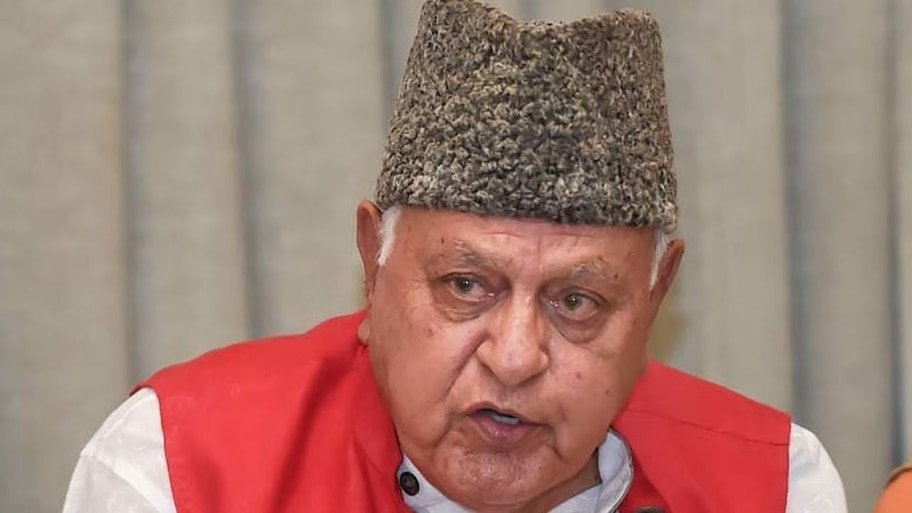
Former Chief Minister of Jammu and Kashmir and President of National Conference (NC), Dr. Farooq Abdullah has heated up the political atmosphere by giving a big political statement amid the ongoing controversy in the country regarding Voter List Revision (SIR) and the impartiality of the Chief Election Commissioner (CEC). While addressing the ‘Halla Bol’ conference organized in Srinagar, Farooq Abdullah raised serious questions on the policies of the tenure of the country’s first Prime Minister Pandit Jawaharlal Nehru. Abdullah claimed that the biggest historical mistake of the Nehru administration after independence was that it did not establish the Election Commission of India (ECI) as a completely independent and autonomous constitutional body. He said that if at that time the Election Commission had been given a completely autonomous structure by keeping it free from all kinds of influence of the executive, then today this poor condition of democracy and electoral institutions would not have been seen in the country. This statement of Farooq Abdullah has come at a time when the opposition alliance and many civil organizations are protesting from Delhi to Mumbai against the Chief Election Commissioner for allegedly removing the names of lakhs of voters from the voter lists.
In his speech, Farooq Abdullah, linking past and present political developments, said that when the Constitution was being made and the country was laying the foundation of democratic institutions, then only the wings of the Election Commission should have been left completely open. He said that today the entire country is suffering the consequences of the same institutional shortcomings and mistakes left by Pandit Nehru. Abdullah stressed that if the Election Commission was completely independent, then any kind of control or indirect control over it by the governments would not have been possible. He said that impartiality of institutions is the first condition to protect democracy, but unfortunately the Election Commission in India could never achieve the level of autonomy that the judiciary or other independent bodies should have. His statement has sparked a new political discussion even among the traditional coalition equations of Congress and National Conference, because generally the opposition has been defending the Nehruvian democratic legacy, but Abdullah directly blamed Nehru’s institutional decisions as the root of the current crisis.
Along with commenting on Nehru’s decisions, the National Conference chief also made a scathing attack on the Narendra Modi government at the Centre. He raised questions about the government’s intentions regarding the new law made by Parliament for the appointment of the Chief Election Commissioner and other election commissioners. Farooq Abdullah said that earlier the Chief Justice of India (CJI) was included in the selection committee under the order of the Supreme Court, but by making a new law, the Modi government excluded the CJI from this committee and changed the structure of the committee to ‘two versus one’ (two representatives of the government and one leader of the opposition). Abdullah alleged that when the ruling party already has the majority in the committee, then the opposition leader’s disagreement has no meaning. He claimed that through this majority selection system, favorite bureaucrats are being appointed to the top posts of the Election Commission, due to which the impartiality of the Commission has completely ended and it is working only to serve the political interests of the ruling Bharatiya Janata Party.
In his address, Abdullah directly targeted the functioning of the Chief Election Commissioner, alleging huge irregularities in the Special Intensive Revision (SIR) and voter list updation process. He claimed that citizens have been disenfranchised on a large scale across the country. Abdullah said that the Constitution of India is the gift of Baba Saheb Bhimrao Ambedkar, which gives the supreme right to vote without any discrimination to every adult citizen of the country. No officer or commission has the legal right to arbitrarily remove the names of citizens from the voter list. Making sensational allegations, he said that as part of a well-planned strategy, names of voters from minorities, especially the Muslim community, were selectively deleted from the voter list. Giving an example, he said that the level of rigging reached such a level that even the country’s well-known senior lawyer and former Union Law Minister Kapil Sibal’s name was removed from the voter list. Abdullah said that when the opposition or the media highlighted these irregularities, the Commission adopted an irresponsible attitude and said that it would be looked into in the next elections.
After lashing out at the election machinery and the policies of the central government, Farooq Abdullah described the resistance of the people of the country as the biggest hope for democracy. He said that no matter how much people in power repress, the soul of India is not dead yet, India is still alive. He said that he is very happy that now political parties, social organizations and common people have started openly taking to the streets against this injustice. Referring to the recent massive demonstrations in Mumbai and the siege by various organizations at Jantar Mantar in Delhi, he said that the people have now stopped being afraid and have started showing their courage. He said emotionally, ‘Whether I will be alive or not in the future, a storm of change has swept through the country which no one can stop.’ From North to South and from East to West, the common people have watered this country with their sweat and only those people will stand up and make the democracy of this country great once again.
These questions raised by the opposition and the National Conference have created a major credibility crisis before the Election Commission. The major constituent parties of the ‘India’ block are continuously demanding the resignation of the Chief Election Commissioner and a judicial inquiry under the supervision of the Supreme Court into the voter list deletion case. Amidst the ‘Save Vote’ campaigns being run by civil society and student organizations in various states, opposition parties argue that if the purity of the voter list becomes doubtful, then the very concept of free and fair elections will collapse. On the other hand, sources supporting the government and the Election Commission say that the revision of the voter list is a regular and statutory administrative process, in which the names of dead, transferred or double voters are removed as per the rules and any citizen has the full legal right to get the name added again by filling Form-6. However, the sharp questions raised by Farooq Abdullah, from Nehru’s historical decisions to the current selection system, have brought the country’s constitutional discourse at the center of a new and heated debate.