 look news india

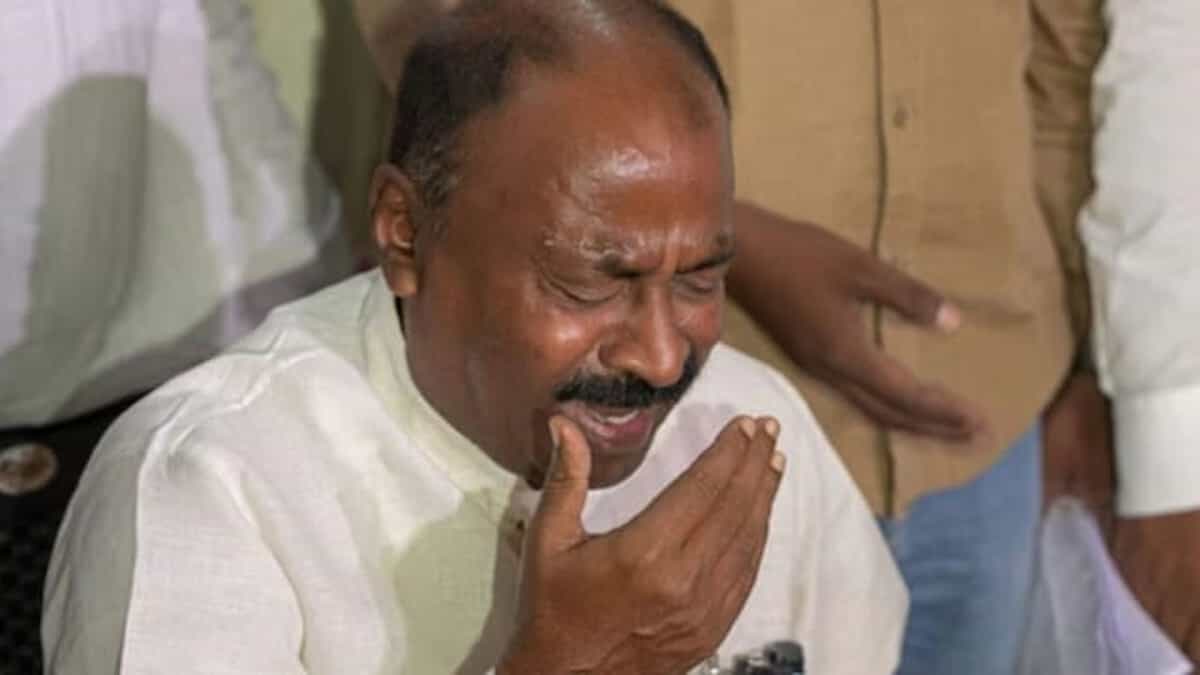
Amidst the ever-changing equations in the politics of Bihar, a very big and shocking political news is coming out from within the Rashtriya Janata Dal (RJD). The party high command has officially rejected the resignation given recently by RJD’s senior leader and former minister Shivchandra Ram. If seen from diplomatic and strategic point of view, this step is having a very deep meaning in the politics of Bihar. There has been a strong discussion in the political circles about whether this decision of Lalu Prasad Yadav and Tejashwi Yadav is just an immediate damage control effort within the party i.e. ‘political ceasefire’ or is there a huge masterstroke of ‘social engineering’ behind it, woven keeping the upcoming elections in mind.
The real reason behind Shivchandra Ram’s resentment and resignation
The displeasure of Shivchandra Ram, one of the most loyal and old faces of RJD, had been a topic of constant discussion within the party for some time. They were feeling neglected due to the allocation of seats, organizational decisions and the preference given to new faces in the party. Due to this internal discord and dissatisfaction, he suddenly resigned from his post and created a major political upheaval within the party. Such a rebellious stance of Shivchandra Ram was being considered a big blow for RJD, because he is recognized as a strong and mass base leader of the party who represents a large section.
Why did Lalu and Tejashwi Yadav make this calculated political move?
As soon as the news of Shivchandra Ram’s resignation reached Rabri residence, there was a stir in the top leadership of the party. Lalu Prasad Yadav’s political foresight and Tejashwi Yadav’s crisis management started working immediately. The RJD leadership knows very well that losing any of its old and loyal soldiers in Bihar, which is on the verge of elections, would be like giving a big issue to the opposing camp i.e. NDA. This is the reason why Shivchandra Ram’s resignation was rejected without any delay and a message was sent to him that his respect and stature in the party will always remain intact. Experts are considering this as a strategic ceasefire so that the internal discord can be calmed down immediately.
‘Social engineering’ to give new edge to RJD’s M-Y equation
If this entire incident is seen from the perspective of caste and social equations of Bihar, then it appears to be a part of a huge social engineering of RJD. Lalu Prasad Yadav has always been advocating the integration of Dalits and the underprivileged along with his traditional ‘M-Y’ (Muslim-Yadav) equation. Shivchandra Ram is considered a big and strong leader of the Dalit community. In such a situation, accepting his resignation would have meant that the party would have angered a large part of its social base. By rejecting the resignation, RJD has tried to send a clear message that it stands firmly with its leaders coming from marginalized communities, thereby defusing the opposition’s allegations that RJD was being said to give preference only to certain sections.
Opposition’s plans backfired, what will be the next strategy?
After the resignation of Shivchandra Ram, leaders of Janata Dal United (JDU) and Bharatiya Janata Party (BJP) were continuously accusing RJD of nepotism and ignoring their own leaders. The opposition was hopeful that on the pretext of Shivchandra Ram, they would be successful in making a major breach in the RJD fort. But this one masterstroke by Lalu Yadav has completely ruined all the claims and intentions of the opposition. However, political analysts believe that how long this ceasefire will last will depend on how big and important responsibility Shivchandra Ram is assigned in the organization or government (in future equations) in the coming days. For now, RJD has very wisely postponed its internal crisis.