 look news india

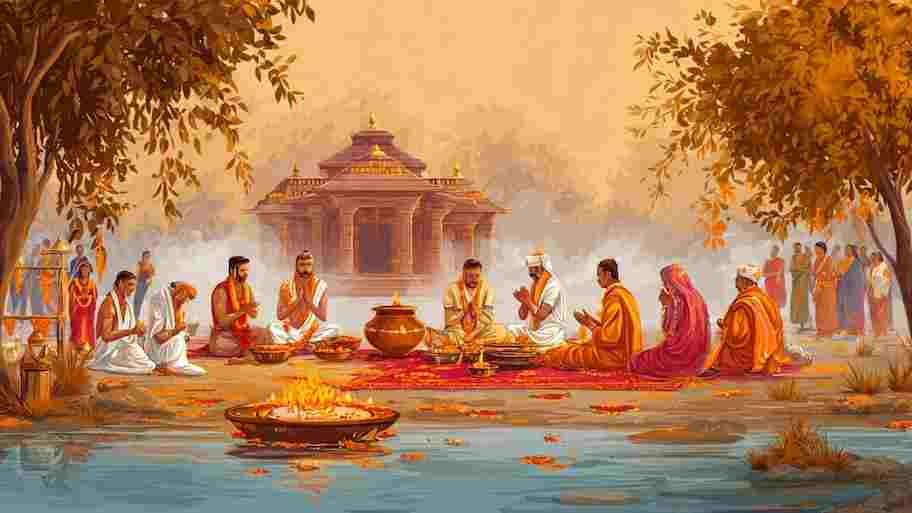
In Sanatan Dharma, the full moon day of Saavan month is considered very sacred and a great festival of spiritual awakening. This day is not only limited to ‘Raksha Bandhan’ symbolizing the unbreakable affection of brother and sister, but in the Vedic tradition it is celebrated with devotion in the form of ‘Shravani Upakarma’ and ‘Coconut Purnima’. Since the Vedic period, there has been a tradition of wearing a new sacred thread (Yajnopavit) and immersing the old sacred thread on the holy occasion of Saavan Purnima. According to the scriptures, by changing the sacred thread as per the rituals on this day, the seeker receives the blessings of the Trinity – Brahma, Vishnu and Mahesh and all the physical, verbal and mental sins committed unknowingly in the past are expunged.
Shravani Upakarma: The great festival of self-purification and Vedic resolution
Shravani Upakarma is considered to symbolize a new beginning in the study of Vedic knowledge. In ancient times, students in Gurukuls used to start reciting the study of Vedas from this day. This ritual is mainly performed in three stages:
-
Panchgavya and pilgrimage bath: First of all the devotees purify the body and mind externally and internally by drinking Panchagavya (cow milk, curd, ghee, cow urine and cow dung) with water mixed with river, lake or Ganga water.
-
Rishi Tarpan and Dev Tarpan: After this, gratitude is expressed towards the seven sages, ancestors and gods by offering them water and Kush.
-
Yagya and wearing of new Yagyopavit: At the end, offerings are made along with Veda mantras and the duly consecrated new sacred thread is worn.
The Trinity resides in the three sutras of Janeu.
Yajnopavita is not just a thread, but a subtle form of the entire cosmic energy. There are mainly three sutras (threads) in Janeu, which are directly related to the Trinity, the directors of the universe:
-
First Sutra (Lord Brahma): The first thread of the sacred thread symbolizes Lord Brahma, the creator of the universe. It shows a person the path of knowledge, wisdom, truthfulness and creativity.
-
Second Sutra (Lord Vishnu): The second thread represents Lord Vishnu, the sustainer of creation and the lord of preservation. It inspires the seeker to fulfill his responsibility of religion, dignity, morality and nurturing towards the society.
-
Third Sutra (Lord Mahesh/Shiva): The third thread symbolizes Lord Shiva, the god of destruction and renaissance. It gives the message of destruction of ignorance, vices, ego and vengeful tendencies within a person.
When the seeker wears this three-pointed thread from his shoulder to his heart, he remembers at every moment the divine presence of the Trinity and the limits set by them.
Spiritual science of three minuses, three qualities and three glands
The three sutras of Janeu not only represent the Trinity, but also contain deep philosophical truths of life:
-
Salvation of three debts: According to Hindu religion, every human being is born with three debts – Pitra Deb, Dev Deb and Rishi Deb. The three sutras of Janeu remind a person that he has to free himself from these responsibilities by serving his parents (Pitra Loan), worshiping God (Dev Loan) and spreading the knowledge of the Vedas and Gurus (Rishi Loan).
-
Balance of the Three Gunas: It indicates maintaining the balance of the three qualities of nature—Sattva (purity), Raja (karma) and Tama (darkness/laziness). It guides the seeker to rise above the Tamasic and excessive Rajasic tendencies and live a virtuous life.
-
Importance of Brahmagranthi: The knot that connects the three threads of the sacred thread is called ‘Brahmagranthi’. It is believed to reside in the supreme power of Omkar (Om) and Gayatri Mantra, which controls the flow of life energy from Muladhar to Sahasrar Chakra.
Invocation of 9 Gods in 9 fine threads
If all the three threads of Janeu are opened, each thread has 3-3 fine threads (threads), the total number of which is 9. According to Vedic beliefs, nine specific deities reside in these nine tentacles:
-
Omkar (Pranav)
-
fire god
-
Serpent (Anant Naag)
-
Som (Moon)
-
ancestors
-
Prajapati (Brahma)
-
air god
-
Sun god
-
Sarvadev (Vishwadev)
Through these 9 fibers the seeker connects directly with the positive forces of the entire universe, which increases his decision making ability, concentration and self-confidence.
Why is Sawan Purnima the best for changing the sacred thread?
The month of Saavan is dedicated to Lord Shiva, the lord of meditation, renunciation and consciousness. On the Purnima Tithi, the Moon is in its full form, which is the planet responsible for the mind. A special conjunction of Shravan Nakshatra is formed on Saavan Purnima.
Due to the rainy season, there can be an imbalance of Vata and Kapha in the body, at such a time, bathing, fasting, chanting mantras and touching the newly energized sacred thread on the Shravani festival rebalances the energy systems of the body. This is the time to shed the mental stress and impurities accumulated throughout the year and start life with new spiritual energy.
Different rules of sacred thread for celibate and householder
The number of sutras of the sacred thread has been determined according to the Ashrams of life in the scriptures:
-
Brahmachari (unmarried): There is a rule for unmarried youth or students to wear only 3 sutras (one sacred thread), because they are only responsible for their own conduct and acquisition of knowledge.
-
Householder (Married): It is considered mandatory for married men to wear 6 sutras (two sacred thread). In this, 3 sutras are for oneself and 3 sutras symbolize the spiritual responsibility of the wife and protection of the family.
Classical method and Mahamantra of wearing sacred thread
On the day of Saavan Purnima, after morning bath, sit facing east or north. Wash the sacred thread with Ganges water and raw milk and offer sandalwood, Akshat and flowers on it. After this, chant Gayatri Mantra at least 11 or 24 times. Thereafter, chanting the following mythological mantra, wear the sacred thread under the right hand on the left shoulder:
Yajnopavitam Param Pavitram Prajapateryatsahajan Purastat. Ayushyamgryam pratimuncha shubhram yajnopavitam balamastu tejah.
Rules for immersion of old sacred thread:
Only after wearing the new sacred thread is the old sacred thread taken off. One should never remove the old sacred thread and keep the body without the sacred thread. While removing the old sacred thread from the neck, chant this immersion mantra:
Atavahaddinparyantam brahma tvam dharitam maya. Jeernatvatte Parityago Gachcha Sutra Yathasukham.
Float the old Yagnopaveet in some pure flowing water (river/canal) or dig clean soil in the root of a Peepal or Banyan tree and bury it. Never throw it in the dustbin or unclean place.
This divine ritual of Sawan Purnima is not just an external ritual, but it is a living proof of Sanatan Dharma’s high moral values, restrained lifestyle and unwavering devotion towards the Trinity. By wearing Yagyopavit with devotion on this day, a person gets the blessing of strength, bravery and longevity.