 look news india

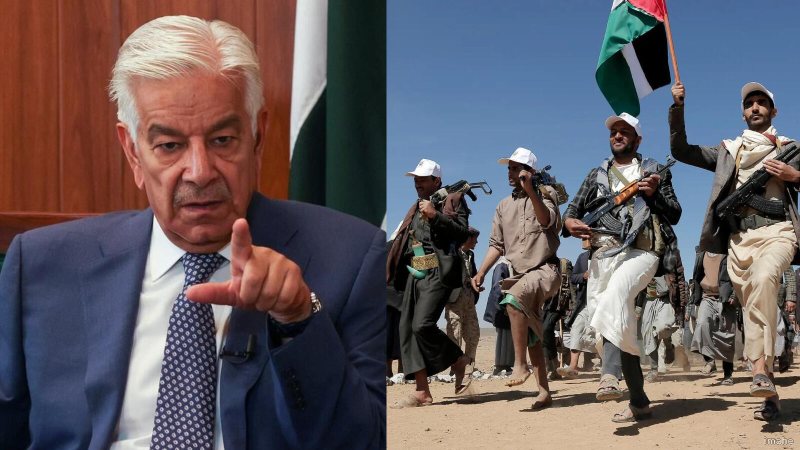
Amidst the changing geopolitical circumstances of the Middle East and the continuously increasing tension in the Red Sea, a big and explosive statement has come out from Pakistan which has created a stir in international politics. Pakistan’s Defense Minister Khawaja Asif has adopted a very sharp and clear stance regarding Yemen’s Houthi rebels, directly calling them the common enemy of both Saudi Arabia and Pakistan. Since this sensational statement came to light, speculations have started whether the Pakistani Army led by General Asim Munir is going to directly become a part of this fierce regional conflict or war in the coming days. From Islamabad to Riyadh and Tehran, deep and far-reaching consequences are being drawn from this diplomatic statement.
Pakistan’s clear and blunt stand on the security and territorial integrity of Saudi Arabia
The centuries-old and strategically very deep military and diplomatic relations between Pakistan and Saudi Arabia are considered to be the main reason behind this statement given by Pakistan’s Defense Minister Khawaja Asif. Whenever there is any kind of external threat to the security of the Gulf countries, Pakistan is traditionally seen standing in support of Riyadh. This latest stand of the Pakistani leadership towards the Houthi rebels who continuously attack the Red Sea and international sea routes gives a strong indication that Islamabad keeps the stability of the Gulf countries paramount in its foreign policy. Defense experts believe that this policy of not tolerating any force against the sovereignty of Saudi Arabia is a new and more aggressive extension of the old diplomatic priority of the Pakistani rulers.
Will Munir Sena enter into a direct war or will Pakistani interference increase on the diplomatic front?
After this sharp statement of the Pakistani Defense Minister, the biggest and important question arising is whether the Pakistani Army (Munir Army) led by Field Marshal or Army Chief General Asim Munir will really take the risk of fielding its troops in this direct war in Yemen or the Red Sea. Currently, Pakistan is facing a serious economic crisis and its domestic internal security challenges, due to which sending the Army or Navy directly to the Yemen front may prove to be extremely challenging and risky for Islamabad. However, there is a strong discussion in diplomatic circles that instead of sending military forces, Pakistan can play strategic roles like sharing intelligence, increasing strategic cooperation or indirectly strengthening the Saudi-led alliance, which could bring a new turn in the balance of power in the Middle East.