 look news india

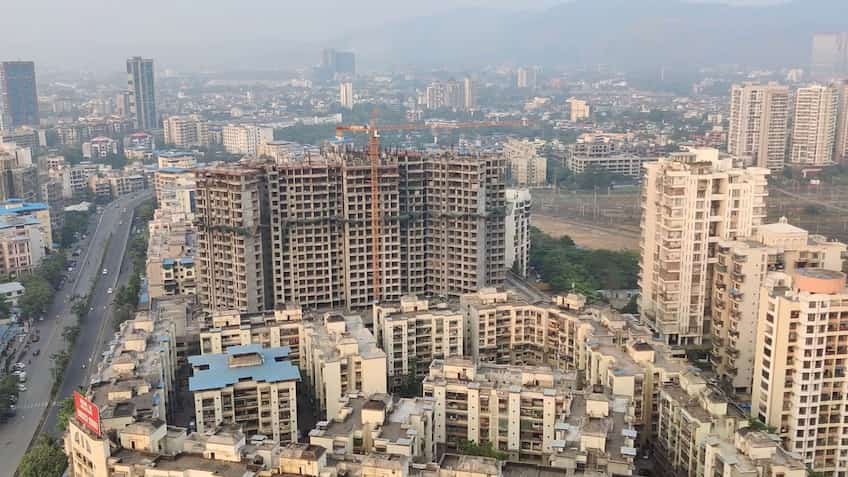
With the beginning of the festive season, there is a tremendous boom in the property market of the country’s financial capital Mumbai. The official registration figures, released just ahead of Diwali, have surprised even analysts, as despite traditional beliefs and festive holidays, there has been no decline in the enthusiasm of home buyers. According to the latest data from real estate consultancy firm Knight Frank India and the Maharashtra Government’s Registration and Stamps Department, a total of 12,690 properties were registered in Mumbai Metropolitan Region in the month of October, which shows an annual increase of 9 per cent compared to the same period last year. This figure is also being considered very special because in the first fortnight of October, there was a 16-day Pitru Paksha i.e. Shraddha period, which in Hindu traditions is generally not considered auspicious for big investments or purchase of real estate. Despite this, Mumbaikars left these beliefs behind and bought properties in large numbers and set a new record by registering an average of 311 houses daily during Shraddha Paksha.
There has been a belief in Indian society for centuries that buying new property, vehicle or gold is postponed during Pitru Paksha, but this time the real estate market of Mumbai has completely shattered this myth. A total of 3,419 properties were registered in Mumbai during the Shraddha period between September 26 and October 10, which is 2 percent more than the same period last year. During this period, the average daily registration was 311 units, whereas last year during Shraddha, an average of 306 properties were registered every day. Industry experts believe that today’s buyer is paying more attention to his budget, builder’s festive offers, stability of interest rates and better location instead of just looking at the auspicious time or calendar. When a buyer finds the right price and attractive payment plan at a location of his choice, he does not want to let the deal go by waiting for customs. This is the reason why even during Pitru Paksha, huge activity was seen in the registration offices of Mumbai and buyers without any hesitation secured the keys of their houses.
The Revenue Department of Maharashtra Government has also directly benefited from this explosive sale during October. According to Knight Frank analysis, the state government received about Rs 1,173 crore in stamp duty revenue from 12,690 property registrations in October. A significant increase of 12 to 13 percent has been recorded in stamp duty collection as compared to last year by October 2025. This surge is a clear indication that not only has the number of home sales increased, but deals for homes in the higher price category i.e. premium and luxury segments have also taken place on a large scale. When the sales of expensive and big apartments increase, it has a direct impact on the average collection of stamp duty. Talking about the entire 10 months from the beginning of the year 2026 till October, a total of 1,32,040 properties have been registered in Mumbai so far, which shows a continuous annual growth of 7 percent as compared to last year. During this period, the government has collected stamp duty of more than Rs 11,756 crore.
From a geographical point of view, the suburban areas of Mumbai have left the traditional areas of South Mumbai far behind in terms of sales. The highest number of homes were purchased in western suburbs like Kandivali, Borivali, Malad, Andheri, Goregaon and central suburbs like Mulund, Thane West, Bhandup, Ghatkopar and Vikhroli. The expansion of new metro lines in these areas, better road connectivity and opening of coastal road phases have significantly reduced travel time, leading to the working class preferring to settle in these suburban belts. While posh areas like South Mumbai and Bandra-Juhu have limited inventory and extremely high prices, suburban areas have an abundance of 1 BHK, 2 BHK and 3 BHK projects with modern amenities for the middle income group. Apart from this, many leading developers have completed redevelopment projects around Western Express Highway and Link Road, which has led to a huge increase in demand for new and secure flats.
There has been a major change in the priorities of Mumbaikars since the pandemic, with people looking for larger, airy and work-from-home friendly spaces rather than smaller homes. October sales data shows that 2 and 3 BHK flats with carpet area of 500 to 1,000 sq ft accounted for the highest share in total sales. Along with this, the sales of luxury and ultra-luxury apartments priced above Rs 5 crore are also increasing continuously. There is a rush by corporate executives, startup founders and stock market investors to secure their wealth in real estate. Deals for large duplexes and sea-facing penthouses in areas around Worli, Lower Parel and Bandra-Kurla Complex (BKC) in south Mumbai have also been in the news. Strong purchasing power of buyers and wage growth have provided a strong support to the premium housing segment, due to which there has been no negative impact on demand despite 5 to 8 per cent annual increase in property prices.
The aggressive marketing strategies of developers and festive offers have also played a big role in this bumper boom in the property market just before Diwali. Most of the renowned builders cashed in on the festive season by offering attractive gifts like ‘No EMI till possession’, zero stamp duty scheme, modular kitchens and home appliances. Additionally, with the Reserve Bank of India (RBI) keeping the repo rate steady, home loan interest rates remained in a balanced range, allowing buyers to accurately estimate their monthly EMIs. Banks and housing finance companies also organized loan fairs with waiver of processing fees and lowest interest rates, which encouraged undecided buyers to take a final decision. Real estate consultants believe that this October performance is just a start and the sales could hit further records during the key festivals of Diwali and Bhai Dooj in November, putting the current financial year on track to be among the most successful in the history of Mumbai real estate.