 look news india

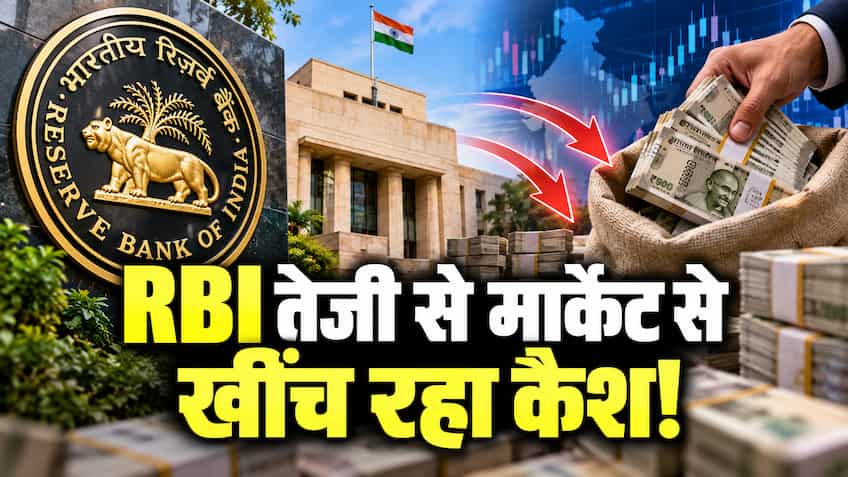
The Reserve Bank of India (RBI) has started a large-scale Open Market Operation (OMO) sales campaign to absorb the surplus liquidity present in the country’s financial system. The central bank has decided to withdraw a total of ₹1,00,000 crore (Rs 1 lakh crore) cash from the market in a phased manner during the month of September. Whenever the central bank withdraws such a huge amount from the market, there is a stir in every sector, from the financial markets to the loans and deposits of the general public.
If we look at the data of the banking system, in the month of September, excess cash of more than ₹ 6.05 lakh crore was deposited with the banks. When banks have more money lying idle even after disbursing loans, then there is a danger of creating many imbalances in the economy. To control this situation, the Reserve Bank has intensified the process of absorbing cash using its most effective monetary weapon—Open Market Operation (OMO Sale).
Under Open Market Operation (OMO), the central bank sells government securities (Government Securities / Bonds) in the market. When banks and financial institutions buy these bonds, their money comes out of the commercial banking system and goes directly into the RBI account. In this way the excess cash circulating in the market automatically reduces.
RBI has divided this Rs 1 lakh crore withdrawal into three streamlined phases:
-
First phase (September 17): Under this, government securities worth ₹50,000 crore were sold.
-
Second phase (September 21): This phase saw huge demand of ₹84,982 crore (3.4 times more bids) against the notified amount of ₹25,000 crore.
-
Third phase (28 September): The final OMO auction of the remaining ₹25,000 crore will be completed on the same day.
Bids of more than 3 times by institutional investors indicate that there is still no shortage of liquidity in the market and investor confidence in government bonds remains very strong.
Why did the Reserve Bank have to take this step suddenly? There are three major economic reasons behind this:
1. Preventing inflation from flaring up: If there is too much easy cash available in the market, speculation and unnecessary spending are encouraged. This increases demand-pull inflation. Given the fluctuations in global crude oil prices and the risk of food inflation, the central bank wants to keep inflation close to its target of 4%.
2. Holding Call Money Rates (Overnight Rates): When there is a flood of cash in the banking system, the call money rates of banks fall much below the repo rate fixed by RBI. Due to this the effect of monetary policy starts weakening. By reducing liquidity, RBI ensures that market rates remain in line with the policy repo rate.
3. To support the exchange rate of rupee: There are large fluctuations in liquidity in the system while also putting pressure on the rupee against the US dollar and managing foreign capital inflows. RBI ensures stability in the money market by withdrawing excess rupee from the market.
The withdrawal of ₹1 lakh crore from the market also has a direct impact on the daily financial decisions of common bank customers:
Impact on Loan and EMI: When excess cash decreases from the banking system, the stock of cheap capital with banks begins to decrease. In such a situation, banks can limit additional discounts or cheap festive offers on lending rates. However, unless there is an official change in the repo rate, there will not be any immediate big increase in the EMIs of existing floating home loans, but the margins on new personal and auto loans may get a little tighter.
Interest Rates on Bank FD (Fixed Deposit): This step can bring relief news for senior citizens and savers investing money in fixed deposits. When banks have less surplus cash and demand for loans increases during the festive season, banks keep FD interest rates attractive or increase them to attract new deposits from the general public. With this, fixed income investors will continue to benefit from higher interest rates for a long period.