 look news india

For the passengers traveling between Jharkhand and Bihar, the day is not far when the journey from Ranchi to Patna will become synonymous with speed and convenience instead of tedious jams and winding roads. The modern four-lane corridor worth about Rs 5000 crore, which is taking shape due to the joint efforts of the Central and State Governments, has gained momentum on the ground. This is not just an asphalt and concrete road, but is going to prove to be a revolutionary lifeline directly connecting the Chotanagpur plateau to the Ganga plains with an economic corridor. Once this ambitious project is completed, the time taken to travel the distance between the two capitals will be reduced to almost half, which will not only provide relief to the common passengers but will also bring down the cost of freight transportation significantly.
Koderma district and Jhumri Tilaiya, which is called its heart, is going to get the biggest and direct benefit of this entire mega project. Geographically, Koderma has always been the gateway to Jharkhand, but due to narrow roads and frequent heavy traffic jams, its economic potential was not fully revealed. The bypasses, flyovers and wide roads being prepared under the new four-lane construction will free the main market of Jhumri Tilaiya forever from the pollution and jam of heavy vehicles. This smooth route passing outside the city will ease the everyday life of local residents and give a national identity to local business.
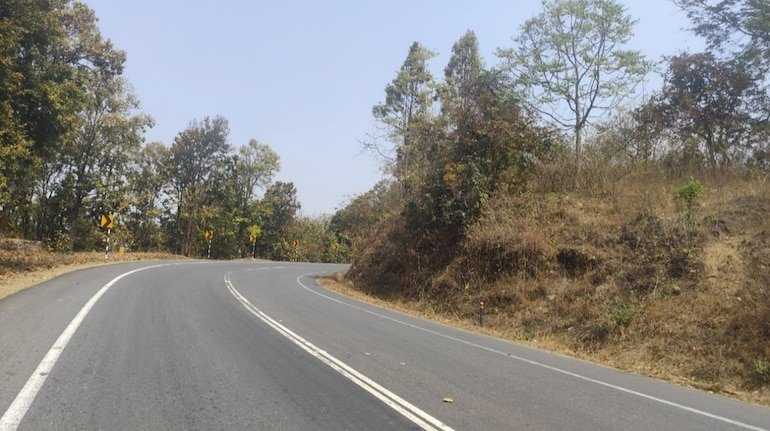
From a technical point of view, the Ranchi-Patna four lane project is a unique example of modern road construction and environmental balance. The project, worth over Rs 5000 crore, involves construction of state-of-the-art bridges, deep cuttings and eco-friendly tunnels to cross inaccessible valleys. In the famous valley area of Koderma, traffic used to come to a standstill for hours due to heavy goods vehicles getting stuck, but in the new alignment of four lanes, the slopes are being smoothened as per international standards so that the speed of vehicles can be maintained up to 100 kilometers per hour.
According to senior engineers of NHAI, high-grade bituminous concrete and geo-synthetic material is being used in the road construction, which will keep the road safe from subsidence or potholes even during rainy days. Under the project, a target has been set to completely eliminate black spots, due to which the possibility of accidents will come close to zero. Along with this, advanced drainage systems and solar based street lights are being installed on both sides of the highway to provide clear visibility to the drivers even during fog or rain at night.
As soon as the name of Jhumri Tilaiya comes to mind, old radio requests and the rich history of mica start floating in people’s minds. The new fourlane has the potential to establish this historic city as a new modern logistics hub. Due to better connectivity, the supply chain between Ranchi, Hazaribagh, Koderma, Nawada and Patna will become extremely fast. Jhumri Tilaiya traders will be helped to transport their local materials, stone industry and handicrafts to big markets faster.
With ease of transportation, possibilities have opened up for huge investment in real estate, warehousing and cold storage sectors at the local level. The geographical advantage of being located right between the consumer market of Patna and the industrial centers of Ranchi makes Koderma a natural transit centre. A new ecosystem of new commercial zones, petrol pumps, motels and dhabas is rapidly developing along the highways, which will create thousands of new avenues of employment and self-employment for the local youth.
This four lane is not just limited to commercial benefits, but will also completely reshape the tourism map of both the states. The famous Tilaiya Dam of Jhumri Tilaiya and the beautiful Barakar River valley will now become a convenient weekend getaway for tourists from both Patna and Ranchi. Tourists who were hesitant to come here till now due to poor connectivity, will now be able to enjoy this natural beauty in just a few hours’ drive.
Along with this, this route will also provide new energy to the Buddhist and Jain circuits. Pilgrims going to Gaya, Bodh Gaya and Rajgir will now be able to proceed towards Parasnath and Ranchi via Koderma without any hindrance. During the construction of the project, special care has been taken to ensure that the rich wildlife sanctuary and forests of Koderma are not harmed. Special underpasses and sound barriers are being installed on the designated corridors for safe movement of wildlife so that there is no threat to the ecological balance of the forests.
This four lane is no less than a boon for local travelers and long distance drivers. Whereas earlier the journey from Ranchi to Patna used to take eight to ten hours, now after the full operationalization of this world class route, this distance can be covered in about five to six hours. This reduction in travel time will not only save fuel but will also drastically reduce carbon emissions, which is the biggest need of today’s times.
The biggest relief for the residents of Koderma and Jhumri Tilaiya will be the openness within the city. School buses, ambulances and local vehicles will no longer have to contend with interstate trucks. Transporting patients in case of medical emergencies to big super-specialty hospitals in Ranchi or Patna was earlier a very risky task, but now thanks to wide and barrier-free roads, it will be possible to save patients during golden hours. This highway, which is being built at a cost of Rs 5000 crore, is actually writing a golden chapter of joint progress, security and modern development of Jharkhand and Bihar.