 look news india

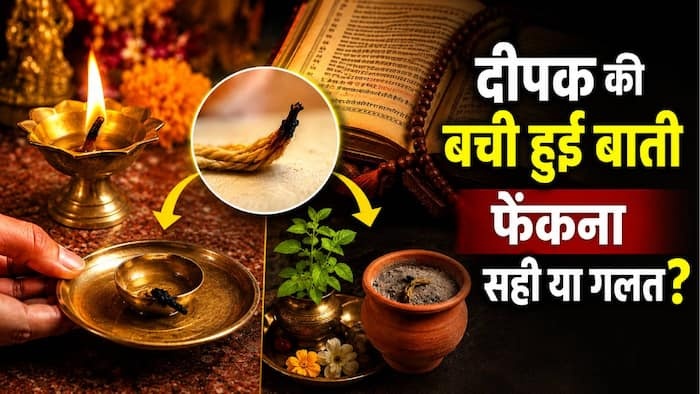
Rules of lamp lamp: Lighting a lamp at the time of worship has special significance in Sanatan Dharma, but do you know what should be done with the remaining wick after the lamp is extinguished? According to the scriptures, considering it as ordinary garbage and throwing it in the dustbin can cause Dev Dosh and Pitra Dosh. Know the 3 correct and religious rules for immersing the remaining sacred wick.
In Sanatan Dharma, it is considered mandatory to light a lamp in the home temple in the morning and evening. The lamp is considered a symbol of light, positivity and the presence of God. But often people remain confused about the remaining wick after the lamp is completely lit. Many people consider it as ordinary garbage and throw it in the dustbin.
If you are also doing this unknowingly, then be careful. Special rules for immersing every small item related to worship have been mentioned in the scriptures. Throwing the sacred wick directly into the garbage is not only religiously inappropriate, but it can also bring negativity into the house. Let us know what should be done with the remaining wick according to religious scriptures.
Why not throw the remaining wick straight into the trash? (Why Not to Throw in Trash)
When we soak a wick in ghee or oil and light it in front of God with mantras and pure feelings, it is infused with divine and positive energy. That wick has been dedicated directly to God. Throwing such a sacred object in a dirty place like a dustbin or allowing it to come in contact with the feet can cause Dev Dosh and Pitra Dosh. This can hamper the prosperity of the house and increase mental stress in the family.
According to the scriptures, 3 important rules for leftover wicks (3 Rules for Leftover Wicks)
If there is any wick left after daily puja in your house, then instead of throwing it here and there, immerse it in these three holy ways:
-
Press into potting soil: Collect the remaining wicks at one place and bury them deep in the soil of a sacred plant in the house, such as a pot of basil or other flowers. With time it will naturally dissolve in the soil. Keep in mind that no one’s feet should step on that place.
-
Flow into the sacred reservoir: If there is a holy river, pond or reservoir near your house, then respectfully throw the wicks collected for a week or a month into the water there.
-
Dedicate to Agni Dev: If you burn camphor regularly at home or perform a small havan, then put these remaining wicks in the sacred fire. Since these have already been a part of the puja, their burning in the fire is considered to be the purest and best.
Special rules for the wick of Akhand Jyoti (Akhand Jyoti Wick Rules)
Apart from daily puja, if you have lit the Akhand Deepak during Navratri, Diwali or any special religious ritual, then the rules regarding its remaining wick are even more stringent. This great wick should never be left carelessly in the house. After the ritual is completely over, it is considered best to immerse the sacred wick in a clean flowing river or sacred reservoir.
Disclaimer: All the information given here is based on social and religious beliefs. We do not confirm this. Before adopting any particular remedy, definitely take advice from an expert or astrologer in the concerned field.