 look news india

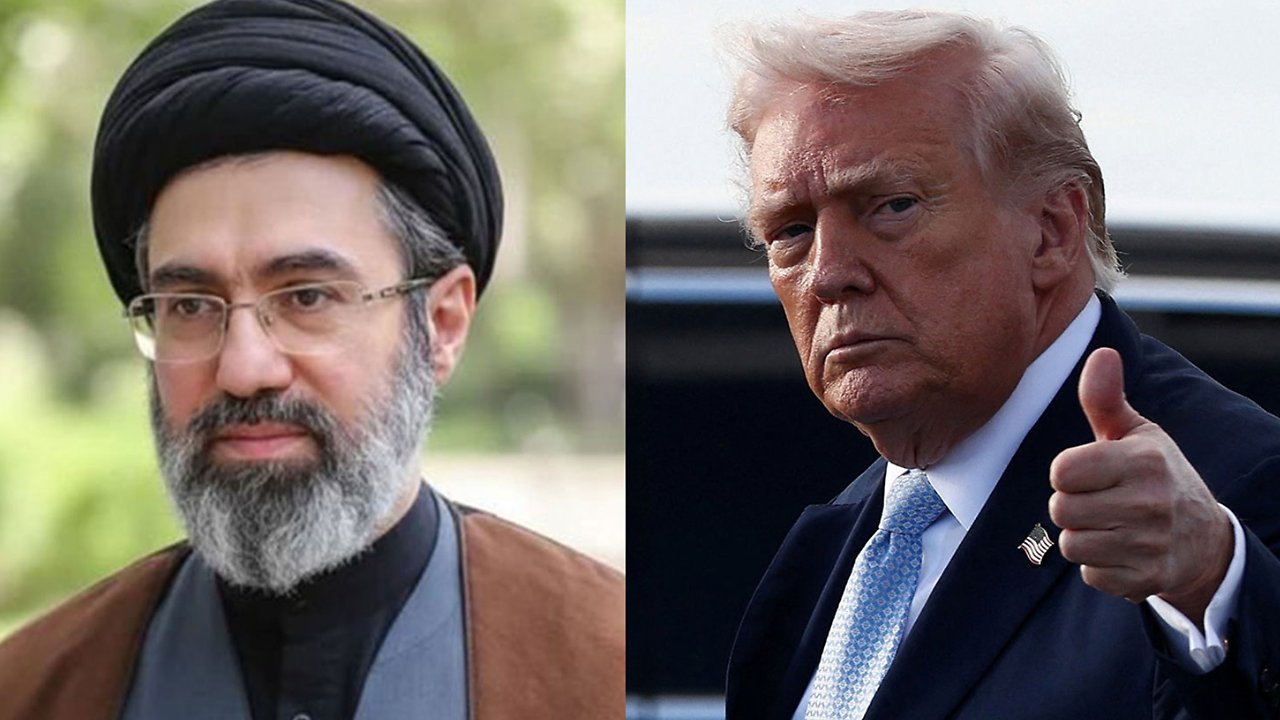
The tension that has been going on for months in the Middle East has now reached such a critical point where another fierce military conflict can break out at any time. The US Defense Ministry, or Pentagon, has issued strict instructions to the US Central Command (US CENTCOM) to finalize all preparations for a large-scale direct military attack and possible ‘Major Combat Operations’ against Iran. According to information quoting defense sources, the US Air Force, Navy and missile defense systems have been kept in the highest state of combat readiness in the Persian Gulf and the Gulf of Oman. Although no specific date or official order for the final attack has been made public by the White House yet, the speed with which the military blockade is being done has created a huge uproar in geopolitical and economic circles all over the world.
To shape the strategy of this possible military action, a highly confidential and marathon high-level meeting of the national security team was held at the US President’s historic retreat ‘Camp David’ in Maryland. US Secretary of State Marco Rubio, National Security Advisor, Defense Chief and top officials of joint intelligence agencies attended the meeting. According to sources, the main agenda of the meeting was to consider various strategic options to target Iran’s nuclear sites, energy and oil infrastructure and missile launching pads of the Revolutionary Guards (IRGC). The US leadership is closely assessing to what extent the strategic consequences and impact on the global energy market can be controlled if direct military action is resumed against Iran.
Israel’s role has emerged as the most important pivot in this entire incident. Recently, there have been two long telephonic talks between US President Donald Trump and Israeli Prime Minister Benjamin Netanyahu within a few days. Israeli security officials believe that if a new military operation starts, it could not be a joint military strike by the US alone but a joint military strike by the US and Israel. There is a constant apprehension from Tel Aviv that in view of its declining military situation and strategic loss, Tehran may try to launch a pre-emptive strike at any time, in response to which the Israeli and US forces may have to jointly destroy the Iranian air defense systems.
The most immediate impact of this new rumor of military conflict is visible on the world’s most sensitive maritime trade corridor ‘Strait of Hormuz’ (Strait of Hormuz) and the international energy market. About 20 percent of the world’s crude oil is supplied via the Strait of Hormuz. Following suspicious attacks on oil tankers and Iranian threats in recent days, the US Navy has described the deployment of its warships in the region as a ‘wall of steel’. Amidst the deepening clouds of war, the prices of Brent crude in the international market have crossed $ 101 per barrel. Economists worry that if Iran’s oil refineries or export terminals are attacked, there will be a severe shortage of petroleum products globally, which could trigger a new cycle of inflation in all major oil importing Asian economies, including India.
Amidst the military preparations, there is also a heated debate going on in the political circles of Washington on whether this military action should be taken before or after the US midterm elections to be held in the first week of November. One camp in the administration argues that striking a decisive blow to Iran’s nuclear threat and aggressive stance before the election would send a strong message. On the other hand, a large diplomatic faction is warning that if Iran retaliates by firing hundreds of ballistic missiles at Israel or American military bases located in the Gulf countries, then America may get entangled in a long and inconclusive war, which may have to bear political consequences. The instructions given by the Pentagon to CENTCOM prove that the guns have been loaded and now everything depends on the final political order from the White House.