 look news india

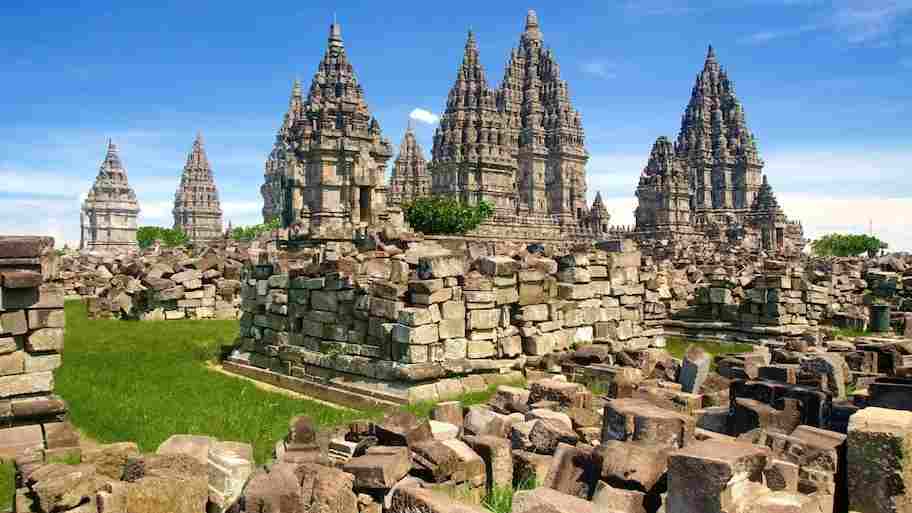
Indian Prime Minister Narendra Modi is currently on a very important and historic official visit to the South-East Asian country Indonesia. From diplomatic and cultural point of view, today (8 July 2026) is going to write a new golden chapter for the bilateral relations between India and Indonesia. PM Modi will today visit the 900-year-old ‘Prambanan Temple’ located in Yogyakarta along with the newly elected President of Indonesia Prabowo Subianto, which is one of the most grand Hindu temples in the world.
This tour is also attracting the attention of the whole world because Indonesia is the country with the largest Muslim population (about 90 percent) globally. In such a situation, the President’s visit to an ancient Hindu temple along with the Indian Prime Minister presents an unmatched example of ‘Equality of all religions’ and religious co-existence in front of the world.
Divine History of the 9th Century: Symbol of the ‘Trinity’ of Sanatan Dharma
According to historians and archaeologists, the Prambanan Temple was built by the Hindu kings of the ancient Mataram Kingdom in Central Java around the 9th century (about 850 AD). This amazing marvel of architecture is mainly dedicated to Lord Shiva.
There are three main high peaks built in the center of this huge temple complex, in which along with Lord Shiva, there are grand temples of the creator of the universe, Lord Brahma and the sustainer, Lord Vishnu. This is the reason why it is considered the biggest symbol of the ‘Trimurti’ or Trinity of Sanatan Dharma. Spread over several acres, this historical complex once had more than 200 small and big temples, many of which got damaged over time due to devastating earthquakes and natural disasters, but the grandeur of the main temples remains intact even today.
The saga of Ramayana and the tradition of ‘Ramayana Ballet’ is alive on the stones.
The biggest and most awe-inspiring feature of the Prambanan Temple is the extremely detailed and vibrant carvings done on its walls. The stone walls of the temple are carved with scenes from the great scripture Ramayana and mythological stories of Krishna Leela.
The most beautiful part of Indonesia’s cultural identity is also associated with this temple. Even today, the famous ‘Ramayana Ballet’ is grandly staged in the open-air theater of this temple complex as per the centuries-old tradition. Local Muslim artists bring alive the sacred story of Lord Shri Ram, Mata Sita and Hanuman ji through traditional Indonesian dance (Javanese dance) and music with great devotion and artistry, which is visited by lakhs of tourists from India and abroad.
UNESCO World Heritage List and earthquake tragedy
Seeing the historical importance of this ancient heritage, the United Nations organization UNESCO had declared Prambanan Temple as a ‘World Heritage Site’ in the year 1991. After this, efforts to conserve it and maintain its original form intensified at the international level. However, the temple structure was heavily damaged by an extremely strong earthquake that struck the island of Java in May 2006. After this, rigorous reconstruction and scientific conservation work was carried out here for many years under the supervision of international experts, after which it could be completely opened for tourists again.
Global message of PM Modi’s visit and ‘civilizational diplomacy’
It would be wrong to call this visit of Prime Minister Narendra Modi as just a visit to a normal religious place. From a geopolitical point of view, there are deep meanings behind this:
-
Message of Vasudhaiva Kutumbakam: In the current global scenario, where serious conflicts over religious and racial identity are going on in many parts of the world, this visit to a Hindu temple in one of the largest Muslim nation gives a strong message of ‘Vasudhaiva Kutumbakam’ (the whole world is one family) to the entire world.
-
Civilizational Diplomacy: This visit will give a new direction to ‘civilizational diplomacy’ between India and Indonesia. Along with trade and maritime relations between the two countries, there are deep cultural and historical ties dating back thousands of years, which connect the two countries despite geographical distances.
-
Demonstration of soft power: This journey will also show the world how ancient Indian culture and eternal values are still highly respected and protected globally, and how two different religious cultures can complement and not oppose each other.