 look news india

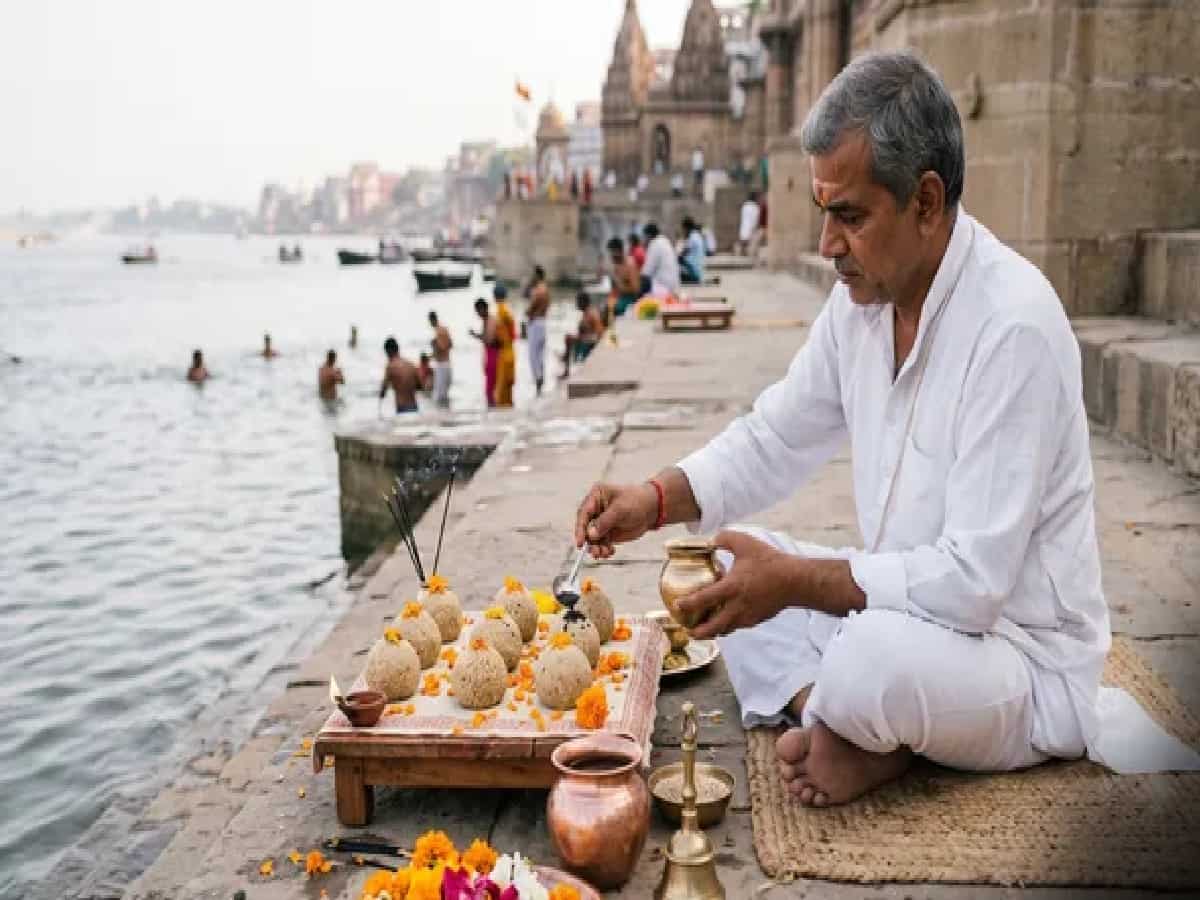
In Sanatan Hindu religion and Vedic tradition, the period of Pitru Paksha i.e. Mahalaya is considered to be the most sacred and sensitive time for offering immense gratitude and offerings to ancestors, deceased ancestors and family deities. During this period, every devotee of Sanatan Dharma religiously performs the classical rituals of Pind Daan, Til Tarpan and Brahmin feast as per the date of death of his deceased parents and ancestors. According to general popular belief, this great festival lasts for 16 days from the full moon day of Bhadrapada month to the Sarvapitri Amavasya of Krishna Paksha of Ashwin month. But according to the Vedic calendar and astronomical calculations, the Pitru Paksha of the year 2026 is going to last only for 15 days instead of 16 days. Many questions are being raised in the minds of the devotees regarding the reduction of one day in this Pitru Paksha, which starts from 26th September 2026 and will take rest on Sarvapitri Amavasya on 10th October. Theology and astrological principles make it clear that there is no bad omen behind this shortening of dates, but there is an authentic mathematical and religious reason based on solar and lunar movements.
The Hindu calendar is composed on the basis of the mutual angular distance of the Sun and the Moon and their daily motion. According to astrological science, the movement of the Moon is not the same every day; Sometimes it is fast and sometimes it is slow. When the Moon moves faster in its orbit, the time extension of a date is significantly reduced by 24 hours. In such a situation, that date starts after one sunrise and ends before sunrise of the next day. Since in Vedic Hinduism, Udayatithi i.e. the date existing at the time of sunrise is considered to be the date of that entire day, hence the date which ends without touching any sunrise, is called ‘Tithi Kshaya’ in the language of Panchang. When any one tithi in the fortnight of Pitru Paksha decays, naturally the count of days in the calendar reduces from 16 to 15. This year also the same astronomical event is happening due to the simultaneous arrival of Chaturthi and Panchami Tithi.
In the event of the date changing, a doubt arises in the public mind as to on which day and how the Shraddha of the respective ancestors should be performed. A very clear and well-organized solution to this has been given in the scriptures. When two dates coincide in the same solar day, then the Shraddha rituals of both the dates are performed on the same day at different specific Muhurtas. In the scriptures, for Pitra Shraddha, the afternoon time i.e. ‘Kutup’, ‘Rouhin’ and ‘Aparahan Kaal’ is considered to be the most auspicious and fruitful. When Shraddha is performed on two dates on the same day, then the Shraddha of the first date is performed in Kutup or Rauhin Muhurta, while the Shraddha of the second date is completed as per the rituals in the last phase of the afternoon. Due to this, the ancestors of both the dates get their Havishya, water and Pind Daan in full and the family members do not have to face any kind of defect.
This misconception often spreads among the common people that due to decrease in the number of days or 15 days of Pitru Paksha, this time becomes inauspicious. Authentic religious texts like Garuda Purana, Manusmriti and Nirvana Sindhu completely reject this apprehension. The number of days of Pitru Paksha is determined by the mathematical rules of the calendar, which has no negative relation with spiritual virtue or results. Whether the dates are 15, 16 or more due to the influence of the month, the reverence, prayer and offering of food and water to the ancestors never fails. The souls of the ancestors only accept the offerings given by the family members with true feelings, purity, kush and black sesame seeds. Therefore, even during the 15 days of Shraddha, the person should take a resolution as per the date fixed by his ancestors and perform the puja in Kutap Muhurta, which leads to freedom from ancestral debt and complete extinguishment of Pitra Dosh.
On a detailed analysis of the Pitru Paksha calendar of the year 2026, it becomes clear that this time Chaturthi and Panchami Tithi are coinciding with each other. Pitru Paksha is starting from Pratipada Shraddha of Bhadrapada Purnima on 26 September 2026. After this, Dwitiya and Tritiya Shraddha will be performed in a systematic manner. But immediately after this, Chaturthi Tithi is starting after sunrise and ending on the same day and Panchami Tithi is entering in the same evening. For this reason, Shraddha rituals of both Chaturthi and Panchami dates will be completed on the same day. After this, Shashthi, Saptami, Ashtami, Navami (Matri Navami), Dashami, Ekadashi (Indira Ekadashi), Dwadashi (Sanyasi Shraddha), Trayodashi (Magha Shraddha), Chaturdashi (Akal Mrityu Shraddha) and finally Shraddha of Sarvapitri Darsh Amavasya will be performed. In this way, within a total of 15 days, the Shraddha rituals of all 16 dates will be completed smoothly.
A very distinctive and rare feature of Pitru Paksha of the year 2026 is its day combination. This year Pitru Paksha is starting on Saturday, 26th September and it is also formally ending with Sarvapitri Amavasya on Saturday, 10th October. In astrology, Saturday is dedicated to Lord Shanidev, the giver of karma and the god of justice. According to the scriptures, Shani Dev is directly related to the justice of Yamraj and Pitru Loka. Those devotees who ritually offer tarpan to their ancestors during Pitru Paksha, the evil eye of Shanidev never falls on them and their troubles of Sadesati and Dhaiya also get calmed. Donating black sesame, black urad, umbrella, black shoes and warm clothes to the poor and needy on the Shraddha falling on Saturday, simultaneously removes Shani Dosh along with Pitra Dosh, which provides longevity, wealth and mental peace in the life of the seeker.