 look news india

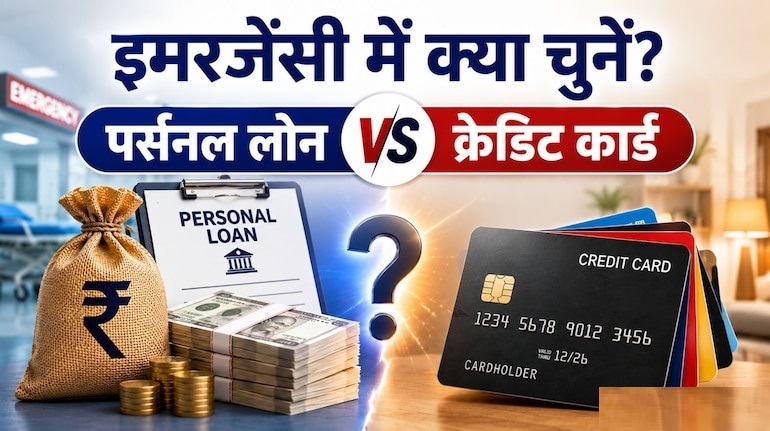
Difficulties in life never come without warning. A sudden huge hospital bill, a major emergency at home, or a sudden loss of job and needing to arrange money immediately are situations that can put anyone in trouble. In such times, most people are left with only two main ways to raise funds immediately: Credit Card or Personal Loan.
But the biggest question that arises is that in times of crisis, which of these two options is less expensive and wise? Is it right to swipe credit card in every small or big emergency? Or would it be better to apply for a personal loan directly from the bank? The right answer to this completely depends on the amount you need, time period and your ability to repay it. Let us understand this with very simple mathematics.
Emergency of ₹2 lakh: Understand the difference with a simple example
Suppose you suddenly need ₹2 lakh to pay the hospital bill. You have both these options. Let us see how your money account will change in both the situations:
Option 1: If you take a personal loan from a bank
If you take a personal loan of ₹ 2 lakh from a bank at a simple interest rate of 12% per annum for a period of 3 years (36 months), then your entire mathematics will be like this:
| loan details | accurate accounting of money |
| total loan amount | ₹2,00,000 |
| Interest Rate | 12% per annum |
| Loan Tenure | 3 year |
| Estimated Monthly EMI | About ₹6,640 per month |
| Total interest in 3 years | around ₹39,000 |
| total payment to bank | Around ₹2,39,000 |
The biggest advantage of personal loan: In this, your monthly installment (EMI) remains fixed from the first day. You know very well how much money will go out of your pocket every month, so that your monthly budget does not get disturbed.
Option 2: If you use a credit card
Now suppose that you paid the entire ₹ 2 lakh through your credit card without thinking. When the bill was generated at the end of the month, you paid only the amount given by the bank instead of paying the entire bill. ‘Minimum Due’ Chose the net.
-
Credit Card Maze: Suppose on a bill of ₹2 lakh the bank asked you to pay only the minimum due of ₹10,000. By filling this amount, you will not be charged ‘late fee’, but huge interest will immediately start accruing on the remaining ₹ 1,90,000.
-
Indiscriminate Interest Rates: On most credit cards of the country 30% to 48% annually Penal interest of up to Rs. That means interest of about 2.5% to 4% every month! If you keep paying only the minimum due every month, the compound interest, 18% GST and other hidden charges will turn this ₹2 lakh loan into a big quagmire in a few months.
Direct comparison at a glance: who outweighs whom?
| Features/Details | personal loan | credit card |
| interest rate | 10% to 18% per annum (much less) | 30% to 48% annually (extremely high) |
| Repayment Method | EMI option fixed every month | Facility to pay only ‘Minimum Due’ (which is dangerous) |
| for big money | Safest and better option | Can prove to be very costly and harmful |
| For small amount/period | The process may take a little longer | Best if you pay the entire bill within 30-45 days. |
How much difference will there be between the two on the requirement of ₹1 lakh?
Let’s look at the difference in one year requirement of ₹1 lakh:
-
by credit card: If you spend ₹1 lakh on a credit card and pay only the minimum due throughout the year, you will have to pay a huge debt at the end of the year due to heavy interest and taxes. Additional interest from ₹30,000 to ₹40,000 May have to be filled.
-
From Personal Loan: If you take this same ₹ 1 lakh as a personal loan for 3 years at 12% interest, then your EMI will be around ₹ 3,320 per month. The total interest you will get in full 3 years is only ₹19,500 to ₹20,000 Will have to pay around Rs. That means, 3 years interest on personal loan is half of 1 year interest on credit card.
When should you choose which option?
-
When to use credit card?
When you are 100% sure that you will Within 30 to 45 days (credit free period) Will pay the entire amount in lump sum. For example, if your salary is 15-20 days away and you have to pay ₹50,000 to the hospital immediately, it is best to swipe the card. If you make full payment before the due date, you will not have to pay even ₹ 1 interest.
-
When to choose personal loan?
When the amount you require is large (say ₹3 lakh or more) and you know it will take you several months or years to repay it. You should always choose personal loan for marriage, long treatment of serious illness or major repair of house, because its low interest puts less burden on your pocket.
Final Conclusion and Best Advice:
In times of emergency, the biggest skill is not raising money, but raising money the right and cheap way It happens. However, to avoid the problem of these two expensive loans, the best financial weapon is yours. ‘Emergency Fund’. If you have savings equal to your 6 months’ salary or expenses safe in a separate fixed deposit or liquid fund, then in difficult times you will neither have to lend a hand to anyone nor get caught in the trap of heavy interest.