 look news india

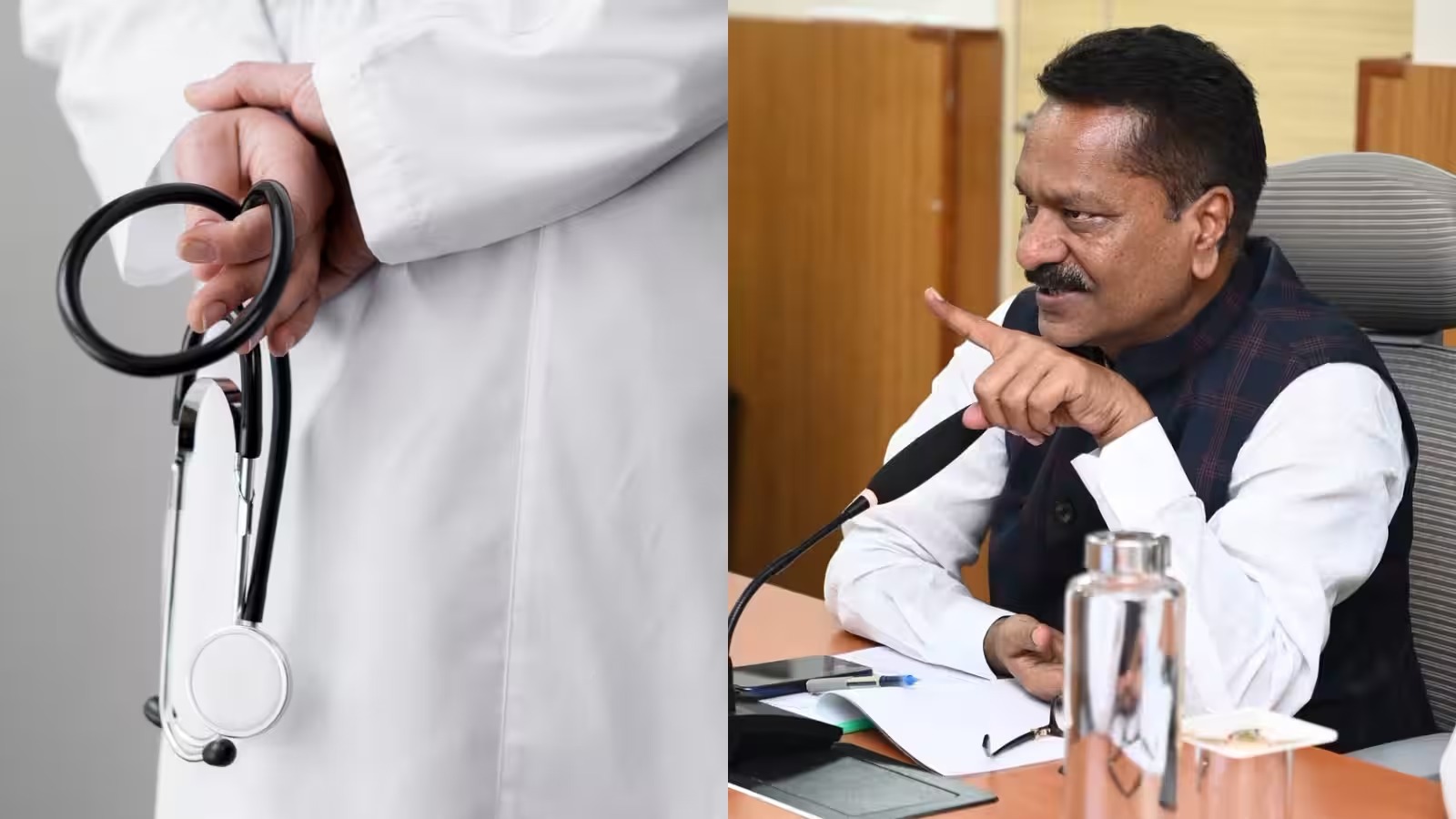
These days, there is an uproar in the medical education corridors and political circles across the country regarding the increase in tuition fees of medical colleges. Amidst strong opposition from opposition parties and student organizations, now the government itself has come into the field. Recently, while defending the decision to increase the fees, the State Health Minister has given a statement which has further intensified the debate. The Health Minister sarcastically said that while today people are ready to spend Rs 30 to 40 lakh to get a seat in MBBS in private colleges or in the name of donation, our government has increased only a nominal and reasonable fee in government and aided medical colleges. As soon as this statement of the Minister came out, there has been a flood of reactions among students and parents, on one hand it is being described as a practical need, while on the other hand, bright students of poor and middle class are considering it as a step to take medical education out of their reach.
During the press conference and a long conversation with the media, the Health Minister explained why the government had to take this tough and unpopular decision. He argued that the cost of maintaining state-of-the-art labs, super-specialty equipment, modern hospitals and research centers in medical colleges has increased manifold in the last decade. Providing high quality practical training to medical students required infrastructure worth crores of rupees, which had become impossible to sustain on the old fee structure alone. The minister said that if the government does not strengthen the infrastructure of medical colleges, our doctors will lag behind in international competition. He also clarified that the increased fees will not have any impact on the poor and needy students who are financially weak, as the government is providing them full support through various scholarship schemes and easy education loans.
After this argument of the Health Minister, opposition parties and various student organizations have opened a front against the government. Student unions say that this comparison clearly shows how far the government has moved away from the struggles of the common man. The students raised the question that if private colleges are expensive, was it not the duty of the government to keep government medical education cheap and accessible? The opposition alleged that the huge increase in fees will shatter the dreams of talented students from rural areas and poor families, who after hard work and pass tough exams like NEET, get admission on government seats. Protests have also started by students at many places, in which there is a strong demand from the government to immediately withdraw this decision.
Speaking further in his defence, the Health Minister also put forward the data that in the last few years the government has unprecedentedly increased the number of MBBS seats by setting up new medical colleges within the state. He argued that when seats were less, the game of corruption and donation used to run on a large scale, but due to transparent counseling and expansion of seats, now more and more children are getting a chance to become doctors. He said that the revenue generated from the nominal fee increase will be directly used to improve the quality of education of medical students and further improve the medical services provided to patients in hospitals. The government believes that if world class facilities can be provided to future doctors by increasing the cost a little, then it will prove to be a far-sighted step in the interest of the society.
This whole issue of increasing MBBS fees has once again revived the biggest debate of this country – commercialization of education versus social welfare. On one hand, the government is citing the need for financial discipline and modern medical education, while on the other hand, the general public and students are seeing it as an economic burden. There are full chances of increasing political activity on this issue in the coming days, because student organizations and opposition parties are preparing a strategy for large-scale agitation to put pressure on the government. Ultimately, it will be very interesting to see whether the government announces any relief package or concession to calm the anger of the students or remains firm on its decision.