 look news india

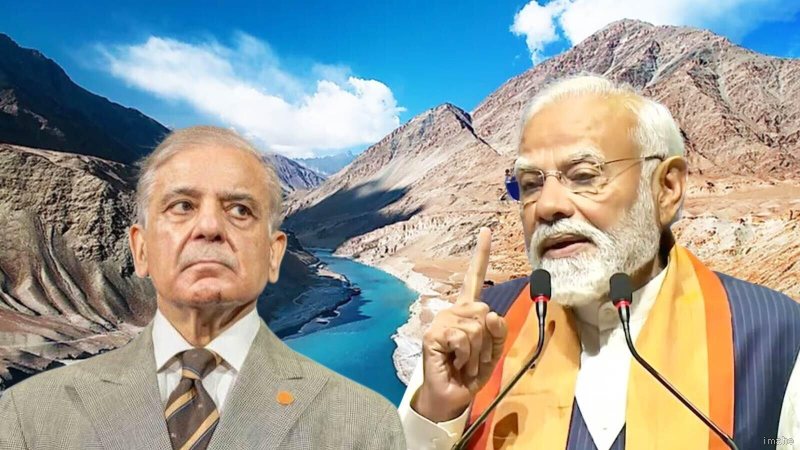
Neighboring country Pakistan is currently going through a severe water crisis and economic crisis, but international water affairs experts have once again made it clear that India cannot be held responsible in any way for this internal water mismanagement and plight of Pakistan. Recently, amid the debate in global forums and diplomatic corridors regarding Indus Waters Treaty (IWT), experts have clearly said that India has always used its share of water within the limits of international rules and treaty. Pakistan has long accused India of diverting attention from its own failed domestic policies, highly water-wasting irrigation practices and poor water management, which is now being vehemently rejected by diplomats and groundwater experts around the world.
Experts believe that the Indus Water Treaty, which has been the main basis of water distribution between the two countries since adolescence, has given India some special rights regarding the use of water of western rivers, which India is following with complete transparency. Despite this, Pakistan’s media and rulers are continuously engaged in spreading propaganda against India so that the public’s attention can be diverted from the real and internal failures of the country. The Government of India has also made it clear on several occasions that terrorism and diplomatic negotiations cannot go together, and has also stressed the need to amend the Indus Water Treaty as per the changing times as the changing climate change and new dimensions of security at the global level cannot be ignored.
The main reason for the water shortage within Pakistan is not India’s attitude at all, but the very old and faulty canal system there, in which thousands of cusecs of water gets wasted every year due to lack of maintenance. Additionally, political wrangling over water sharing between Pakistan’s Punjab and Sindh provinces further deepens the crisis. Analysts say that unless the Islamabad government improves its agricultural policies and adopts modern drip irrigation or water harvesting techniques, it is not going to get any relief from such severe water crisis. Accusing India will neither turn Pakistan’s dry rivers green nor will its economy get back on track, hence diplomatic experts advise that Pakistan should reflect on its internal shortcomings.
Amidst the decades-old discussions on the Indus Water Treaty, it is very important to understand what the framework of this treaty says and what are its legal aspects. Under this historic treaty signed between India and Pakistan with the mediation of the World Bank in the year 1960, the water of six rivers was divided between Rawalpindi and New Delhi. According to this agreement, most of the waters of the eastern rivers i.e. Sutlej, Beas and Ravi were earmarked for the use of India, while a large part of the western rivers i.e. Indus, Jhelum and Chenab were left for Pakistan. However, under the provisions of the treaty, India has a valid legal right to use the water on the western rivers for run-of-the-river hydroelectric projects, i.e., power generation and limited agricultural use.
In the last few years, India has rapidly built hydropower projects on these western rivers such as Kishanganga and Ratle to meet its energy and development goals, to which Pakistan has repeatedly objected. These baseless claims of Pakistan have received setbacks many times even in front of the International Court of Arbitration and neutral experts, because India has taken every step within the ambit of the treaty. Diplomatic experts say that India is completely free to fulfill its development needs and is following the rules of international law in letter and spirit. The unnecessary legal hurdles and objections lodged by Pakistan only reflect its diplomatic frustration, which has nothing to do with reality.
From India’s point of view, the demand for changes in the rules of the Indus Water Treaty is completely justified because with the changing times, serious issues like population growth, environmental protection, climate change and terrorism have come to the fore. India has already sent a formal notice to Pakistan making clear its intention to review and amend the treaty. Experts believe that if Pakistan really has to deal with the water shortage in its country, then instead of raising anti-India slogans, it should positively engage in bilateral meetings and modernize its water conservation system, otherwise its water crisis may take a more dire form in the future.
Pakistan’s own faulty policies and administrative inefficiencies are mainly responsible for Pakistan’s economic crisis and severe water shortage. Even today, traditional and old flood irrigation method is used indiscriminately in the agricultural sector of the country, which leads to huge misuse of water. Moreover, due to lack of political will to build water storage capacity i.e. large reservoirs and dams, flood water during monsoon flows directly into the Arabian Sea without any use. In such a situation, when there is no concrete arrangement to save or conserve water within the country, it has become an old habit of Pakistan to put the entire blame on India.
International media and independent reports have also confirmed that water wastage is occurring at record levels in major cities and rural areas of Pakistan due to pipeline leakages and over-exploitation of groundwater. There is a huge shortage of clean drinking water in metropolitan cities like Karachi and Lahore, for which the provincial governments and corrupt systems are responsible. Whenever the people of the country raise their voice being troubled by inflation, unemployment and water shortage, the politics and media there immediately try to divert people’s attention by raising the issue of India and Indus Water Treaty. This is an old strategic maneuver which Pakistani rulers have been using for decades to hide their failures.
India has always fulfilled its duty as a responsible neighbour, but this does not mean that India should shoulder the responsibility of solving the water problems of any other country at the cost of its national security and economic interests. Unless Pakistan changes its mindset and reforms its policies on the terrorism front, it will be extremely difficult to move forward on any kind of normal diplomatic or water agreement with India. The clear message from the experts is that India is moving forward at full speed on its development journey and Islamabad will have to find the solution to Pakistan’s water crisis only by improving its administrative system.