 look news india

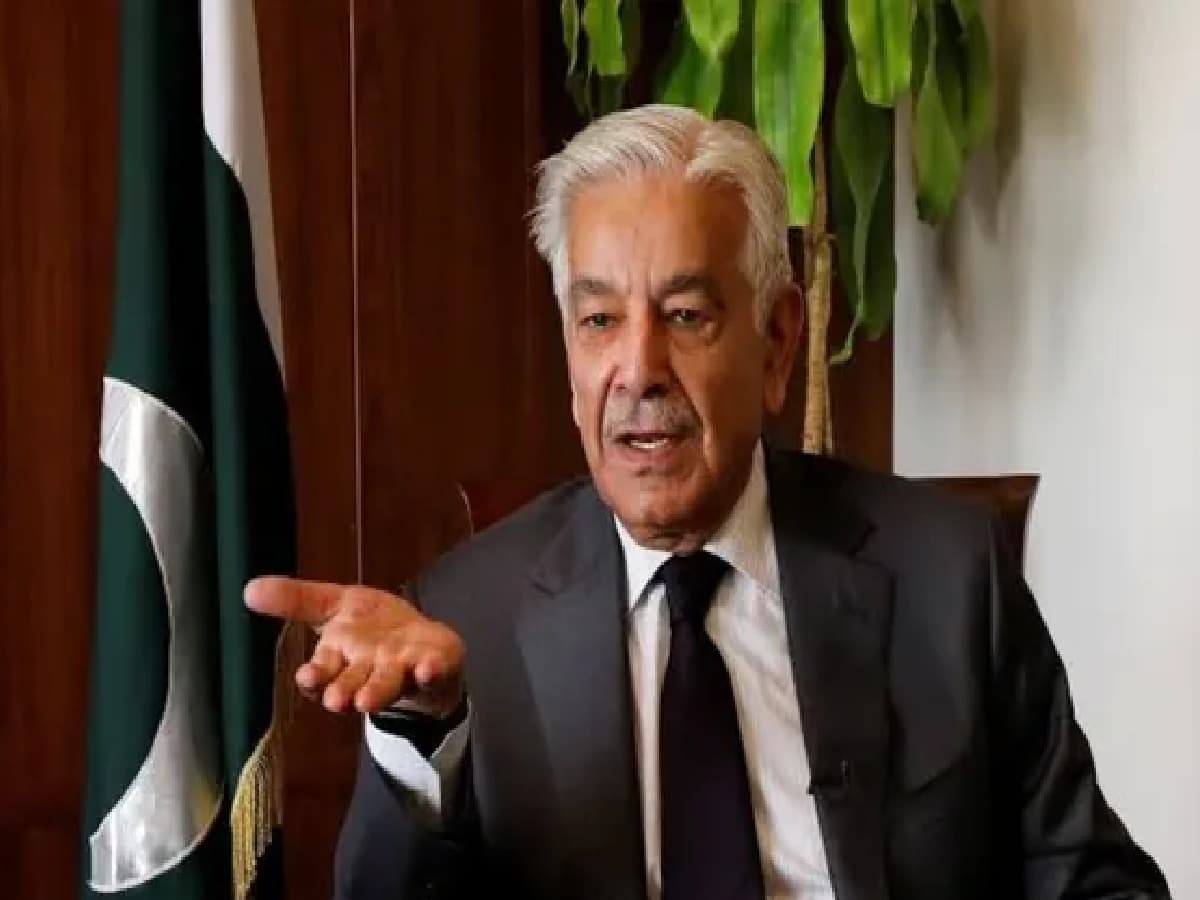
Geopolitical tensions in West Asia and the Gulf region have once again reached a fever pitch after Saudi Arabia officially claimed to have shot down an armed drone south of the holy city of Mecca. As this serious development unfolds, Pakistan has reiterated its full military and diplomatic commitment to the recently concluded trilateral Mecca Defense Agreement with Saudi Arabia and Turkey. The Pakistan government and military leadership have made it clear that it is ready to go to any extent to protect the most sacred sites of the Islamic world. Pakistan’s Defense Minister Khawaja Asif said in strong words that protecting the holy Harman Sharifan is not dependent on any written agreement, but it is the basic faith and duty of Islamabad, which will be fulfilled at any cost. No formal agreement needed for Mecca security: Defense Minister Khawaja Asif’s blunt statement: After the incident of Houthi drone intrusion near Mecca province of Saudi Arabia, the stir in the political circles of Pakistan has intensified. Speaking to Geo News, Pakistan Defense Minister Khawaja Asif clarified the situation in blunt words. He said that protecting Islamic holy sites like Mecca and Medina is more important for Pakistan than any technical or paper agreement. Asif underlined that if there is any direct threat to Mecca Mukarrama, Pakistan will use all its strength to protect it without any hesitation. Along with this, he clarified that the trilateral agreement recently signed with Saudi Arabia and Turkey is fully active and whatever military or strategic responsibilities fall on Pakistan under it, the country will implement them with full devotion and promptness. What is the Saudi-Turkey-Pakistan trilateral Mecca Defense Agreement and its collective security framework? A historic trilateral defense agreement was signed between Pakistan, Saudi Arabia and Turkey on August 7 amid the rapidly changing security equations in West Asia. The main axis of this agreement is a strong framework of collective security, under which, on the lines of Article 5 of NATO, it has been provisioned that if there is any armed or external military attack on any one of the three signatory countries, it will be considered as a joint attack on all three countries. The main objective of this agreement is to build shared deterrence in the Gulf and the Middle East and keep regional sovereignty intact. Director General of Inter-Services Public Relations, the media wing of Pakistan Army, Lieutenant General Ahmed Sharif Chaudhary had already made it clear that this agreement is completely defensive and its purpose is not to spread aggression, but to make the defense system of friendly countries impenetrable. Saudi Air Defense’s action near Mecca: Claim of shooting down Houthi drone and denial by Houthis According to the Saudi Defense Ministry, their advanced air defense system tracked a drone in the southern area of Mecca when it was attempting to enter the restricted and sensitive airspace. The Saudi army shot down the drone in the air through quick missile interception and prevented it from crossing Mecca’s airspace. After this incident, Riyadh seriously accused the Houthi rebels of making holy religious sites unsafe. On the other hand, Yemen’s Houthi rebel organization immediately issued an official statement denying these claims of Saudi Arabia. The Houthis say they have never targeted Mecca or any other Islamic holy site and have no intention of doing so in the future. Foreign Ministry’s weekly briefing: Operational secrecy and policy of non-disclosure of military strategy Spokesperson Sajjad Haider Khan clarified Pakistan’s strategic position to international journalists during the weekly Foreign Ministry briefing held in Islamabad. When asked whether Pakistan was deploying its army or air defense systems to neutralize the continuous air and drone attacks in Saudi Arabia, he said that Pakistan is determined to implement the terms of the agreement. However, he stressed that the success of military operations depends on their secrecy, so when, where, under what circumstances and what level of force will be used cannot be shared publicly. Defense Minister Khawaja Asif also supported the stance, saying that if geographical integrity or international boundaries of member states are violated, prompt retaliatory action will be taken, but military plans will not be discussed openly. Tensions in the Red Sea, Bab al-Mandeb and the Strait of Hormuz: Impact on global trade and Pakistani economy The impact of the Gulf crisis is not limited to land borders only, but is also having a devastating impact on the major maritime trade routes of the Red Sea. Pakistan’s Foreign Office has expressed deep concern over the increasing attacks and obstructions to the movement of ships in the strategic corridors of Bab al-Mandeb and the Strait of Hormuz. Spokesman Sajjad Haider Khan appealed to all non-governmental elements and Houthi rebels operating in the region to immediately stop their provocative activities. Defense experts have warned that much of the world’s oil and commercial cargo passes through the Bab el-Mandeb and the Strait of Hormuz. If stress increases in these narrow sea routes, the cost of freight and marine insurance will increase manifold. For an already struggling economy like Pakistan, this disruption could prove to be a double whammy, leading to an energy crisis and a sharp increase in inflation. Prime Minister Shehbaz Sharif’s sharp condemnation: Appeal for unwavering solidarity and restraint with Riyadh In view of the seriousness of the security situation in Saudi Arabia, Pakistan’s Prime Minister Shehbaz Sharif also issued a strong official statement. Reiterating Pakistan’s unwavering support for the security, sovereignty and territorial integrity of Saudi Arabia, Prime Minister Sharif said that Islamabad stands shoulder to shoulder with its Saudi brothers in this hour of crisis. He termed the alleged attempt to send a drone near a holy site like Mecca as a cowardly and condemnable act. The Prime Minister said that any threat looming over the holy places would be considered a conspiracy against the entire Muslim Ummah. Additionally, to avert the risk of a broader regional war, Prime Minister Shehbaz Sharif strongly called on all parties in the Gulf to exercise utmost restraint, step back from military confrontation and establish peace through dialogue.