 look news india

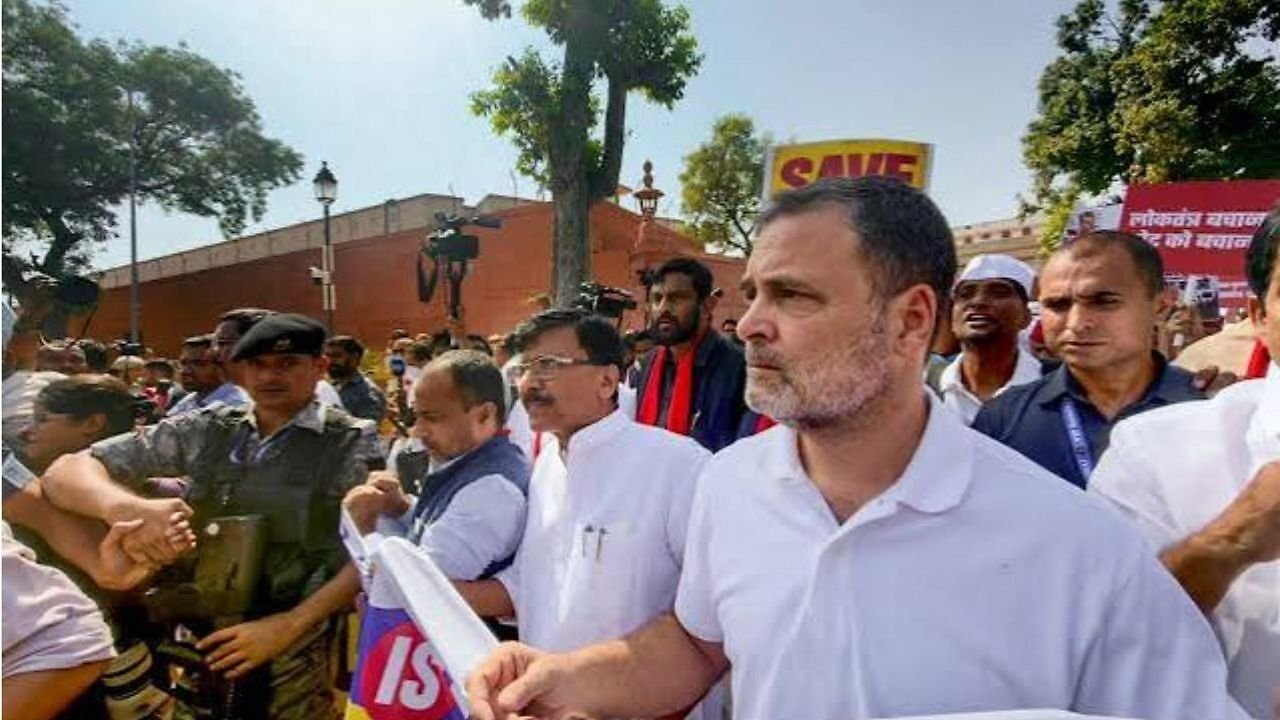
The protest by the opposition alliance ‘INDIA Bloc’ against the ‘Special Intensive Revision’ (SIR) process being run by Chief Election Commissioner (CEC) Gyanesh Kumar and the Election Commission will continue on Friday. Despite continuous protests, dharnas and detentions at Nirvachan Sadan, Akashvani Bhawan and Rajghat for the last three days, the attitude of the opposition parties has not softened. Opposition MPs have made it clear that their ‘Satyagraha’ against alleged discrepancies in electoral voter lists, allegations of ‘vote theft’ and demanding restoration of fair election process will continue. MPs and top leaders of opposition parties have been instructed to remain present in Delhi itself, so that the proposed protest march and the program till Rashtrapati Bhavan can be sharpened.
Along with demonstrations on the streets, the opposition is working on a strategy to take this entire matter to the highest constitutional post of the country. Congress General Secretary K. According to C. Venugopal, a formal appointment was sought by the India Alliance to meet President Draupadi Murmu. According to sources, Rashtrapati Bhavan is likely to allow a delegation of 10 prominent opposition leaders to meet. However, Rashtrapati Bhavan’s formal response and scheduling regarding the scheduled time and final protocol of the meeting is being eagerly awaited. This delegation of opposition leaders is preparing to submit a detailed memorandum to the President raising questions on the functioning of the Election Commission, the Voter List Revision (SIR) and the impartiality of the Commission.
The 10 top leaders from the opposition who are likely to meet the President include prominent faces from various constituent parties:
-
Mallikarjun Kharge (Congress President and Leader of Opposition in Rajya Sabha)
-
Rahul Gandhi (Leader of Opposition in Lok Sabha)
-
Mamata Banerjee (Trinamool Congress chief and West Bengal Chief Minister – who has specially reached Delhi for this march and meeting)
-
Akhilesh Yadav (Samajwadi Party chief)
-
Priyanka Gandhi Vadra (Congress MP)
-
Abhishek Banerjee / Sudip Bandyopadhyay (Senior leader of Trinamool Congress)
-
Tejashwi Yadav / Manoj Jha (Rashtriya Janata Dal)
-
T.R. Sand (Dravida Munnetra Kazhagam – DMK)
-
Sanjay Raut (Shiv Sena – Uddhav Balasaheb Thackeray)
-
D. Raja / Sitaram Yechury Cadre / John Brittas (Representatives of leftist parties)
Opposition parties allege that under the ‘Special Intensive Revision’ (SIR) run by the Election Commission in Delhi and other parts of the country, names of lakhs of genuine voters are being removed or influenced without proper verification. Congress leader Rahul Gandhi and other opposition leaders say that the commission is deviating from its constitutional obligation of impartiality. The main demands of the opposition are:
-
The Special Intensive Revision (SIR) process should be withdrawn or banned with immediate effect.
-
Chief Election Commissioner Gyanesh Kumar should resign from his post.
-
The entire process of voter list revision should be made transparent and there should be open communication with all political parties.
On the other hand, the Election Commission and the Bharatiya Janata Party (BJP) have completely rejected all these allegations of the opposition, calling them a result of defaming constitutional institutions and election frustration.
Security arrangements have been tightened in Central Delhi in view of the proposed protest march for the fourth consecutive day and possible movement from Rajghat towards Rashtrapati Bhavan. Delhi Police as well as Central Paramilitary Forces (CAPF) and Rapid Action Force (RAF) personnel have been deployed around Raisina Hills, India Gate, Janpath and Rajghat. Roads connecting Lutyens Delhi and Sansad Marg have been barricaded and traffic advisories have been issued for commuters. Police officials say that no major march will be allowed to proceed in high-security areas without prior permission.