 look news india

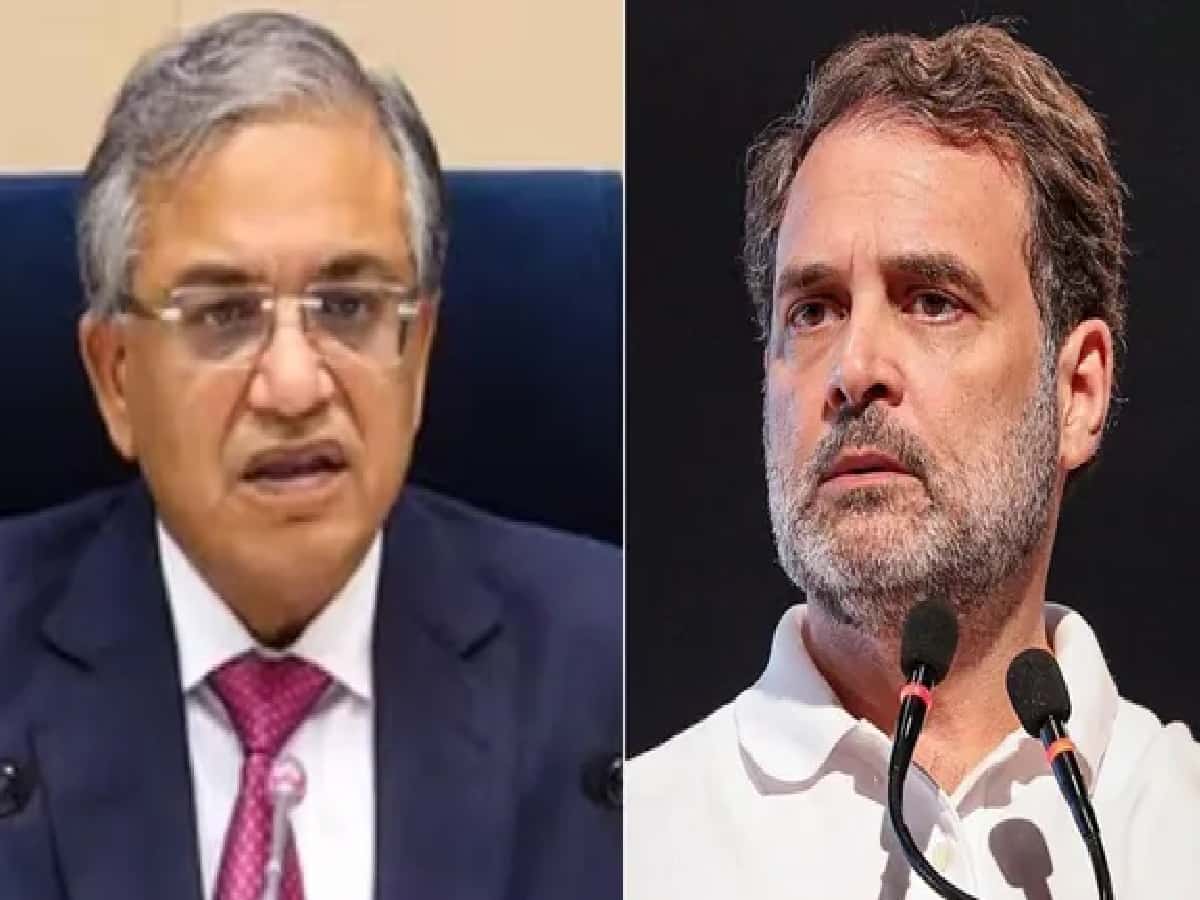
A new and fierce political battle has erupted in the corridors of power of the capital Delhi regarding the integrity of the country’s elections and the impartiality of democratic institutions. The opposition camp has taken an unprecedented aggressive stance regarding the working methods of Chief Election Commissioner (CEC) Gyanesh Kumar and the internal decisions of the Election Commission. Opposition parties have now formally started drafting a new impeachment motion to remove the Chief Election Commissioner, who has been accused of taking unilateral decisions on important policy matters related to SIR, ignoring the alleged objections and disagreements of two fellow Election Commissioners within the Election Commission. This time, the strategists of INDIA alliance have made their strategy more comprehensive and aggressive and have started a systematic exercise to mobilize non-BJP regional parties outside the alliance in support of this impeachment motion. The objective of the opposition camp is clear that not only to register protest in both the Houses of Parliament, but also to create a wide national debate on the impartiality of the Election Commission by presenting a concrete constitutional challenge.
Even though the opposition parties are demonstrating their unity within the Parliament against the Chief Election Commissioner, it is not easy in any case to take this impeachment motion to its actual conclusion. The procedure for removal of the Chief Election Commissioner under Article 324(5) of the Indian Constitution is exactly the same as that prescribed for the removal of a sitting judge of the Supreme Court. For this, there is a mandatory constitutional requirement of special majority in both the houses of the Parliament i.e. majority of the total membership of the House and the support of at least two-thirds of the members present and voting. If we look at the current arithmetic of Parliament, the ruling National Democratic Alliance (NDA) has the decisive numerical strength in both the houses. Unless there is a major political rebellion among the constituent parties of the ruling party or they do not cross-vote in favor of the opposition proposal, it seems technically impossible for this proposal to be passed by the Parliament. Despite this, opposition parties like Congress, DMK and Trinamool Congress believe that presenting the resolution containing signatures of MPs from Aam Aadmi Party (AAP) and regional parties would in itself send a powerful political message that the country’s institutional credibility is under serious threat.
The main opposition party Congress, which is leading this entire constitutional campaign, has made it clear that it is not going to back down against the current activities of the Election Commission, from Parliament to the streets. Congress media and communications department head Pawan Kheda, while talking to reporters, confirmed that this time the framework of impeachment will not be limited to the alliance only. He said that continuous dialogue is going on with all the major political parties of the country and the parties which are not currently part of the INDIA block are also ready to sign this resolution for the protection of democracy and constitutional institutions. Congress alleges that the decisions currently being taken in the Election Commission are against the basic principles of transparency and consent, due to which a detailed charge sheet is being prepared in consultation with leading jurists and jurists of the country so that the real status of the functioning of the Commission can be revealed to the public.
This political move of Congress has got direct and strong support from DMK from South India. Senior DMK leader and chief spokesperson TKS Elangovan bluntly said that his party will strongly support the impeachment motion against Gyanesh Kumar. Elangovan clarified that top party leader and Tamil Nadu Chief Minister M.K. Stalin has already made his position clear that the current Chief Election Commissioner is not meeting the constitutional standards of impartiality and should be immediately relieved from the post. At the same time, Trinamool Congress (TMC) leader in the Upper House of Parliament, Derek O’Brien, has emerged as the key strategist of this campaign. O’Brien has announced that TMC will personally take the initiative to unite the Aam Aadmi Party and other neutral parties under this proposal. It is clear from this coordinated activism of the opposition parties that in the coming parliamentary session, there will be a fierce conflict between the ruling party and the opposition regarding the functioning of the Election Commission.
Along with gathering political support, the opposition parties are taking full care that this time their impeachment notice should not be rejected on any technical or legal basis. For this, a core committee of top legal experts from Congress and opposition parties has been formed. According to sources, discussions have begun with top jurists like eminent constitutional expert and senior advocate Abhishek Manu Singhvi, Vivek Tankha, former Union Minister and Rajya Sabha MP Kapil Sibal, senior advocate Prashant Bhushan and Dr. Maneka Guruswamy. The legal team is making a thorough study of the recent administrative decisions taken by the Chief Election Commissioner, internal differences of the Commission, alleged violations of service rules and constitutional articles so as to make the allegations made in the notice cogent and to avoid any procedural lapse before the Presiding Officer.
The opposition’s past bitter experience is also a major reason behind this new and cautious strategy. Earlier, Rajya Sabha Chairman C.P. Radhakrishnan had rejected the earlier impeachment notice given by the opposition against the Chief Election Commissioner on procedural and technical grounds. Taking a lesson from that failure, the opposition strategists this time do not want to give any legal loophole to the presiding officers on the basis of which the notice can be canceled at the very beginning. Sources say that as part of the strategy, separate notices are being prepared for both Lok Sabha (where signatures of at least 100 MPs are mandatory) and Rajya Sabha (where signatures of at least 50 MPs are required). After collecting the necessary signatures of the MPs, a joint meeting of the top floor leaders of all the opposition parties will be called, in which the final decision will be taken whether the notice should be first presented in the Lok Sabha or tabled in the Rajya Sabha, in view of political influence and legislative pressure.