 look news india

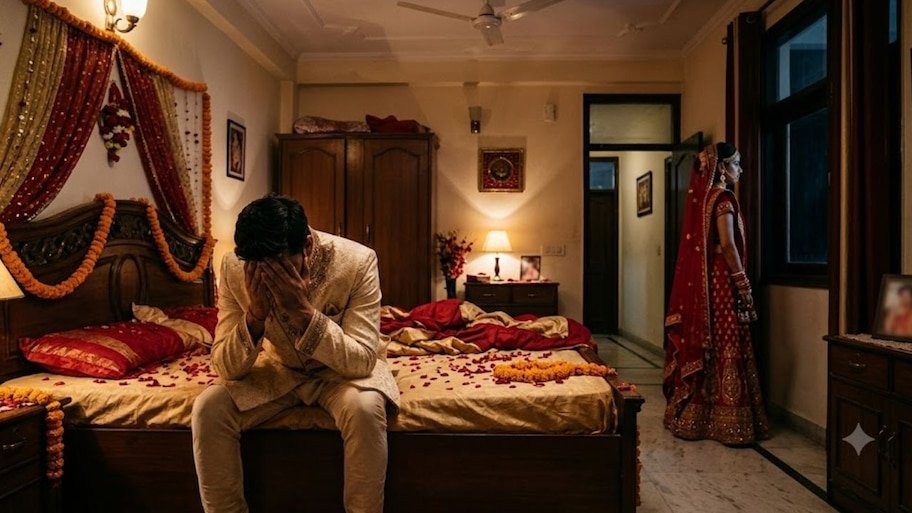
A marriage that started with great expectations and the consent of the family ended in bitterness and controversy within just a few hours. When the groom entered the room on the wedding night after the marriage was completed with great pomp and after reaching his in-laws’ house, an unexpected statement by the bride knocked the ground out from under his feet. The bride simply maintained physical distance and said, “I don’t like you at all and I don’t want to have any relationship with you.” Despite the young man’s persuasion and the family’s interference, the bride remained adamant on her decision and flatly refused to start married life.
Refusal to live with in-laws, legal dispute started again
A few days after the marriage, the bride returned to her maternal home and refused to come to her in-laws’ house again. Many attempts were made for reconciliation and compromise at the level of relatives and society, but the girl’s side clearly refused to maintain the relationship. After this the dispute reached the threshold of police and court. The groom and his family started being warned of filing legal cases under serious charges of dowry harassment and domestic violence, due to which the groom’s side had to face immense mental and social harassment.
Long round of courts and dates for 2 years
The young man approached the family court to legally end his marriage. This legal battle in court dragged on for almost 2 years. During this period, repeated efforts were made for counseling and mediation, but no path for reconciliation was found between the two parties. The young man said that without any physical relationship or real married life, he was carrying the burden of marriage only on paper and due to the court rounds, his career and mental peace were getting completely ruined.
Talk made on one-time settlement of ₹10 lakh
To get relief from the long legal process and burden of lawsuits, both the parties finally decided to separate with mutual consent in court mediation. Under the agreement, the husband had to agree to pay a lump sum alimony of Rs 10 lakh (One-Time Alimony / Permanent Settlement) to the wife on the condition of his ‘freedom’ and withdrawal of all legal cases. After a demand draft of the fixed amount was submitted in the court, a divorce decree was duly issued to both of them under the Hindu Marriage Act.
Increasing trend of settlement in matrimonial disputes
According to family court lawyers and legal experts, in today’s era, such cases of mismatched marriages or forcibly arranged relationships are increasingly coming to the fore. To save both the parties from wasting years and resources in a long and exhausting legal battle, now the path of mutual consent divorce and one-time settlement is being adopted.