 look news india

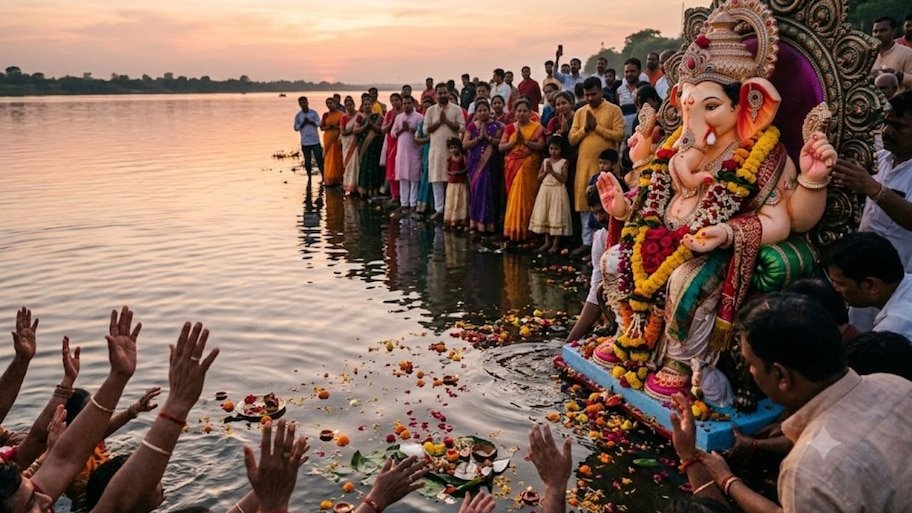
New Delhi. The auspicious time has come for the farewell of Lord Shri Ganesha, the first revered destroyer of obstacles, who arrived in every house and grand pandals with music and immense enthusiasm on the Chaturthi date of Shukla Paksha of Bhadrapada month. After taking away the sorrows of the devotees for 10 days and giving them the boon of Riddhi-Siddhi, on the great festival of Anant Chaturdashi the devotees bid farewell to Bappa with a heavy heart and moist eyes. Only one echo is heard all around –“Ganpati Bappa Morya, Pudhchya Varshi Lakar Ya” (Ganpati Bappa Morya, come early next year).
According to religious beliefs, on the request of Maharishi Vedvyas ji to compose the Mahabharata, Lord Ganesha wrote the epic Mahabharata without stopping for 10 days. His body temperature had increased due to continuous writing. On the 10th day i.e. on Anant Chaturdashi, Ved Vyas ji calmed Bappa’s fever by bathing him in cool water (Saraswati River). In this memory, there is a tradition of immersing the Ganesh idol in water every year after 10 days of service. Immersion is not just a formality but a sacred ritual. If the farewell is not done with the rules and decorum mentioned in the scriptures, then the full results of the 10 days of worship are not achieved.
Before bidding farewell to Bappa, it is mandatory to perform proper puja at home or pandal. The correct Vedic process of immersion is as follows:
-
Morning Shodashopachar puja and offering: On the day of immersion, take bath in the morning and do the last daily worship of Bappa. Offer them Roli, Chandan, Akshat, Durva, fresh red flowers and sacred thread. Offer his favorite modak, gram flour laddu, panchmeva and seasonal fruits to Bappa.
-
Karpoor Aarti and Forgiveness Prayer: Sing Maha Aarti of Lord Ganesha together with the whole family. After the Aarti, fold your hands and ask for forgiveness for any mistake or error committed during the 10 days of service, knowingly or unknowingly.“O remover of obstacles! We are ignorant, accept our service and keep your blessings on the family.”
-
Chowki/Pata Shaking (Departure Resolution): After the puja is over, move or shake the wooden platform (Pata) on which Bappa is seated, a little forward with your right hand. This is called ‘lifting’ (departure) of the deity idol. This means that now Bappa has given permission to bid farewell.
-
Tying Patheya (Pathway Offering): Just as we give food and water to our loved ones while sending them on a journey, in the same way, wrap 5 laddus/modaks, some durva, betel nut, akshat and dakshina (coin) in a clean yellow or red cloth and keep it with the idol of Bappa.
-
Pronunciation of Visarjan Mantra: Lift the idol respectfully with both hands and carry it towards the immersion site (holy river, lake or eco-friendly tub at home) and keep chanting this mantra:
‘Gachch Gachch Surshrestha Svasthane God. ‘Yatpujitam maya dev paripurnam tadastu mein’
(Meaning: Oh God, the best among gods! May you come to your supreme abode and complete this worship done by me.)
-
Water Samadhi with respect: After reaching the immersion site, keep Bappa’s face towards you and slowly float him in the water.
There is a religious belief that even a small carelessness at the time of farewell can cause Vaastu defects and inauspicious things:
-
1. Throwing the idol in water is strictly prohibited: Many people toss or throw the idol in a river, canal or pond in a hurry or from a distance. Doing this is considered a grave insult to God. Get into the water or bend down on the shore and slowly immerse the idol in the water with utmost respect and ease.
-
2. Beginning of immersion in Rahukaal: Start the immersion journey only after seeing the almanac. It is considered inauspicious to lift or immerse the idol from the platform during Rahukaal of the day. Always undertake the journey only during auspicious, auspicious, auspicious or Char Choghadiya Muhurta.
-
3. Wearing black and blue clothes: Visarjan is not a time of mourning, but a festive farewell. Avoid wearing black, blue or dirty clothes on this day. Wearing red, yellow, orange or traditional white-saffron clothes is considered extremely auspicious.
-
4. Throwing Havan material and Nirmalya in the garbage: Never put Durva, flowers, garland and coconut of Kalash offered for 10 days in the general dustbin. It is called ‘Nirmalya’. Either flow it in water along with the idol or bury it under the soil in a pot at home and make organic fertilizer.
-
5. Drain the water from the urn: Never pour the sacred water of the Mangal Kalash that is installed at the time of Ganesh installation into the sink or drain. Sprinkle this water with mango leaves all over the house to remove negative energy, and offer the remaining water to Tulsi or any sacred plant.
If you have an eco-friendly Ganpati Bappa made of clay (Shadu Mati) installed in your home, the best solution to prevent rivers and water bodies from getting polluted is ‘home immersion’:
-
Take a clean big tub or bucket in the balcony or courtyard of the house and fill it with pure water mixed with Ganga water.
-
Place Bappa’s idol in it slowly. Within a few hours the soil will completely dissolve in water.
-
After this, put that sacred soil and water in the pots of the house or the plants of the garden (like Tulsi, Aparajita or Shami). In this way, Bappa will always reside in your house in the form of nature and greenery.
This departure of Bappa is the beginning of a new wait. It is prayed to the Vighnaharta that while leaving, he takes with him all the troubles, diseases, poverty and tribulations of the house and leaves the gift of happiness, peace and prosperity in the family.