 look news india

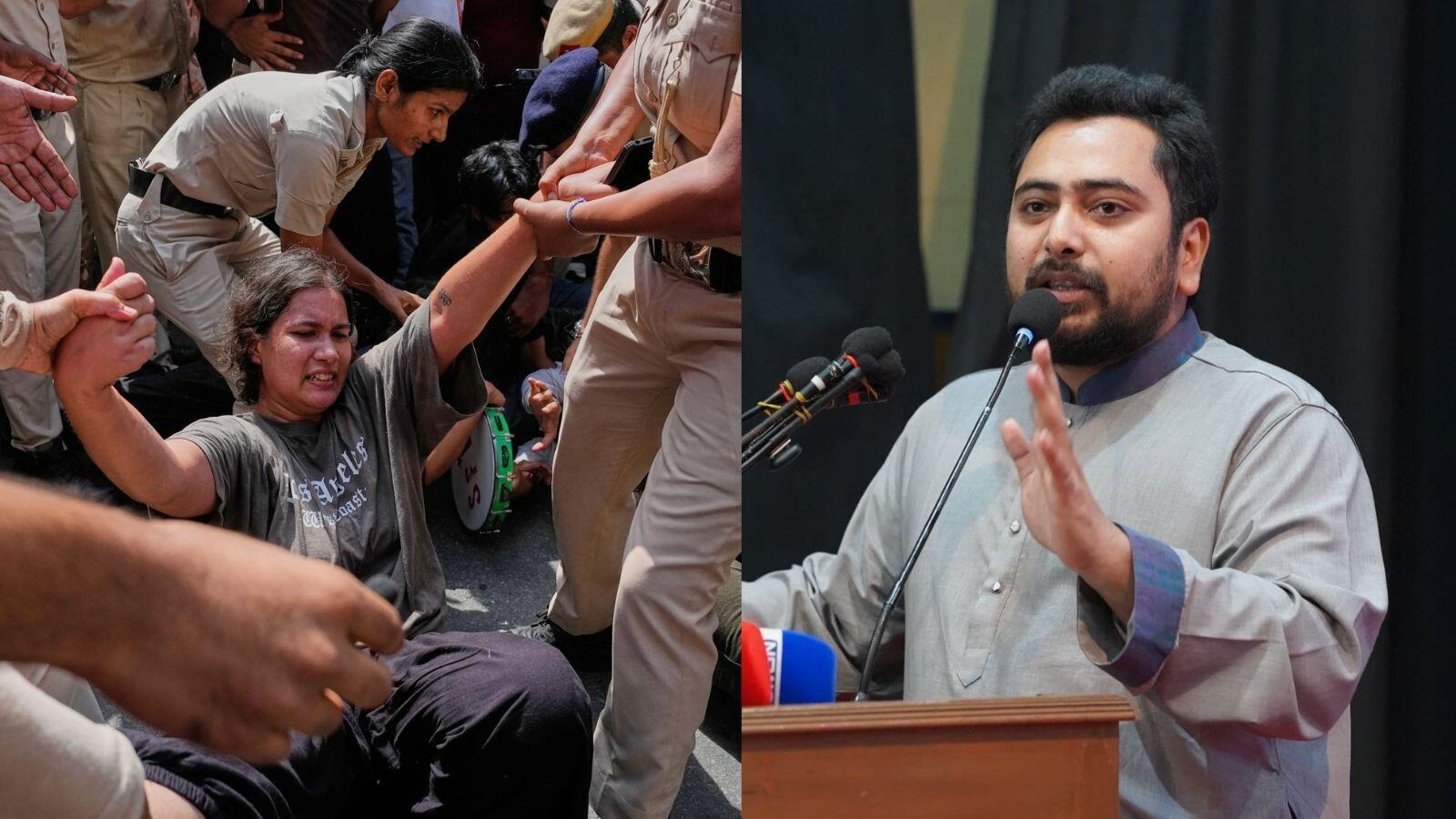
An unprecedented turmoil is currently being witnessed in South Asian politics. Since the fall of Sheikh Hasina government in Bangladesh, there has been a heated debate in political and diplomatic circles from Dhaka to New Delhi. Nahid Islam, the fiercest critic of former Bangladesh Prime Minister Sheikh Hasina and leader of the recent student movement, has given a statement regarding the ongoing civil rights and various movements in India, which has created a new controversy in the entire subcontinent. Naheed Islam, who led the Civil Joint Platform (CJP) and student movements against Sheikh Hasina’s rule in Bangladesh, is now openly speaking out for undertrials and student activists in India.
While talking to the international media, Nahid Islam said that democracy and freedom of expression should not be limited to the borders of any one country. Making special mention of India’s prestigious Jawaharlal Nehru University (JNU) alumni Umar Khalid, Sharjeel Imam and other protesters, he said the voice of dissent and opposition should not be suppressed in any democratic system. He believes that youth and students should have the freedom to put forward their demands and raise their voice for political reforms. This statement of Nahid Islam is being considered very strategic and sharp in the context of Sheikh Hasina’s stay in India and the tense relations between the two countries.
In India, accused Umar Khalid and Sharjeel Imam have been in jail for a long time in cases related to the 2020 Delhi riots and CAA protests. India’s judiciary and law enforcement agencies are working on this issue with complete impartiality and within the constitutional framework. However, efforts by Bangladesh’s new political leadership and student organizations to raise the issue at international forums are viewed by many experts as interference in India’s internal affairs. Nahid Islam claims that just as an attempt was made to suppress the voice of students and youth in Bangladesh, in the same way democratic rights should not be violated anywhere in the world. His statement has started a new discussion regarding student politics and human rights in South Asia.
Since Sheikh Hasina took refuge in India, there has been a situation of diplomatic tension between the new interim arrangement of Bangladesh and the Government of India. Such statements are continuously coming out from the new power centers present in Dhaka, which seem to be trying to influence Indian politics and policies. Naheed Islam’s comments on CJP protesters, JNU student leaders and the ongoing cases under the Indian justice system may further sour the relations between the two countries. Indian diplomats believe that Bangladesh’s leaders should focus on their country’s internal situation, economy and law and order, and not make statements on India’s internal legal and administrative matters.
This statement is not just a comment amidst the changing political equations in South Asia, but it has deep diplomatic meaning. On one hand, the new generation of Bangladesh is claiming to take its country to a new democratic path, while on the other hand it is trying to register its presence by interfering in the sensitive internal affairs of neighboring countries. The Government of India has always made it clear that its judicial system is completely independent, impartial and transparent, where every citizen has the right to a fair trial in accordance with the law. In the coming days, it will be very interesting to see what is the official reaction of the Government of India and the Ministry of External Affairs on this stand of Nahid Islam and how it affects the historical relations between India and Bangladesh.