 look news india

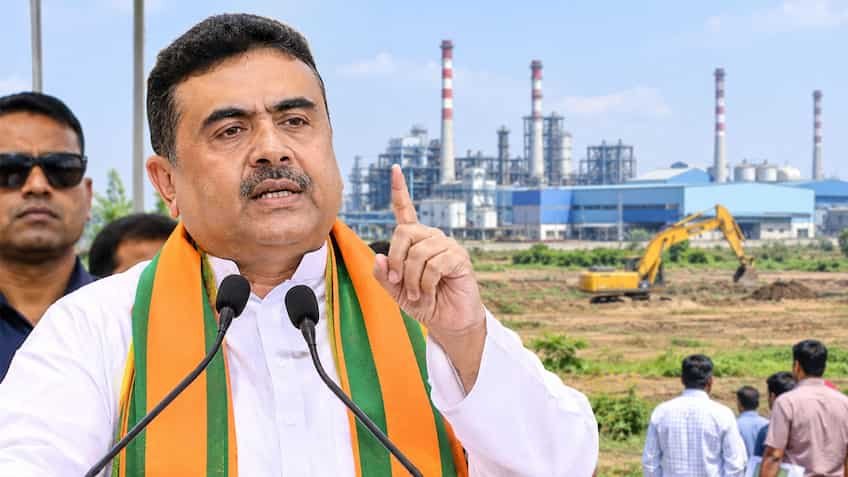
A historic and epoch-making change has begun in the industrial and economic scenario of West Bengal. The government has approved a new and practical formula regarding ‘Land Acquisition Policy’, which has been the biggest obstacle in the path of industrialization in the state for years. Under the new system, the state government will not forcibly acquire the land of any farmer or land owner for industries, but will directly purchase land from the land owners at market rates through transparent negotiations. By combining these purchased plots, a huge, certified and transparent ‘Land Bank’ will be created across the state. The history of West Bengal is witness to the fact that after the Singur and Nandigram movements, land acquisition in the state had become a highly sensitive, political and legal dispute. But now with this new model of the government itself purchasing land by acting as an intermediary between industrialists and farmers, on one hand the land owners will get proper and immediate compensation for their property, on the other hand, legally safe, dispute-free and ready land will be available to domestic and multinational companies for setting up factories.
In the new industrial and investment policy of West Bengal, it has been made clear that police force or pressure tactics will never be used to acquire land in the state. In the past, land was acquired by the then governments under the Land Acquisition Act 1894 despite the reluctance of farmers, leading to violent confrontations and legal litigation. After this, there came a long period when the government completely withdrew from acquiring land for industry, due to which the industrial development of the state and employment of youth had to suffer. The new policy offers a balanced solution between these two extreme paths. In this, the government has made it clear that it will neither resort to lathicharge nor leave the industrialists alone to negotiate land directly with the farmers. Instead, the administration itself will sit at the table with the land owners and carry out ‘consent based direct purchase’, which will completely curb the arbitrariness of middlemen and local syndicates.
The biggest land challenge for industries in the state has been that large plots of land are not available here at once, rather the land is divided into small pieces. To deal with this problem, the system of ‘Land Pooling’ and consolidation has been added in the new policy. Under this, an integrated big industrial plot will be created by merging small plots. Apart from this, strict rules have been made to prevent irresponsible use of land and land holding. Under the policy, if a company or investor takes concessional or acquired land from the Land Bank, it will be mandatory for him to start commercial production in the factory within a maximum of 3 years of allotment of land. If work does not start on the land within the stipulated time frame, the government will have full legal right to take that land back into its possession, so that the land is not misused and only genuine employment generating industries can flourish.
To attract investors, the government will not only buy land, but will also prepare a modern GIS-based Inventory based digital map of the entire land bank. Under this system, any investor sitting from any corner of the world will be able to see through online single window portal how much land is available in which district, sub-division or industrial corridor of the state, what is the situation of electricity and water there and how is the connectivity with the nearest national highway or port. After submission of application, Letter of Intent and allotment of land will be done through digital medium within the stipulated time. This will provide relief from years of visiting government offices and red tape. In the policy, priority is also being given especially to brownfield re-development i.e. reusing unused land of old closed mills and factories.
The state government aims to attract new private investment of more than Rs 1 lakh crore in the next few years on the back of this new land bank and investment promotion policy. The government has identified specific ‘thrust sectors’, which include semiconductors and electronics, green hydrogen, electric vehicles (EV) and battery manufacturing, defense equipment, biotechnology, pharmaceuticals, specialty steel and logistics. Investors setting up factories in these high-tech areas will be given financial assistance ranging from 100% to 120% on the investment made in plant and machinery, rebate in electricity duty and interest subsidy. Besides, a unique provision of reimbursement of up to 100% of EPF contribution has also been made for MSME units employing women and transgender workers.
This new model of direct procurement will provide solid economic security to land owners and local villagers at multiple levels. First of all, the land compensation will not be given at any old government circle rate, but directly into the bank account keeping in mind the current market value and welfare standards of the Central Land Acquisition (LARR Act). Second, the sale of land will be completely voluntary, that is, the land will be taken only from those farmers who wish to sell on their own free will. Third, skill development centers and new employment opportunities will open for the local youth in the industrial parks to be prepared. The development of new land banks around major industrial hubs like Kolkata, Durgapur, Asansol, Siliguri, Kharagpur and Haldia will provide a boost to the rural and semi-urban economy of the entire state, thereby once again establishing West Bengal as the country’s leading manufacturing and employment generation hub.