 look news india

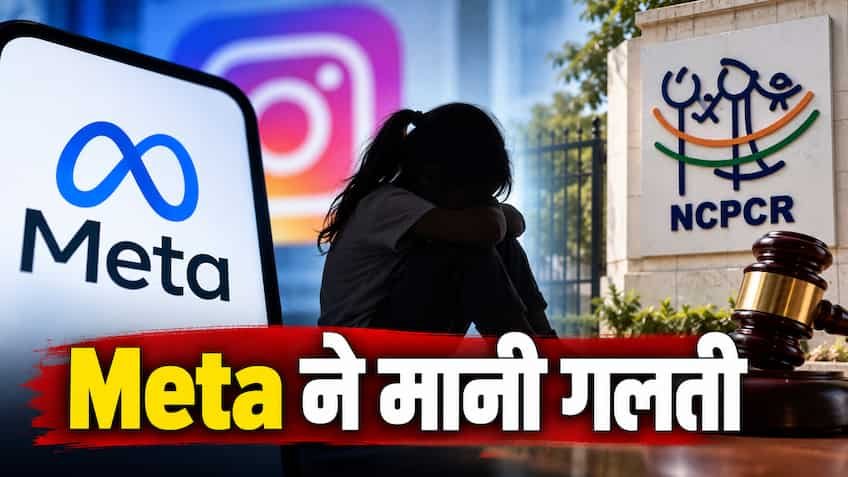
Social media giant Meta has admitted its mistakes in advertising and recommendation algorithms related to child sexual exploitation and abuse material (CSEAM/CSAM). After a strict investigation by the National Commission for Protection of Child Rights (NCPCR) and repeated summons, top officials of Meta India appeared before the Commission and admitted that there had been lapses at the platform level. After this historic turn, the company has given official consent for direct reporting of cases related to child protection and sexual exploitation on the portal of Indian Cyber Crime Coordination Center (I4C) working under the Ministry of Home Affairs, Government of India.
This is being considered a major victory for online child safety by the Government of India and child rights protection bodies. Till now, Meta did not send such sensitive cases directly to the Indian police or agencies but to the US-based organization National Center for Missing and Exploited Children (NCMEC), due to which a lot of time was wasted in reaching the information to the Indian law enforcement agencies. Now this entire process is being made straightforward, immediate and transparent.
This whole issue started after an international media investigation (BBC Eye) revealed that sponsored advertisements were running on Instagram which were using objectionable keywords related to child sexual abuse. Through these advertisements, users were being directed to Telegram channels where illegal content was being sold and shared. Additionally, concerns were raised that Meta’s Reels and video recommendation system was amplifying such content.
As soon as the matter came to notice, the Ministry of Electronics and Information Technology (MeitY) and NCPCR took a strong stand. The commission issued a notice to Meta on July 3 and sought a detailed reply. After not getting a satisfactory solution from Meta, the Commission took strict action and personally summoned Arun Srinivas, Managing Director and Head of Meta India. During the hearing, government officials and the Commission made it clear that online safety of children is a fundamental and ‘non-negotiable’ principle, which cannot be compromised under any circumstances.
During this investigation, the Central Government has also clarified a very important policy stance. According to government sources, Meta can no longer be considered merely an impartial ‘intermediary’, as its algorithms decide which user will see which content and how much reach that content will get. When algorithms are promoting or amplifying content, the platform completely takes on the role of a ‘service provider’.
Under Section 19 of the POCSO (Protection of Children from Sexual Offenses) Act, it is legally mandatory for any person or institution having information or suspicion of a child sexual abuse offense to immediately inform the local police or juvenile police unit. Till now Meta did not hand over the data directly to the Indian police citing its US legal system. The government clearly believes that when platforms are running commercial profits and advertisements, they cannot escape legal accountability and criminal action.
The launch of direct reporting of cases by Meta on the I4C portal (cybercrime.gov.in) will provide a tremendous boost to India’s criminal investigation machinery.
In the earlier system, when Meta identified any objectionable account, post or video, the report was sent to the American NCMEC. From there, this information would reach the police of the concerned state after several months through the nodal channel of Interpol or Central Bureau of Investigation (CBI). Taking advantage of this lengthy process, criminals either erase their digital footprints or change their locations. Now with Meta submitting reports directly to I4C, state police, cyber cell and child protection units will be able to instantly trace IP addresses, device locations and mobile numbers and arrest criminals red-handed.
This decision of Meta is not going to be limited to just one company, but it is a strong message for all the big social media platforms operating in India like X (Twitter), Telegram, YouTube and Snapchat. The government has made it clear that strict punitive action will be taken against any digital platform that violates child safety standards.
Meta’s consent is the first step in this direction, but the Indian government has also reiterated that companies will not have to be limited to just reporting, but they will have to create proactive systems to block such content even before it is uploaded to the platform, using AI and machine learning tools.