 look news india

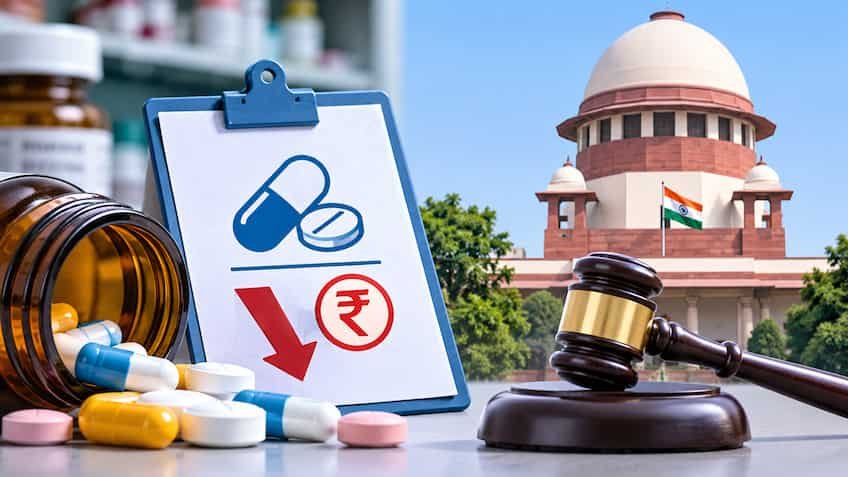
The Supreme Court of the country has made a very harsh comment on the unbridled profits of private pharmaceutical companies which are draining the pockets of crores of patients suffering from serious diseases in the country. While hearing a PIL filed in the Supreme Court against the exorbitant Maximum Retail Price (MRP) of life-saving drugs and unfair trade margin charged by the companies, the Chief Bench expressed deep displeasure over the lax attitude of the Central Government. During the hearing, such shocking documents and figures were presented before the court, where the drugs used in cancer, heart disease and serious infections, whose actual manufacturing and procurement cost is only ₹ 120 to ₹ 150, are being sold by drug manufacturing companies in the open market by printing an MRP of ₹ 1,200 to ₹ 1,300. On this, the Justice Bench slammed the government and asked a direct question that when the poor and middle class people are becoming indebted under the heavy bills of medicines, then what was the government doing to control this trade margin for so many years?
During the hearing, the Supreme Court, citing the ‘Right to Life and Health’ provided under Article 21 of the Constitution, said that providing life-saving medicines at affordable rates is the first constitutional responsibility of any welfare state. The court observed that when a patient is hanging between life and death in the hospital, his attendants have no other option but to pay the exorbitant amount demanded by the chemist. The bench asked the government in strong words whether the officials realize that keeping a trade margin of 800% to 1000% on medicines is a direct manipulation and exploitation of the general public? The court orally recorded that files have been being shuffled around for decades in the name of policy meetings and formation of committees, but at the ground level, patients have not been able to get any concrete legal relief.
The entire drug pricing structure in the pharmaceutical industry is mainly divided into two categories:
-
Scheduled Drugs: There are more than 900 medicines under the National Essential Medicine List (NLEM), the ceiling price of which is fixed by the National Pharmaceutical Pricing Authority (NPPA) through the ‘Drug Price Control Order’ (DPCO). Companies cannot increase the rates on these medicines arbitrarily.
-
Non-Scheduled Drugs: Non-scheduled and branded generic drugs account for about 80% of the country’s total pharmaceutical market. As per the current rules, there is no strict government price cap on these medicines; Companies are free to increase prices by a maximum of 10% a year.
-
Open game of margin: To attract wholesalers, distributors and hospitals, pharma companies keep the ex-factory price of the medicine at ₹ 100 or ₹ 120, but put a printed MRP on it at ₹ 1,300. After this, hospital or medical store operators buy the medicine in bulk for ₹ 150 and sell it to the patient for ₹ 1,300. The net profit of Rs 1,150 goes into the pockets of the hospital, distributor and middlemen.
The lawyers appearing for the petitioner told the court that the government itself had constituted several high-level task forces and expert committees regarding ‘Trade Margin Rationalization’ (TMR) in the pharma sector in the year 2016 and even thereafter.
-
Recommendation of Committees: These government committees had clearly recommended that the trade margin on non-scheduled life saving drugs should be maximized from the first point of sale to the final consumer. 30% to 50% Should be limited within the scope of.
-
Effect was seen in cancer medicines: When the government capped the trade margin on 42 non-scheduled anti-cancer drugs at 30% as a pilot project a few years ago, the MRP of those drugs fell by a whopping 85% to 90% and patients were left with hundreds of crores of rupees.
-
Why not stop other medicines: The court asked that when this formula was completely successful in cancer medicines, then why did it take so many years for the government to implement it compulsorily in the entire country on common life-saving medicines like diabetes, BP, kidney, liver and antibiotics?
Law officers appearing for the central government tried to assure the court that the government is making continuous efforts to control drug prices and through the Pradhan Mantri Bharatiya Jan Aushadhi Kendras, 50% to 90% cheaper generic medicines are being provided across the country. The government argued that India is the pharmacy of the world and while imposing price controls in the pharmaceutical sector that employs millions of people in the country, the quality of drug manufacturing, international cost of raw materials (API) and huge investment in new research (R&D) also have to be kept in mind. If very stringent price caps are imposed, many multinational companies may stop manufacturing or supplying essential medicines in India.
The apex court, which seemed completely dissatisfied with the government’s explanation, made it clear that business profiteering can never be above the health of the common citizen. The Supreme Court has given strict instructions to the Ministry of Chemicals and Fertilizers (Department of Pharmaceuticals) of the Central Government and the NPPA to file before the court a time-bound and concrete action plan to rationalize the trade margin and put a legal check on the MRP of non-scheduled drugs. The court warned that if the government does not take immediate action at the policy level, the Supreme Court will be forced to intervene directly in public interest and issue necessary directions.