 look news india

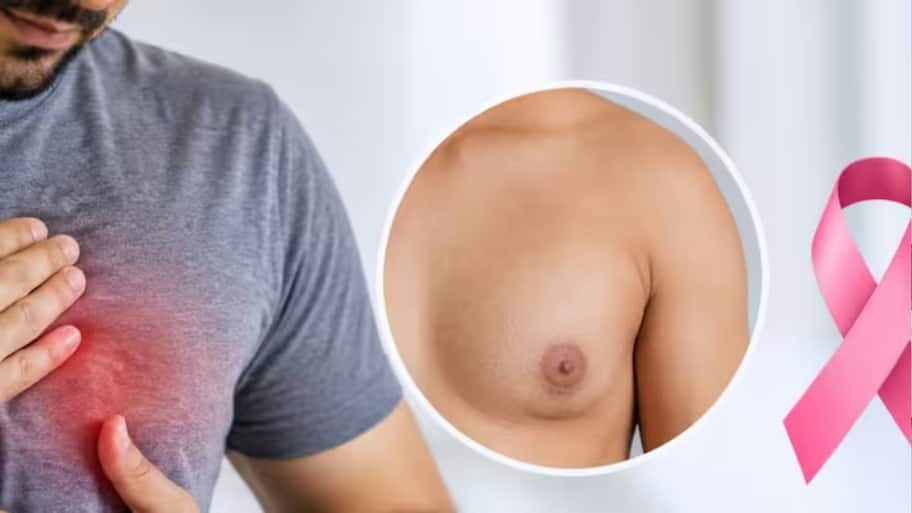
Generally breast cancer is considered to be a disease related only to women, but according to medical science this perception is completely wrong. Although the disease is relatively less common in men than in women (about 1 percent of all breast cancer cases), the risk of it being fatal is much higher in men. The biggest reason for this is lack of awareness. Men often ignore any lump, pain or skin change in the chest for a long time considering it to be normal fat, gym injury or the effect of aging. By the time they reach the oncologist or surgeon, the cancer has reached an advanced stage. With timely identification of symptoms and proper testing, successful treatment of breast cancer is possible even in men.
The amount of breast tissue in men is much less than that of women. Because of this, whenever a tumor grows, it can spread very quickly to the chest muscles and nearby lymph nodes. If any of the following signs appear in the body, a doctor should be contacted immediately:
-
Hard lump in the chest or near the nipple: Its most primary symptom is the feeling of a painless, hard lump just below or around the nipple in the chest. This lump feels hard to touch and does not move.
-
Changes or sinking in nipples: A sudden turning of the nipple inwards (inverted nipple) or change in its direction can be a serious warning.
-
Discharge from the nipple: Any kind of fluid, watery discharge or bleeding from the nipple can be a clear symptom of cancer.
-
Changes in skin texture: Dimpling, orange peel-like skin, redness or flaky skin.
-
Swelling in the armpit: Swelling of lymph nodes near the armpit or collarbone or the appearance of a small lump there.
Every man has a limited amount of breast tissue at birth. When there is an imbalance of hormones in the body or a genetic mutation occurs, these cells start dividing uncontrollably. Its major risk factors include:
-
growing old: This cancer can occur at any age, but its risk is highest in men aged 60 to 70 years.
-
Genetic and Family History: If any woman or man in the family has previously had breast or ovarian cancer, the genetic risk increases. especially BRCA1 And BRCA2 This risk is several times higher in men with gene mutations.
-
Estrogen hormone imbalance: Increasing level of female hormone (estrogen) and decreasing level of male hormone (testosterone) in the body becomes a major reason. This may be due to liver cirrhosis, hormonal therapy, or genetic conditions such as Klinefelter Syndrome.
-
Obesity and sedentary lifestyle: Excessive obesity increases fat tissue in the body, which triggers the production of estrogen.
-
History of Radiation: If you have had radiation therapy for any other disease around the chest in the past, your chances of developing breast cancer in the future increase.
Often men get scared after seeing the enlarged bulge in the chest. In most cases, the bulge in the chest in men is ‘gynecomastia’, which is a completely benign (non-cancerous) condition. Gynecomastia occurs equally in both breasts due to hormonal changes and the tissues feel soft and slightly spongy.
In contrast, breast cancer usually occurs only on one side (in one breast), feels hard as a stone, and does not slide easily under the skin when touched. However, any suspicion cannot be determined by physical touch alone; medical examination is mandatory.
If a man feels any lump or abnormal change in the chest, the first thing a doctor recommends is ultrasound, mammography and biopsy (FNAC or core biopsy). Through biopsy it is ascertained whether the cells are cancerous or not.
Once cancer is confirmed, the treatment plan is decided based on the stage and grade of the disease:
-
Surgery (Mastectomy): Since men have less breast tissue, the affected tissue and nearby lymph nodes are completely removed through surgery.
-
Hormone Therapy: Most male breast cancers are ‘hormone receptor positive’, so medications (such as tamoxifen) block estrogen to prevent the cancer from regrowing.
-
Chemotherapy and Radiation: In high-risk cases or to prevent cancer from spreading, surgery is followed by radiation and chemotherapy.
Men should give up hesitation or shame about their physical health and consult a doctor immediately if they notice any kind of lump, because cancer caught at an early stage can be completely cured.