 look news india

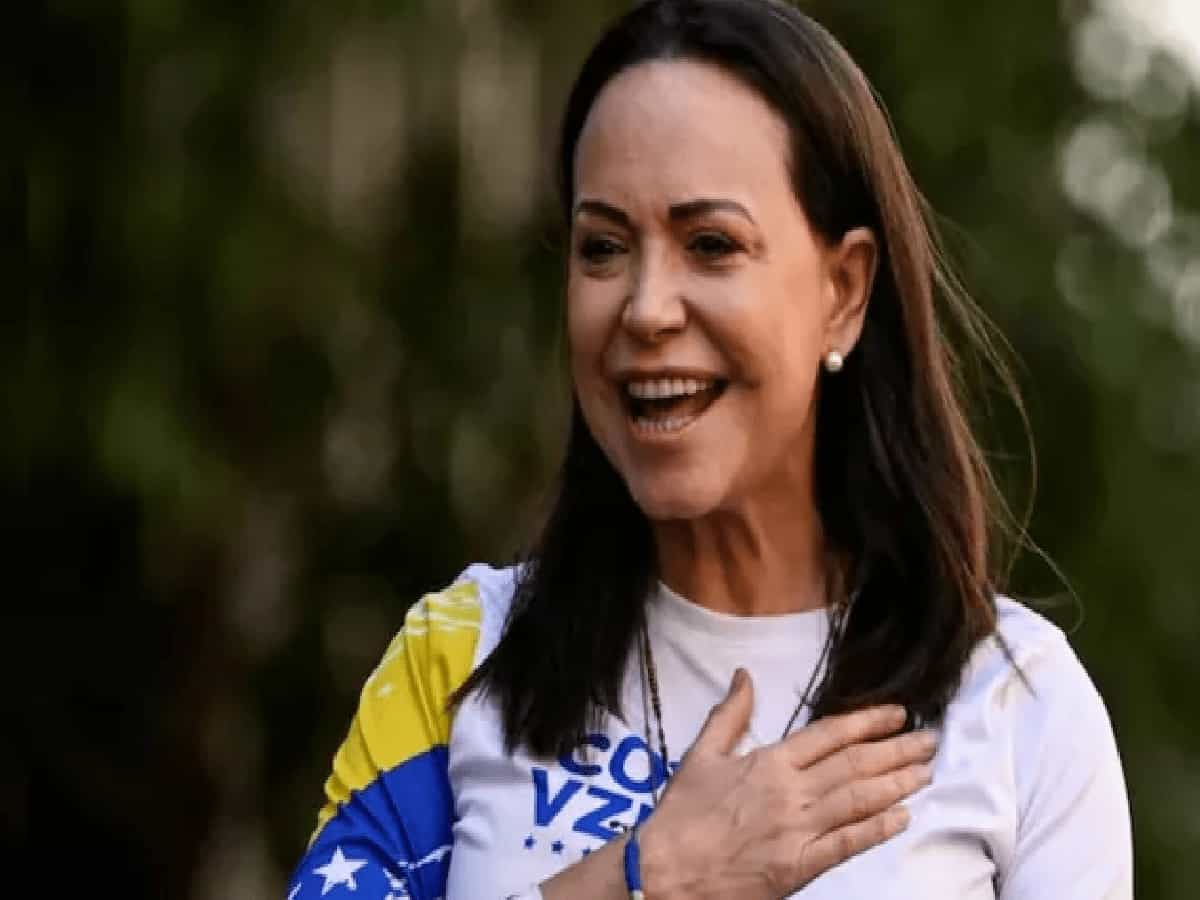
Venezuela, the center of Latin American politics, witnessed a major diplomatic turn when the country’s most influential opposition leader and Nobel Peace Prize winner Maria Corina Machado made a historic return to her homeland on Sunday. His secret and unexpected return after being out of the country for nearly twelve months has sparked widespread discussion in national and international circles. This step is being considered among the opposition alliance and their supporters as an important milestone towards the restoration of democratic institutions and independent political process in the country.
There were long speculations in the political circles whether Machado would be able to step onto her soil safely amid the current circumstances. His chief spokesman David Smolyansky formally confirmed this development, calling it the basis for a peaceful, transparent and genuine change of power in the country. He clarified that Machado’s presence will give unprecedented energy to the people’s movement to hold free and fair presidential elections in the near future.
Maria Corina Machado’s recent political journey has been full of challenges, dangers and personal risks. Machado, who had been a strong thread for the entire Venezuelan opposition for the past three years, had to face severe repression during the rule of former President Nicolas Maduro. He spent months in hiding at undisclosed locations within his own country, avoiding arrest by government agencies and arbitrary legal trials. Despite living underground, he continuously raised his voice among the public and created global public opinion against election rigging.
Last year, when it was decided to honor him with the prestigious Nobel Peace Prize for his unique contribution to human rights, civil liberties and peace, he had to go to the international stage to receive this global honour. During that time he was formally forced to live outside the country’s borders. Despite living in exile, she continued to raise the ground reality of Caracas prominently in international forums and expressed her views strongly from Latin American countries to the United Nations.
Venezuela’s geopolitical landscape changed rapidly when a major strategic development unfolded in Caracas in January this year. There was a huge international uproar after the capture of Nicolas Maduro by US agencies. However, contrary to the expectations of democracy supporters, with the support of the US administration, the reins of power were handed over to Delcy Rodriguez, also associated with the Maduro administration, as acting president.
Since this decision, there has been a clear uneasiness and policy tension between Machado and American diplomats. Machado has always believed that the system will not change merely by changing faces, rather the sovereign power will have to be decided by the common people of Venezuela through their franchise. Even during this period of diplomatic tension, she repeatedly reiterated that she would return to her country and fight on the ground for a free referendum and democratic elections.
Recently, in an interview given to the leading international newspaper New York Times, Machado had made his intentions completely clear. When she was asked when she would return to Venezuela, she said with great confidence that her return home would be much sooner than anyone expected. Her statement proved to be true on Sunday when she posted a short but very emotional message on the social media platform X, in which she wrote that she is back and standing among her people.
Soon after this message, his political party made public his latest photographs from a local church in Venezuela’s Lara state. In these pictures, Machado can be seen praying with local citizens and giving the message of peace. These authentic scenes confirmed his safe arrival and filled a new enthusiasm within his supporters spread across the country.
Machado’s return comes at a time when all of Latin America is eyeing the next political steps in Caracas. Political analysts from the capital Caracas to Bogota and Washington believe that Machado’s physical presence will prevent disintegration of the opposition and the pressure on the ruling party to conduct fair elections will increase manifold. Ordinary citizens, who have been struggling for years with economic crisis, inflation and humanitarian tragedies, are seeing this return as the beginning of a new democratic dawn.
However, the road ahead will not be easy. Security threats, the establishment’s strict rules and ensuring the fairness of the upcoming elections will prove to be a complex challenge for Machado. Despite this, by returning to his soil he has given a clear message that the future of Venezuela will no longer be decided in closed rooms, but with the open participation of the public.