 look news india

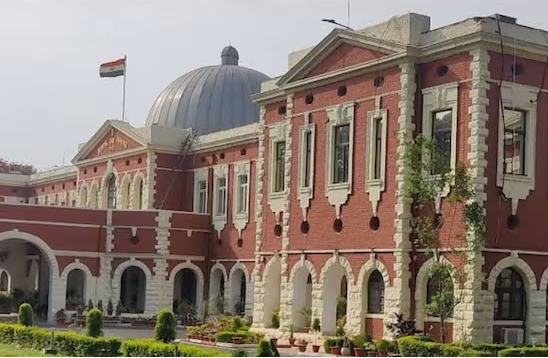
A very unique, jurisprudential case full of historical and legal precedents has come out from the Jharkhand High Court, which has started a new debate on the legal world and judicial process of the entire country. The High Court has acquitted an accused, who had been sentenced to life imprisonment by the lower court in a sensational murder case years old, and declared him completely innocent. The main and turning point behind the overturning of this entire decision was the legal interrogation of the accused in English language by the court and the serious procedural lapse in recording the statement under Section 313 of the Code of Criminal Procedure (CrPC). The division bench of the High Court made it clear in its decision that if a rural or less educated accused cannot understand the language in which he is being asked questions, then it will be considered a direct violation of the principles of natural justice.
This legal battle started after a bloody incident in a rural area of Jharkhand, where the accused was accused of serious murder by assault. Based on the charge sheet submitted by the local police and the statements of witnesses, the trial court (lower court) had convicted the accused under section 302 (murder) of the Indian Penal Code (IPC) and sentenced him to life imprisonment and fine. The accused was serving his sentence behind the bars for the last several years. The accused’s advocate filed a criminal appeal in the Jharkhand High Court against this decision of the lower court. It was argued in the petition that during the hearing in the lower court, the accused was not given a fair and reasonable opportunity to present his explanation, which raises questions on the fairness of the entire trial.
When the division bench headed by Justice Jharkhand High Court took an in-depth look at the case file and records of the trial court, a very shocking thing came to light. The provision of Section 313 of the Code of Criminal Procedure (CrPC) (now under the Indian Civil Protection Code) is very important in the Indian criminal justice system. Under this, it is the constitutional duty of the court to present all the prosecution evidence against the accused in the language he understands and ask him his side. The High Court found that when the statement of the accused was being recorded in the trial court under Section 313, all the complex questions asked to him were completely prepared in English language. The accused came from a typical rural background and was completely unable to read or understand even a single word of the English language.
While hearing the appeal, Jharkhand High Court made very strict and scathing remarks on this functioning of the lower court. The High Court said that asking questions of an accused in a language he does not know is not just a technical error, but it is a direct violation of the fundamental right to a fair trial. When the accused will not be able to understand the essence of the evidence and allegations presented against him, then how will he be able to give the correct answer in his defence? The High Court underlined in its order that fairness in criminal trials and giving full opportunity to the accused to express his views is the soul of our justice system. If the process itself gets corrupted, then the life sentence given on its basis cannot be justified and valid.
Not only were there lapses in language in the case, but the High Court also found many contradictions in the statements of witnesses and the forensic evidence presented by the prosecution. The court held that when the basic legal procedure was not followed in recording the statement under Section 313 and the key evidence also lacked links, then the award of life imprisonment passed by the trial court was not sustainable in the eyes of law. Giving the benefit of doubt, the court completely set aside the punishment order of the lower court and issued an order to immediately release the accused in jail. This judgment once again proved how much procedural justice matters in the Indian judiciary.
This historic decision of Jharkhand High Court has emerged as a big example and lesson for all the lower courts of the country. The Supreme Court and various High Courts of the country have for a long time been insisting that court proceedings and especially the statements of the accused should be recorded in their local or mother tongue so that the ends of justice can be served. In today’s era of digital and Generative AI, where instant translation of legal documents is possible, it is worrying that such linguistic and procedural lapses lead to violation of the fundamental rights of an innocent or an accused. This decision of the High Court not only brought the message of freedom for the accused, but it also put a stamp on the necessity of language accessibility and transparency in the justice delivery system across the country.