 look news india

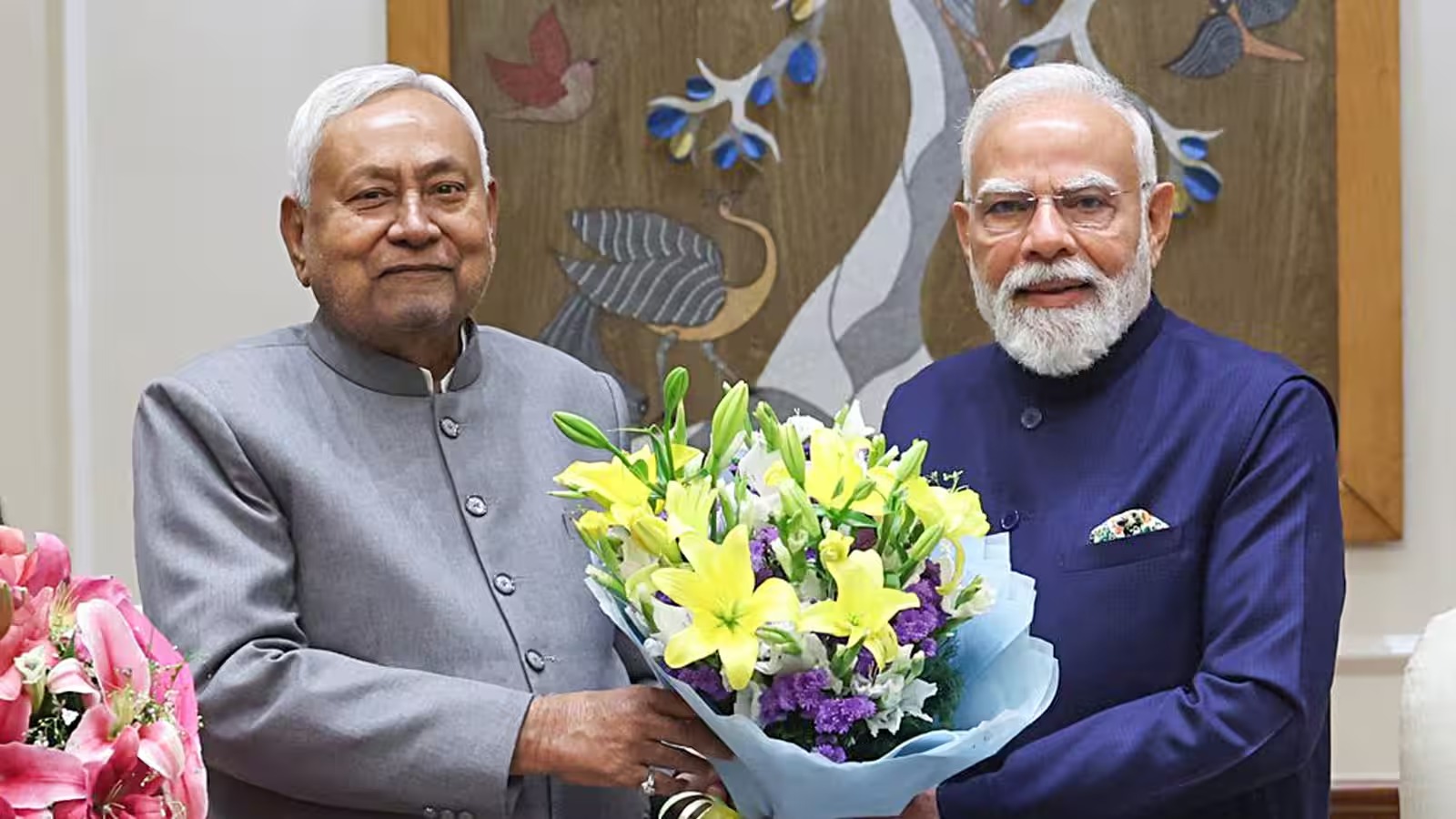
The history of Coalition Politics in Indian politics has always been interesting, full of ups and downs and sometimes full of contradictions. Whenever parties with ideologically different or opposing views join hands in the political arena of the country, the lesson of ‘Alliance Dharma’ is taught. Especially the relationship between BJP and Janata Dal United (JDU) within the National Democratic Alliance (NDA) has been the most vivid example of how two parties sometimes become each other’s biggest political opponents and after some time they come together again and start running the government. The coming and going of leaders between these two parties, changing sides and changing their statements and principles according to electoral needs has become such a hallmark of Indian political culture that the general public is often forced to think how much value is left in principles in politics.
The history of relations between BJP and JDU has been a witness to the fact that there have been many leaders between the two parties who have been changing sides from time to time, sensing the direction of the wind. When both the parties come together, they praise each other’s policies, and as soon as they part ways, the same leaders start making sharp political attacks on each other. This is not just a game of personal ambitions of the leaders, but a huge electoral mathematics works behind it. In order to solve caste equations in the politics of Bihar, there is constant movement of leaders, sometimes within the NDA and sometimes in the Grand Alliance camp. Even if the message is given among the public that all this is happening for public interest and development, but in reality it is a well-thought-out strategy to gain power and preserve one’s political existence.
Political analysts believe that in today’s era, ideological purity and ideological commitment have been left behind and the only goal remains to win elections. The BJP has had a clear ideological identity and nationalist agenda, while the JDU has long framed its politics under the banner of socialist ideology and social justice. Despite this, whenever it comes to solving power equations, both the parties put aside all ideological differences and come on one platform. Such agreements may provide short-term political stability, but in the long run it weakens the democratic culture and public trust. When the same leader, whom he was criticizing a few months ago, is seen contesting elections tomorrow on the ticket of the same party, then it is natural for the common voter to develop distrust in the system.
In today’s time the term ‘coalition religion’ is limited to speeches and press conferences only. The tussle over seat distribution at the time of elections, the internal strategies against each other and the governments formed out of compulsion after the results are declared are proof that this relationship rests only on the balance of power. As the political situation changes in the coming times, it cannot be denied that this movement of leaders between BJP and JDU or in the broader political scenario will continue like this. However, the public is now watching these political dramas very closely and is fully prepared to respond to these maneuvers through their votes in the coming elections.