 look news india

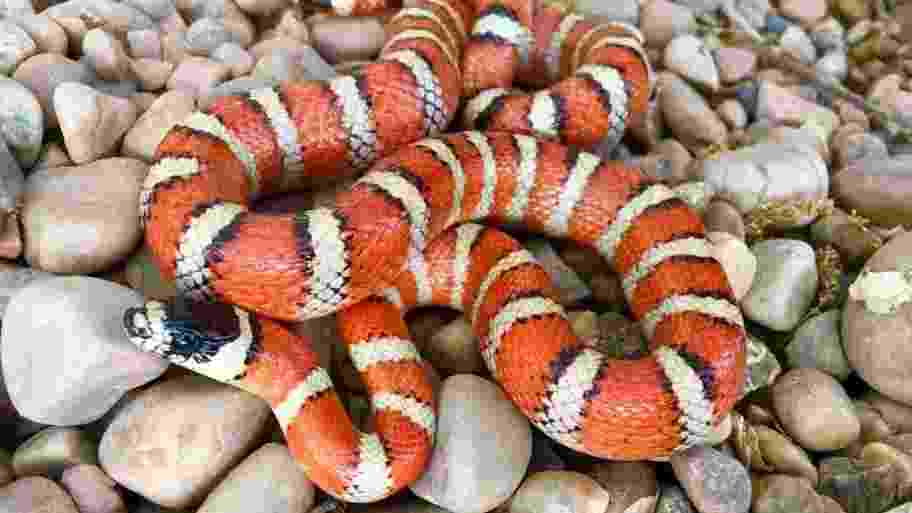
A very pleasant news has emerged for wildlife lovers and scientists from Dudhwa Tiger Reserve located in Lakhimpur Kheri, Uttar Pradesh. The rare ‘Red Coral Khukri’ snake, known for its unique structure and bright red colour, has once again been seen crawling in the forests. The appearance of this rarely seen creature has become a matter of curiosity and joy for the forest department and researchers. According to experts, the presence of this species is a great proof of the healthy ecosystem of Dudhwa.
First seen in 1936, seen again decades later
According to historical documents, this species was first recorded in the forests of Dudhwa in the year 1936. After this, it remained completely hidden from human sight for many decades. After a long gap of almost 80 years, it was seen near the railway track in the South Sunaripur range of Dudhwa Tiger Reserve. The reappearance of this creature in the forests proves that the biodiversity and natural habitat here are completely safe.
Khukri-like teeth and non-poisonous nature
The biggest feature of the Red Coral Khukri snake is its uniform bright coral red color, which makes it completely different from other snakes. Its teeth are slightly curved, whose shape is like the traditional Nepali dagger ‘Khukri’, hence it is named Khukri. Although people get scared after seeing its bright red color, experts say that this snake is completely non-venomous. It does not cause any harm to humans and its main food is lizards, small insects and other creatures.
remains active in the dark of night
This snake is mainly a nocturnal creature, which hides in dry leaves, bushes or cracks in the ground during the day. As soon as night falls, it comes out in search of food, which is why it is generally not visible to people. This rare species is found in limited numbers in the forests of Uttarakhand, Terai areas of Uttar Pradesh, Bihar, West Bengal and Nepal. Due to limited population it has been kept in the category of special protection.