 look news india

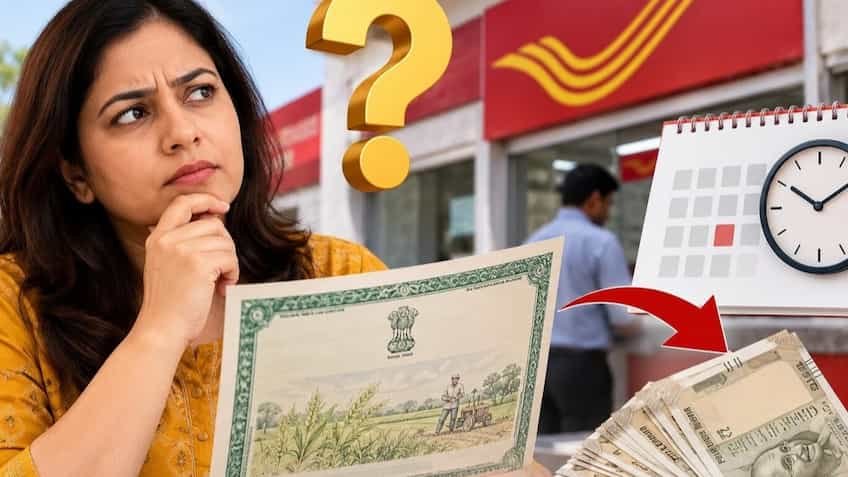
When it comes to safe investment and doubling of money within stipulated time, the name of Kisan Vikas Patra (KVP) scheme of India Post is taken first. But this question often arises in the minds of big investors, businessmen and people who get huge lump sum capital after retirement, can a huge amount like ₹ 1 crore really be invested in this government scheme? As per the official rules of Indian Post and Union Finance Ministry, the answer is yes. The minimum investment limit in Kisan Vikas Patra is fixed at ₹ 1,000 (and thereafter in multiples of ₹ 100), but there is no upper limit for maximum investment. This simply means that any eligible Indian citizen can invest an amount of ₹1 crore or more in KVP through a single account or separate accounts which are backed by the Sovereign Security Guarantee of the Government of India.
The Central Government has retained the annual interest rate of Kisan Vikas Patra at 7.5 percent (Annual Compounding) for the quarter October to December 2026. According to this 7.5 percent interest rate, your invested money doubles in exactly 115 months i.e. 9 years and 7 months. If you invest a lump sum of ₹1,00,00,000 (Rs 1 crore) in KVP this quarter, at the time of maturity on completion of 115 months you will get a total of ₹2,00,00,000 (Rs 2 crore), of which ₹1 crore will be your principal and ₹1 crore will be the net interest. The biggest feature of this scheme is that the interest rate and tenure decided at the time of investment is locked for the entire tenure, that is, even if the government reduces the interest rate in future, there is no impact on your certificate.
Even though the mathematics of making ₹2 crore by investing ₹1 crore in KVP may sound very attractive, it is very important to understand the income tax rules before investing, as these affect your actual earnings. Unlike PPF or Sukanya Samriddhi Yojana, investing in Kisan Vikas Patra does not provide any tax exemption under Section 80C of the Income Tax Act. Apart from this, the entire interest earned from KVP is also taxable and tax is collected as per your income tax slab by adding it under ‘Income from Other Sources’. If you fall in the 30 per cent tax slab, the tax payable on interest on ₹1 crore could be more than ₹30 lakh. Although it is a matter of relief that TDS is not deducted on maturity by the post office, but it is mandatory for the taxpayer to give information about the accrued interest every year in his Income Tax Return (ITR).
Before locking a big capital like ₹1 crore in KVP, assess your liquidity needs. Under normal circumstances KVP has a mandatory lock-in period of 2 years and 6 months (30 months). You cannot withdraw money before the completion of two and a half years, except in case of death of the account holder or there is a court order. After two and a half years (30 months), you can get premature closure of the account, but in such a situation you do not get the full 7.5 percent interest, but interest is paid at a lower rate as per the prescribed table. However, instead of breaking the KVP in case of emergency, you can avail the facility of taking loan at low interest rate by pledging it in any bank or financial institution.
KVP certificate can be purchased from any post office or authorized bank branch in the country including Lucknow, Delhi, Mumbai, Patna and Jaipur. Under the rules, any Indian resident aged 18 years or above can open a joint account either as a single or with a maximum of three adults. Apart from this, a parent or guardian can open an account on behalf of a minor, and a minor of 10 years of age or above can also operate the account in his own name. Keep in mind that Non-Resident Indians (NRIs) and Hindu Undivided Families (HUFs) are not eligible to invest in this scheme. If you are going to invest more than ₹50,000 (e.g. ₹1 crore), it is mandatory to submit Aadhaar card, PAN card, passport size photograph as well as documents proving the source of income (e.g. copy of bank statement, salary slip or ITR) as per KYC norms, and the payment is accepted only through cheque, demand draft or digital transfer.