 look news india

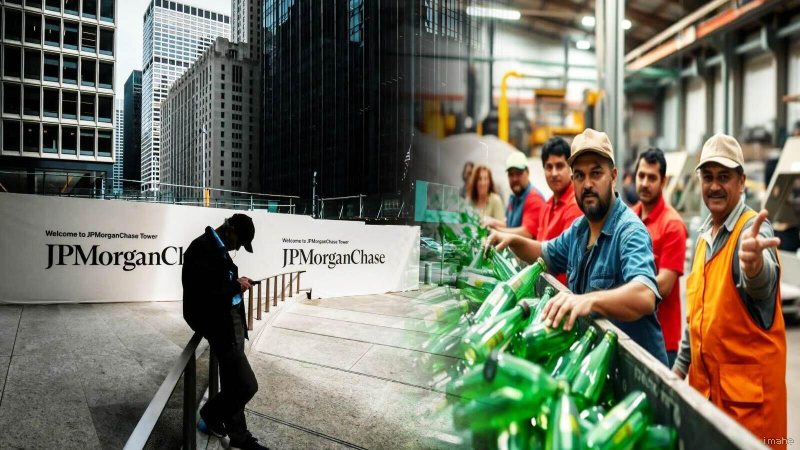
On the lines of Make in India and Waste to Wealth, a historic and revolutionary change is now being seen in the field of construction work all over the world. The new 60-storey skyscraper of JPMorgan Chase, considered the world’s most modern and eco-friendly in the Manhattan area of New York City, America, has set a new record in the world of architecture and science. Not only were any common construction materials used in building this giant tower, rather more than 3 crore (about 2.9 crore) waste and thrown glass bottles have been successfully used in it, setting an example of environmental protection. This project is a testament to how waste can be transformed into strong and sustainable infrastructure through modern technology and scientific thinking.
In today’s era, when the whole world is struggling with serious problems like global warming and climate change, carbon emissions from the construction sector are becoming the biggest challenge. The production of conventional cement and concrete releases massive amounts of carbon dioxide gas which causes huge harm to our environment. To overcome this challenge, a unique approach was taken in the construction of JPMorgan’s new headquarters (270 Park Avenue). Engineers and architects worked together to use ground-glass pozzolan, a fine powder of recycled glass, as an alternative to traditional portland cement. Through this technology, about 40 percent of the traditional cement used in the construction of buildings was replaced with only ground glass. By doing this, not only thousands of tons of dangerous carbon emissions were prevented, but the bottles thrown as waste were also saved from going to the landfill.
This question is bound to arise in the minds of common people that can a material made of glass give as much strength to a building as traditional concrete? Explaining this technical and scientific aspect, structural engineers said that when fine powder of recycled glass is added to the mixture of concrete and water, a special chemical process starts in it. The reactive silica in the glass combines with calcium hydroxide, a byproduct of concrete hydration, to form a dense and strong network of calcium-silicate-hydrate. This main compound gives concrete its ultimate and exceptional compressive strength. According to engineering reports, using this special mixture of glass not only increased the structural strength of the tower manifold, but also brought unprecedented improvement in the durability and moisture resistance of the concrete.
The construction of this grand 60-storey commercial skyscraper spread over 22 lakh square feet has attracted the attention of the entire global construction industry. Due to the adoption of environment friendly measures during this project, more than 5,000 tonnes of carbon dioxide emissions were directly prevented from being released into the atmosphere in the initial stages of construction work. Additionally, the light color of this special glass-based concrete reflects sunlight more than normal brown concrete. Due to this quality, heat absorption on the surface of the building is reduced, due to which the inside temperature is controlled and the energy consumption spent on cooling is also reduced significantly. This green building architecture is also proving to be very helpful in reducing the effect of urban heat island in the future.
The success of this magnificent building of JP Morgan has forced other states and transportation authorities of America to think afresh. In large areas such as New York and Connecticut, the use of ground-glass pozzolana is now officially preferred for public highways, railway infrastructure, and other large commercial projects. This is a clear indication that if modern science, public interest and environmental protection work together, even seemingly impossible goals can be easily achieved. This historic building built from three crore glass bottles proves that our future rests on the shoulders of recycling, sustainability and green technology.