 look news india

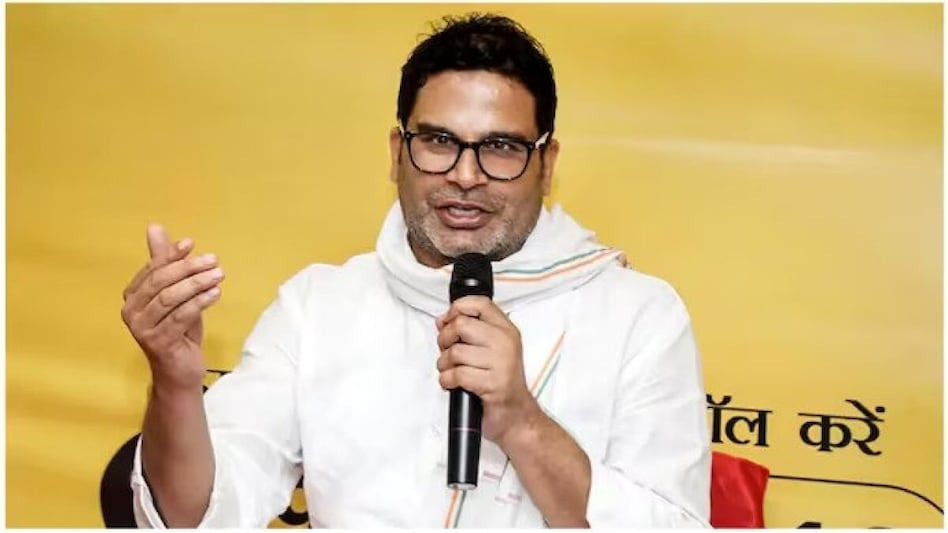
In the country’s politics, the person whose political experiments have made the most headlines in the last few years is election strategist turned politician Prashant Kishor. Prashant Kishor, who brought almost all the big parties of the country to the throne of power on the basis of his unique strategies, has now started making inroads from Bihar to Uttar Pradesh and other neighboring states to prepare his own political ground. At present, a new word is becoming increasingly popular in the political circles, which has been named ‘Prashant Kishor Syndrome’. This simply means that the traditional political parties are now scared of how a new political organization without any old traditional base is directly making inroads among the people and attracting the youth, intellectuals and educated class towards itself. In this sequence, now a huge development has come to light on the political scene of Uttar Pradesh, where Jan Suraj’s entry on the important seats of the Legislative Council i.e. MLC in the teacher and graduate constituencies has given sleepless nights to the mainstream political parties.
Jan Suraj’s stake on 8 seats of teacher and graduate quota of Legislative Council
In the politics of Uttar Pradesh, Teacher and Graduate MLC constituencies of the Legislative Council have always been considered safe forts of traditional parties like Bharatiya Janata Party (BJP), Samajwadi Party (SP) and Congress. Instead of the general public, teachers, professors, educated youth, lawyers and government and non-government employees, who are considered to be extremely ideologically conscious, vote on these seats. Till now, the contest on these seats was usually confined between BJP and SP, but now with Jan Suraj announcing his strong entry on these 8 seats, the entire electoral equation has suddenly changed. People associated with the working style of Prashant Kishor and representatives of his organization are now directly contacting the educated class and teachers in these areas, due to which the ground seems to be slipping from under the feet of the political stalwarts who have been established for years.
Special strategy to break into the vote bank of traditional parties
Political analysts believe that this strategy of Prashant Kishor is very thoughtful and far-reaching. Traditional political parties often revolve their politics around caste, religion and emotional issues, but the entire focus of ‘Jan Suraj’ is based on education, employment, system change and intellectual discussions. The voters of the teacher and graduate constituency are not traditional voters of any party, rather they decide their vote by closely reviewing the administrative policies of the state, shortcomings of the education system and employment opportunities. Jan Suraj fielding his candidates on these 8 seats and building a strong intellectual network at the grassroots level has increased the concern for both BJP and Samajwadi Party, because this is the same vote bank of the educated class which once played the biggest role in deciding the direction of governance.
Far-reaching impact on upcoming elections and political future
In the politics of Uttar Pradesh, the elections for these Legislative Council seats may not be fought on such a large scale as the Assembly elections, but their ideological impact goes far. If this new political experiment of Prashant Kishor succeeds in making its place among the educated and elite class of Uttar Pradesh, then it will prove to be a big wake-up call for other political parties in the times to come. Mainstream parties are now realizing that the public is not going to be satisfied with just slogans, but they need a grassroots and transparent alternative. Only time will tell in which new direction this effect of Prashant Kishor ‘Syndrome’ will take the politics of Uttar Pradesh in the coming days, but it is certain that this new entry has raised serious questions on the working style of the established political parties and has made the contest very interesting.