 look news india

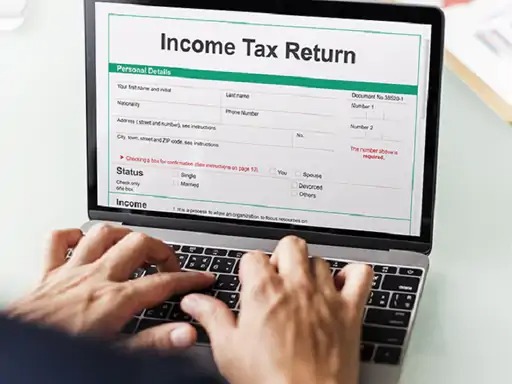
The process of filing Income Tax Returns (ITR) for the financial year 2025-26 (Assessment Year 2026-27) has started in full swing across the country. The last date for filing returns without any late fees for general employed and individual taxpayers has been fixed as July 31, 2026. At the same time, for business class and some taxpayers falling under the scope of audit (ITR-3 and ITR-4), this deadline is 31 August 2026.
If you miss the July 31 deadline, you will have until December 31, 2026, to pay the penalty and file a ‘belated return’. Remember, your ITR is not just a government formality, but the biggest official proof of your entire annual income, investments and major financial transactions.
The tax department is keeping an eye on your every earning through AI and data analytics.
In today’s digital era, the Income Tax Department is using Artificial Intelligence (AI) and advanced data analytics extensively. The department already has complete data about your bank accounts, TDS, stock market and mutual fund investments, purchase and sale of property and even your foreign trips through various portals. This data is matched with the ITR filed by you. In such a situation, a small mistake or hiding information can trap you in the trap of heavy tax demand, huge interest and penalty. According to tax expert and CA Anand Jain (Intaur), you should keep these 10 very important things in mind while filing ITR:
1. Don’t rely only on Form 16, show other income also
Often salaried people feel that the information given in Form 16 received from the company is final. But Form 16 only gives details of your salary and TDS deducted on it. If you have earned profit from fixed deposits (FD), RD, interest from savings account, dividends from companies, house rent, freelancing, shares or mutual funds, then definitely include it in ITR.
2. Choosing the right ITR form is the first step
Selecting the wrong form may result in your return being declared ‘defective’ (invalid), which would mean that you have not filed your return legally. Choose the right form as per your source of income:
-
ITR-1 (Spontaneous): This is only for those earning income from salary, pension, a house and simple interest.
-
ITR-2: If you have made capital gains (profit from selling shares/property), own more than one house or have foreign assets.
-
ITR-3: For those in business, freelancing, F&O trading or intraday trading in stock market.
-
ITR-4 (Sugam): It is for small traders and professionals with presumptive income.
3. Matching of AIS, TIS and Form 26AS is very important
Before submitting your return, be sure to download Form 16, Form 26AS, Annual Information Statement (AIS) and Taxpayer Information Summary (TIS) and reconcile your income. If any difference is found between the data entered in these and your return, the tax department can immediately ask for clarification (notice). If any wrong transaction is visible in AIS, then file a complaint for rectification by giving feedback on it on the portal itself.
4. Changed job in the middle of the year? then add both the salaries
If you have changed your job during the relevant financial year, then calculate the tax by adding the total salary received from both the old and new employers. Often people file returns only after seeing Form 16 of the new company, due to which less TDS is deducted and later they have to pay heavy tax and interest.
5. Fill correct and accurate bank account details for refund
It is mandatory to provide information about all your current and ongoing bank accounts in the ITR form. Enter the account number and IFSC code of the account in which you want to get your tax refund correctly and ensure that the account is validated with your PAN.
6. Don’t make the mistake of hiding interest income.
Many taxpayers have a misconception that if the bank does not deduct TDS on interest, then it is out of the scope of income tax. This is completely wrong. All the interest on FD, RD and savings account is directly recorded in your AIS, skipping which can cost you dearly.
7. Give complete details of sale of shares, mutual funds and property
Your demat account is directly linked to your PAN card, so every transaction in the stock market remains live on the screen of the tax department. Clearly show any long term or short term capital gain (or loss) incurred on selling shares, redeeming mutual funds or selling any land/house. Declaring a loss allows you to set-off it against future profits.
8. Do not claim fake deductions, keep documents safe
To avail savings and tax benefits, claim deductions like Section 80C, 80D (Health Insurance), NPS and home loan interest only if you have actually invested. Keep their valid documents and receipts safely, because the department can ask for their proof at any time.
9. Make full disclosure of foreign investments and foreign income
If you have invested money in shares of foreign companies, ETFs, foreign bank accounts or any international platform, then it is mandatory to give its details in ITR. Hiding foreign assets and income is considered a serious offense under the Black Money Act, especially for ‘Resident and Ordinary Resident’ (ROR) category taxpayers.
10. Don’t forget to do e-verification after filing returns
Many people get relieved after seeing ‘Return Submitted’ on the computer screen. Remember, the process is incomplete unless you e-verify your return. You can verify it instantly through Aadhaar OTP, Net Banking or Digital Signature. If verification is not done on time, your ITR will be considered cancelled.