 look news india

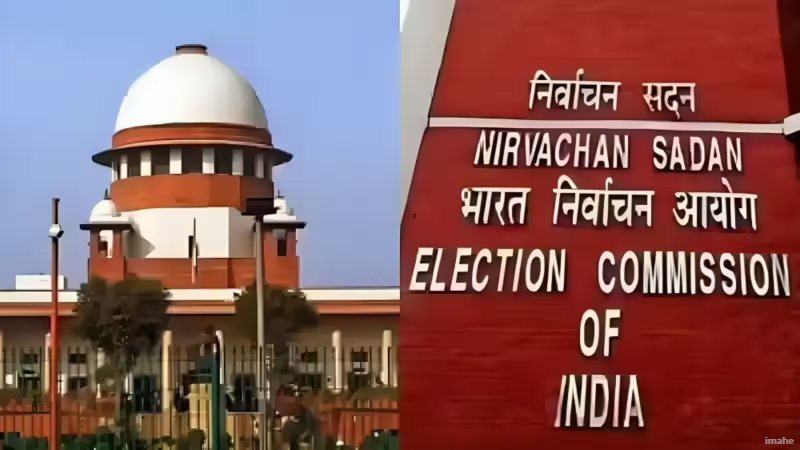
A very big and very shocking news is coming out from the Indian electoral politics and administrative corridors regarding West Bengal. During the Special Revision of Voter Lists or SIR process in West Bengal, names of about 37 lakh voters have been removed from the list, after which there has been a huge stir at the political and administrative level. According to the legal and administrative process that currently exists regarding the disposal of these deleted names and objections, if the hearing of the cases continues at a normal pace, it may take a long time of 12 years to dispose of all the remaining and disputed cases. Keeping this serious administrative crisis and court maneuvers in mind, the Election Commission of India (ECI) has now approached the highest court of the country i.e. the Supreme Court and has put forward a big demand, so that this delay can be reduced in time and election transparency can be ensured without any hindrance.
In a densely populated and politically highly sensitive state like West Bengal, the simultaneous exclusion of names of 37 lakh voters is no small matter. When door-to-door physical verification and data purification was carried out by Booth Level Officers and District Election Officers under the SIR process, a large number of voters were found who were either found dead, who had changed their permanent residence to other places, or in whose documents serious discrepancies were found. As per the rules, when a voter’s name is struck off or an objection is lodged, he has every right to file his appeal and provide valid proof of his citizenship or residence. Hearing such a huge number of objections and appeals has become a huge challenge for the existing administrative structure.
Why is the Election Commission worried about the possibility of it taking 12 years to resolve appeal cases?
It has been highlighted by the Election Commission before the Supreme Court that if these 37 lakh cases are heard one by one under the present legal and administrative procedures, it will take more than a decade i.e. 12 years. Keeping the cases of lakhs of voters pending unresolved for so long not only raises questions on the efficiency of the Indian electoral system, but is also against the basic spirit of democracy. The Commission believes that in a democracy, elections should be held on time and with complete transparency, and if the voter lists remain under controversy for so long, it may also have an adverse impact on the fairness of the upcoming local body and assembly elections. This is why the Election Commission has urged the court to expedite the process and issue special guidelines.
Reactions from the political parties of West Bengal have also started coming in on this entire matter. There has been a heated exchange of words between the state’s ruling party and opposition parties regarding this matter. Opposition parties allege that the deletion of names of such a large number of voters is a major attack on democratic rights and this would have resulted in the names of many legitimate voters also being left out of the list. On the other hand, the Election Commission and administrative officials say that this entire action has been taken within the ambit of the rules and in a completely transparent manner, the aim of which is only to make the voter list error-free so that the scope of any kind of fake voting can be completely eliminated.
Big demand of Election Commission in Supreme Court: What is the new proposal of the Commission?
To remove all these administrative and legal hurdles, the Election Commission has appealed to the Supreme Court to set up a special and speedy justice system or a system like fast-track tribunal to dispose of these appeals and cases. The Commission argues that unless special provisions are made for speedy disposal of cases, it will prove impossible to eliminate this huge backlog through traditional court and administrative processes. If the court gives green signal to this demand of the Commission, then the work of hearing and verification of these 37 lakh cases of Bengal will be completed in a very short time, due to which the voters will also get justice and the final publication of the voter list will also be possible as soon as possible.
The country’s top legal experts and constitutional experts are keeping a close watch during the hearing of this case in the Supreme Court. The court will decide that on one hand, protecting the voting rights of citizens is the highest priority under the Constitution, on the other hand, it is equally important to run the administrative system of the Election Commission smoothly. This decision of the court will not only impact the elections of West Bengal, but will also set a big legal precedent for any such major SIR or voter list revision process in other states of the country in the future, which will open new avenues of reform in the electoral system of the entire country.
Why is purification of voter lists and awareness of citizens very important?
This entire episode has once again underlined how conscious every citizen of the country should be about his voter identity and his records in the lists. It is often seen that people do not update their address changes or other details in the election office on time, due to which when such special revision drives are conducted, their names fall into the suspicious category. The Election Commission has been continuously appealing that all the eligible and living voters of the country should keep their digital documents updated from time to time along with Aadhar Card and other identity cards so that they do not have to face such administrative hurdles and troubles.
The decision about the future of these 37 lakh voters of Bengal now completely depends on the stand of the Supreme Court and the upcoming action plan of the Election Commission. As the judicial process in this case progresses, the debate related to the country’s politics and electoral reforms will become more intense. This initiative of the Election Commission proves how seriously the institutions are working to make the country’s democracy stronger, transparent and error-free. In the coming days, it will be very interesting to see what historic verdict the Supreme Court gives on this complex and sensitive issue, which will play an important role in deciding both the direction and condition of Indian democracy in the times to come.