 look news india

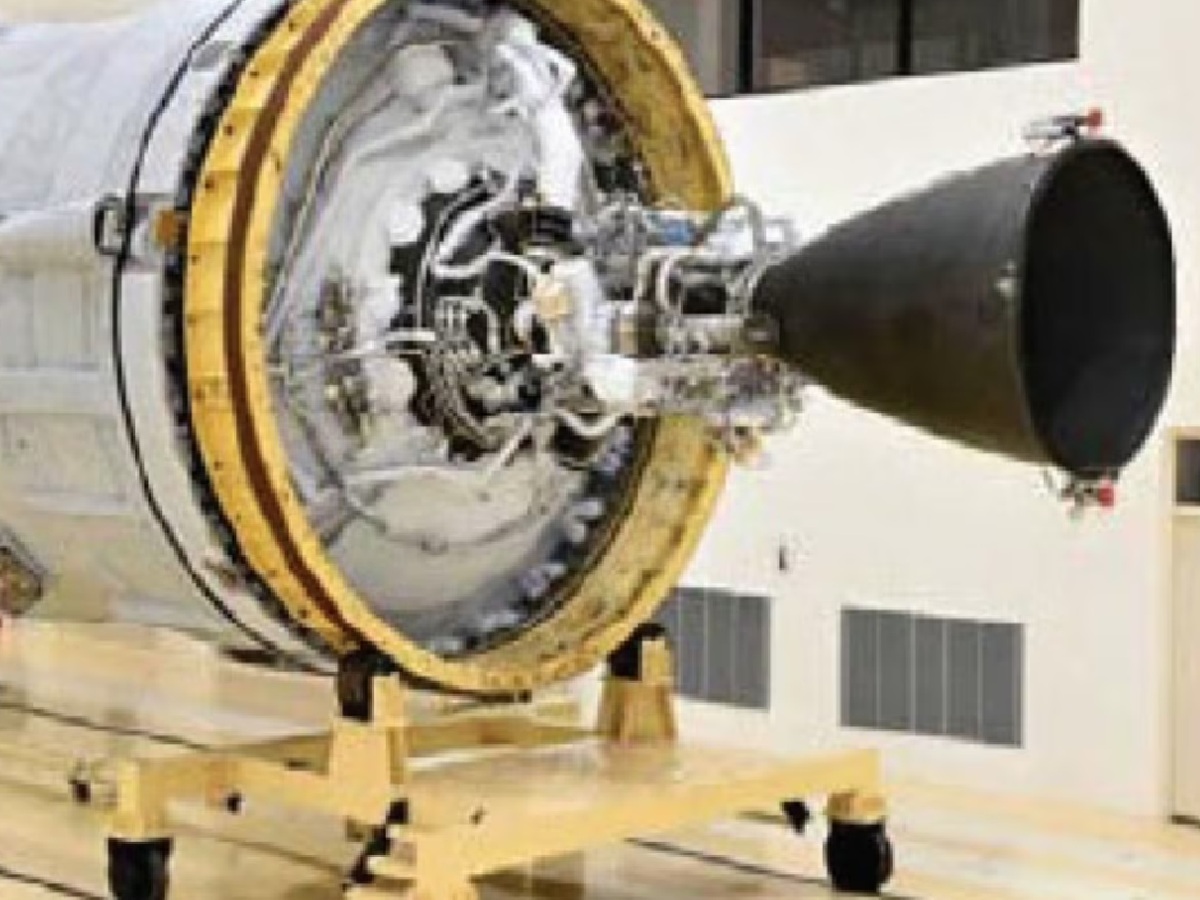
Indian Space Research Organization (ISRO) has achieved another historic and unprecedented milestone in its first manned space mission ‘Gaganyaan’ and upcoming heavy satellite missions. ISRO has successfully completed the final flight acceptance testing of the ‘CE-20 Cryogenic Engine’ scheduled for the seventh operational mission of the country’s most powerful and heaviest launch vehicle, LVM-3. Under this highly complex test conducted at ISRO Propulsion Complex (IPRC) located in Mahendragiri, Tamil Nadu, the engine has been tested for its lethality and reliability by operating it in realistic and adverse conditions before sending it into space.
‘Heart’ of the most powerful rocket: CE-20 engine will fly with the power of 22 tons
‘LVM-3’, which was known as ‘GSLV Mk-3’ in the past, is currently ISRO’s most reliable, heaviest and largest rocket. The main responsibility of pushing the upper and final stage of this powerful launch vehicle into the space orbit rests on this ‘CE-20 cryogenic engine’.
According to the official scientific report released by ISRO, this state-of-the-art engine has been fully certified and found to be safe to work at tremendous thrust (the tremendous force that propels the rocket) ranging from 19 tonnes to 22 tonnes. Let us tell you that this engine has already proved its superiority in eight consecutive successful missions including Chandrayaan-2, the historic Chandrayaan-3 and three major international commercial satellite missions.
Green signal given for Gaganyaan: It meets the stringent standards of human mission
The biggest feature of this recent test was that it was completely operated at a maximum thrust of 22 tons. ISRO scientists have confirmed that the engine has successfully passed all the stringent safety protocols, crew safety and technical reliability parameters required for the Gaganyaan Human Spaceflight Mission.
This simply means that when India sends its astronauts into space through the Gaganyaan module, then this indigenous CE-20 cryogenic engine will be completely ready to become the main backbone of the rocket.
What is the ground-breaking ‘NPS’ technology which appeared for the first time in the world?
During this final flight test, Indian space scientists successfully used a revolutionary technology, ‘Nozzle Protection System (NPS) for the first time. The nozzle of a rocket engine is the end through which extremely hot, compressed and extremely fast moving gases come out, which provides energy to the rocket to move forward. During testing, the part is subjected to extreme pressure and temperature, which can damage it.
This new NPS technology completely protects the nozzle from thermal and structural damage during testing. This system greatly simplifies complex tests by artificially creating airless and extremely low pressure space conditions, especially on the Earth’s surface, such as ‘High Altitude Conditions’. With its help, ISRO will now be able to easily carry out long-running engine tests with very limited resources and at low cost.
Successful explosion of ‘SOLVE’ solid motor also: Crew module will return safely
This success of ISRO is not limited to cryogenic engines only. To make the Gaganyaan mission 100 percent safe, ISRO has recently conducted the first successful ground test of the powerful solid fuel rocket motor of ‘Solve’ (Sub-Orbital Launch Vehicle for Experiments).
The main scientific objective of this specific solid motor test is to safely return the ‘Crew Module’ carrying our astronauts to the Earth’s atmosphere during any emergency in space or after mission completion and to check its precise landing. These continuous successes have proved that India’s Gaganyaan mission is now just a few steps away from hoisting the tricolor in space.