 look news india

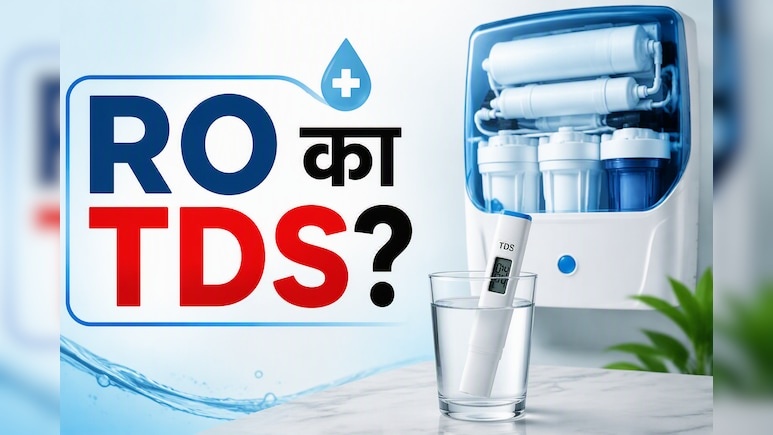
Nowadays, RO (Reverse Osmosis) water purifier is used in almost every house to clean drinking water. However, it is not enough for water to be clean, it is equally important to have the right balance of minerals essential for the body. ‘TDS’ i.e. Total Dissolved Solids is the main parameter to measure the quality of water. Water contains essential minerals like calcium, magnesium, potassium and sodium as well as many types of dissolved salts. If the TDS of your RO is too high, then the water can be harmful for health, whereas if the TDS becomes too low (Demineralized Water), then the water becomes ineffective and tasteless for the body.
How to check water purity at home in minutes with digital TDS meter
You do not need to call any expert to check the TDS of your house’s RO. Digital portable TDS meters are easily available in the market or online platforms at very low prices. To test the water, first fill a glass or clean plastic glass with water from your RO purifier. After this, remove the cap of the TDS meter and press the ON button. Now dip the sensor part of the meter in water to a depth of 2 to 3 cm. Within a few seconds, a number will appear on the digital screen, this is the TDS level of your water. According to the World Health Organization (WHO) and the Bureau of Indian Standards (BIS), the ideal TDS of drinking water is considered to be between 150 to 300 milligrams per liter (mg/L).
When to service your RO purifier? Know these 4 main warning signs
Often people wait for the RO to break down, while the purifier already starts giving many signs that it needs servicing:
-
Change in taste and smell of water: If the taste of water starts appearing bitter, strange or tasteless, then understand that its filters have fulfilled their purpose.
-
Slowing down the speed of water filtration: If your RO tank is taking much longer than usual to fill, it means that the sediment or pre-carbon filters are completely blocked with dust and dirt.
-
Strange noise or leakage from the purifier: If there is a loud gurgling noise from the RO motor or water starts leaking from the bottom, it is a signal to call a mechanic immediately.
-
Excessive Waste Water: If there is much more reject water flowing from the drain pipe than pure water, the RO membrane is damaged.
Rules and health safety for changing filters at the right time
According to health experts, to avoid harmful bacteria and heavy metals present in water, the external pre-filter of RO must be changed every 3 to 6 months. At the same time, it is mandatory to change its internal sediment and carbon filter once a year. If the supply water in your area is very hard, then it is better to change the RO membrane every 1.5 to 2 years. Periodic servicing not only increases the life of the RO purifier but also ensures that the family members get pure, mineral-rich and healthy drinking water every day.