 look news india

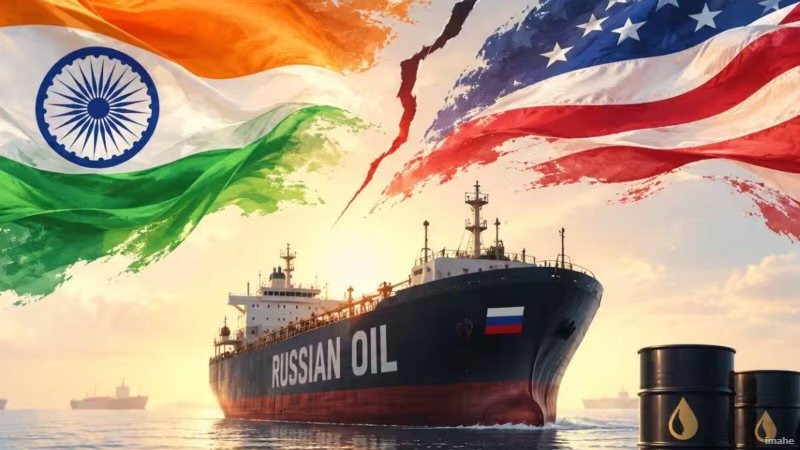
The turmoil in international politics and global energy markets has reached its peak at this time. The whole world is once again keeping a close eye on India’s import policy and diplomatic decisions. Russia is increasingly being hit with tough sanctions by the US and Western countries following the protracted Russia-Ukraine conflict. In this sequence, the proposal and warning by the US administration to impose heavy tariffs, i.e. up to 100 percent, on the import of Russian goods and energy products has further increased the geopolitical temperature. Is India now going to put brakes on the import of Russian crude oil by making changes in its energy basket or will India find a new way by giving priority to its energy security? Let us understand in depth every aspect of this very important and sensitive economic-political issue.
Ever since the military conflict between Russia and Ukraine began and Western countries imposed economic sanctions on Russia, there was a huge surge in crude oil prices in the global market. In that critical situation, Russia had offered to provide crude oil to India at discounted rates. India took advantage of this opportunity keeping in mind its huge population and increasing energy needs and within no time Russia became India’s largest crude oil supplier. In the last few years, India imported huge quantities of crude oil from Russia, saving billions of dollars. While this step was criticized by Western countries, the Indian government clearly said that the interests of the country’s citizens and energy security is its top priority.
Now new and strict measures are being taken by America and its allied countries to tighten the economic screws against Russia. There is talk from American policy makers of targeting such countries which continue to import Russian oil or products on a large scale. Strict warnings such as 100 percent tariffs are intended to force countries to reduce their dependence on Russian energy. Amidst this geopolitical pressure, Indian refineries and policy makers have once again faced a big challenge of striking a diplomatic balance. Market experts believe that if strict tariff rules are strictly implemented, India may be forced to rethink its import strategy.
The entire attention of international energy markets and analysts is now focused on the coming month of November. The orders and contracts placed by Indian oil companies for the November consignment will decide where India is going to move for its energy needs in the future. Will Indian companies bow to possible pressure from America and Western countries and reduce oil imports from Russia or will they continue business while maintaining their strategic autonomy? The November procurement figures will give a clear picture of what the future course of India’s energy diplomacy is going to be.
India is the world’s third largest energy importer, with more than 80 percent of its crude oil needs met through imports. Availability of fuel at affordable rates is essential to control inflation and maintain the pace of industrial development in the country. If cheap oil from Russia is stopped or heavy tariffs are imposed on it, India may have to turn to other alternative sources in the Middle East, Latin America or the US, which may increase fuel costs. However, India’s Ministry of External Affairs and Ministry of Petroleum have always proven that it is adept at striking a diplomatic balance while keeping national interests paramount. It will be very interesting to see in the coming weeks how India deals with this global pressure and what impact it has on November purchases.