 look news india

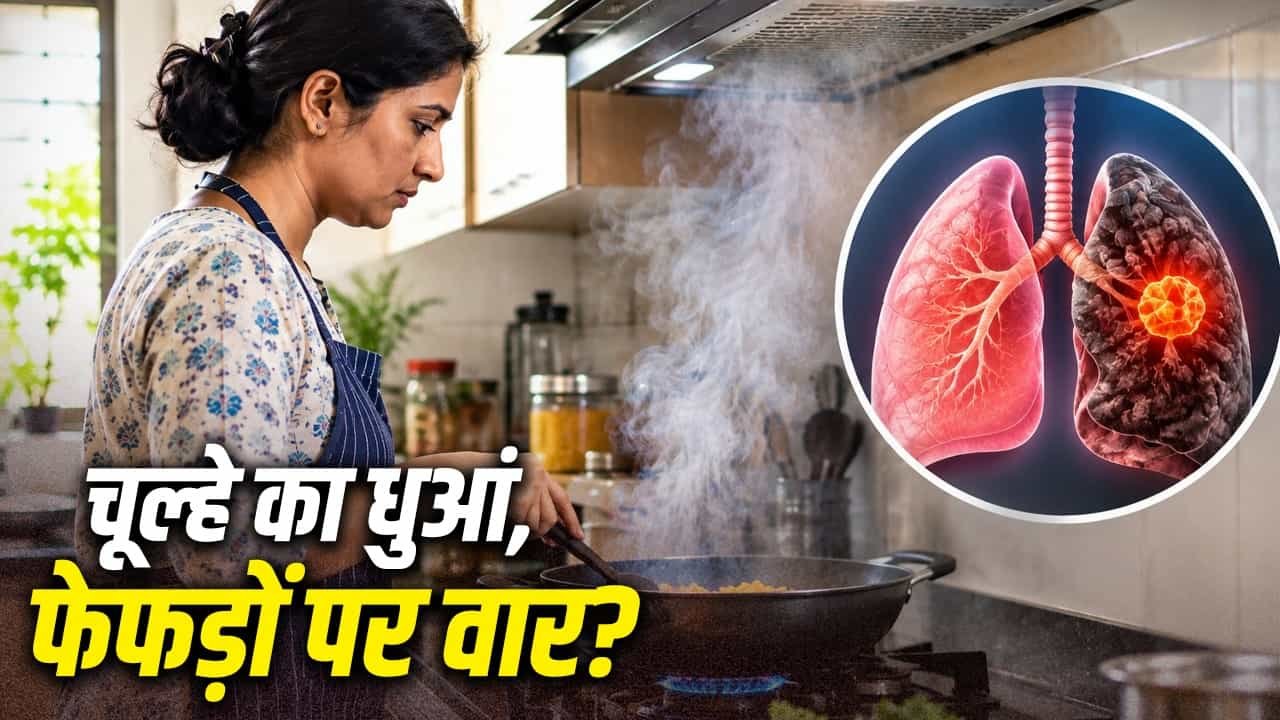
For decades, there has been a common belief about lung cancer that this disease affects only those who consume beedis, cigarettes or tobacco excessively. But the medical data that has emerged in the last few years is extremely shocking and worrying. A large proportion of women who reach hospitals for treatment of lung cancer are housewives who have never touched a cigarette in their life. Medical oncologists and pulmonologists are warning that the ‘silent killer’ present within the walls of the house, i.e. indoor pollution, is harming the lungs of women in the same way as it harms the lungs of a person who smokes 15 to 20 cigarettes a day.
The practice of frying, deep frying and heating oil on high flame is common in the cooking style of Indian homes. When mustard oil, refined or ghee is heated above its smoking point, they break down and release hazardous chemicals like polycyclic aromatic hydrocarbons (PAH), crylene and volatile organic compounds (VOCs) into the air.
When women cook food standing for hours every day in small kitchens without adequate exhaust or chimney, this poisonous smoke reaches the depths of their lungs through direct inhalation. Due to exposure to this poisonous oil smoke and fine particles (PM 2.5) for years, mutation starts occurring in the DNA of the lung cells, which gradually takes the form of Adenocarcinoma i.e. lung cancer.
In India’s tier-2, tier-3 cities and rural areas, wood, coal, cow dung cakes and kerosene oil are still used in many homes for cooking. The thick black smoke emitted from biomass fuel is full of carbon monoxide, sulfur dioxide and carcinogenic (cancer-causing) fine particles.
According to the World Health Organization (WHO) report, spending three to four hours a day surrounded by biomass fuel smoke causes lung damage equivalent to smoking 40 cigarettes a day. Due to lack of proper ventilation in kitchens, this smoke accumulates inside the house, due to which the lungs of housewives become prematurely weak and susceptible to cancerous changes.
The second biggest deadly threat for women working at home is ‘second hand smoke’ or passive smoking. When a family member (husband, father-in-law or son) smokes beedi or cigarette while sitting inside the house, 80 percent of that smoke remains floating in the air of the room.
Side-stream smoke from the burning end of a cigarette contains higher concentrations of toxins such as ammonia, carbon monoxide, and benzene than smoke inhaled directly. Women who stay at home throughout the day continuously inhale this unwanted smoke, due to which the layers of their lungs get damaged. Apart from this, nicotine (third hand smoke) accumulated on sofas, curtains and walls also keeps the air of the house polluted for a long time.
Houses built in modern flat culture and cramped residential colonies do not have proper arrangements for natural sunlight and fresh air. Regular use of mosquito coils, scented incense sticks, room freshener sprays and chemical-laden floor cleaners in sealed rooms takes the indoor air quality index (AQI) to dangerous levels.
Sleeping with a mosquito coil burning in a room overnight releases about as much particulate matter into the air as the smoke of 100 cigarettes. In many old buildings, invisible ‘radon gas’ emanating from basements or walls also accumulates in sunless houses, which is considered to be the second leading cause of lung cancer in non-smokers.
Lung cancer in women is often diagnosed in the third or fourth stage, because its initial symptoms—such as persistent cough for more than three weeks, shortness of breath, heaviness in the chest, frequent bronchitis or pneumonia, and inexplicable weight loss—are ignored by them as normal tiredness or seasonal allergies.
To avoid this serious danger, some precautions are very important:
-
Make sure to install a chimney with high suction capacity or a powerful exhaust fan in the kitchen and keep the windows open while cooking.
-
Do not burn cooking oils repeatedly on very high flame until smoking occurs and avoid reusing frying oil.
-
Strictly prohibit any member from smoking inside the house.
-
Instead of burning incense sticks or mosquito repellent coils in closed rooms, use mosquito nets or natural remedies.
-
If persistent cough does not go away or you feel difficulty in breathing, immediately consult a chest physician and get a low-dose CT scan (LDCT) done.