 look news india

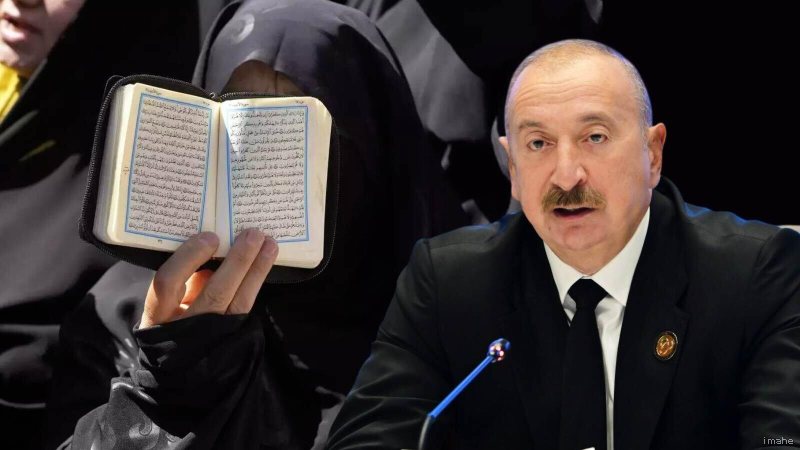
The tension regarding religious freedom and secularism has once again reached its peak in the political circles of Central Asia and the Middle East. The government of Azerbaijan has decided to completely ban the wearing of hijab and religious attire by female students in all public and private schools of the country. As soon as this decision came to light, there was a sharp reaction in the Muslim majority neighboring countries. Initially some religious organizations of Turkey had opposed this move, but now the extremist and fundamentalist groups of Iran have jumped into this controversy and heated the atmosphere even more. Senior religious leaders and fundamentalist leaders of Iran have strongly condemned this decision of Azerbaijan, calling it a ‘satanic step’ and calling it a direct attack on Islamic culture. Azerbaijan government’s big step towards secularism Azerbaijan has long been trying to establish itself as a modern, progressive and secular nation. The country’s Education Ministry has issued an order to implement uniform dress code in schools. The government argues that the environment of educational institutions should be completely neutral, where there should be no display of any religion, caste or privilege. Officials believe that not including hijab or head covering in the school uniform for girls will develop a sense of equality among all students. However, this decision has already caused discontent among conservative families at the domestic level and has now taken the form of an international diplomatic dispute. Turkey’s initial reaction and Iran’s aggressive stance When Azerbaijan announced this sanction, murmurs first started in Türkiye’s conservative and Islamic circles. Many religious groups in Türkiye called it against the sentiments of the Muslim community. However, the Turkish government officially adopted a fairly measured stance, given its strategic and diplomatic relations with Azerbaijan. But in the case of Iran the situation was completely different. The fundamentalist class of Iran has termed this decision as a decision taken directly under the influence of Western countries and Israel. Religious preachers in Tehran and other major Iranian cities have stepped up their rhetoric against Azerbaijan’s president and his government, widening the already existing geopolitical rift between the two countries. Iranian religious leaders attacked by calling it a ‘satanic step’. Iran’s top fundamentalist leaders and religious congregations have used fatwa-like language against this law of Azerbaijan. Statements published prominently in Iranian media said that preventing girls from wearing hijab in any Muslim country is a violation of God’s orders and is a ‘satanic step’. Iranian analysts claim that the government of Baku is conspiring to erase the religious identity of the majority Shia citizens of its own country. There are not only religious reasons behind Iran’s aggressive stance, but also its long-standing desire to maintain its influence in the region, which is constantly being challenged by Azerbaijan’s pro-Western and secular policies. Cross-border diplomatic tensions and impact on regional security Relations between Azerbaijan and Iran have been quite sensitive over the past few years. Azerbaijan’s growing closeness and strategic partnership with Israel has always been an eyesore for Iran. Now this new issue of hijab ban has brought the diplomatic bitterness between the two countries to a new level. Azerbaijan’s Interior Ministry and security agencies have tightened security to deal with any type of Iran-backed protests or anti-social activities within the country. Baku administration clearly states that Azerbaijan is a sovereign nation and will not tolerate interference of any outside country in its internal affairs and education policy. New debate on human rights and religious freedom: This entire incident has given rise to a new debate among human rights activists and civil society at the global level. On one hand, a section of human rights groups are seeing this as a violation of individual freedom and religious rights, while on the other hand, supporters of secularism believe that it is very important to keep schools free from religious symbols to prevent fundamentalism and promote scientific approach. European countries and the United Nations are also keeping an eye on how the Azerbaijani government maintains a balance between demands for religious freedom and its secular policies. Future path and impact on public opinion: This bold but controversial decision of Azerbaijan may have an impact on other countries of Central Asia in the future. While on one hand the young generation and modern thinking citizens of the country are considering this step of the government as progressive, on the other hand there is resentment among rural and traditionally religious families regarding this. Despite pressure from powerful neighboring countries like Türkiye and Iran, the Azerbaijan government seems to be firm on its decision. It will be interesting to see how the Baku administration pursues its policies amidst international pressure, rhetoric from neighboring countries and domestic public sentiments.