 look news india

The decades-long Indus Waters Treaty (IWT) dispute between India and Pakistan has once again taken a new turn. Despite all the decisions of the Permanent Court of Arbitration and the international diplomatic pressure strategies being continuously imposed by Pakistan, India has made it clear that it will completely give priority to its national interests in this matter. India has completely rejected those proceedings and objections of the International Court in which there was talk of changing the treaty or third party arbitration. New Delhi’s stance is very clear that no external or international court order can be forcibly imposed on India on sensitive issues like the Indus Water Treaty. This blunt policy of India has once again proved that it is not ready to compromise with its strategic and water security interests under any circumstances, due to which Islamabad’s problems are continuously increasing.
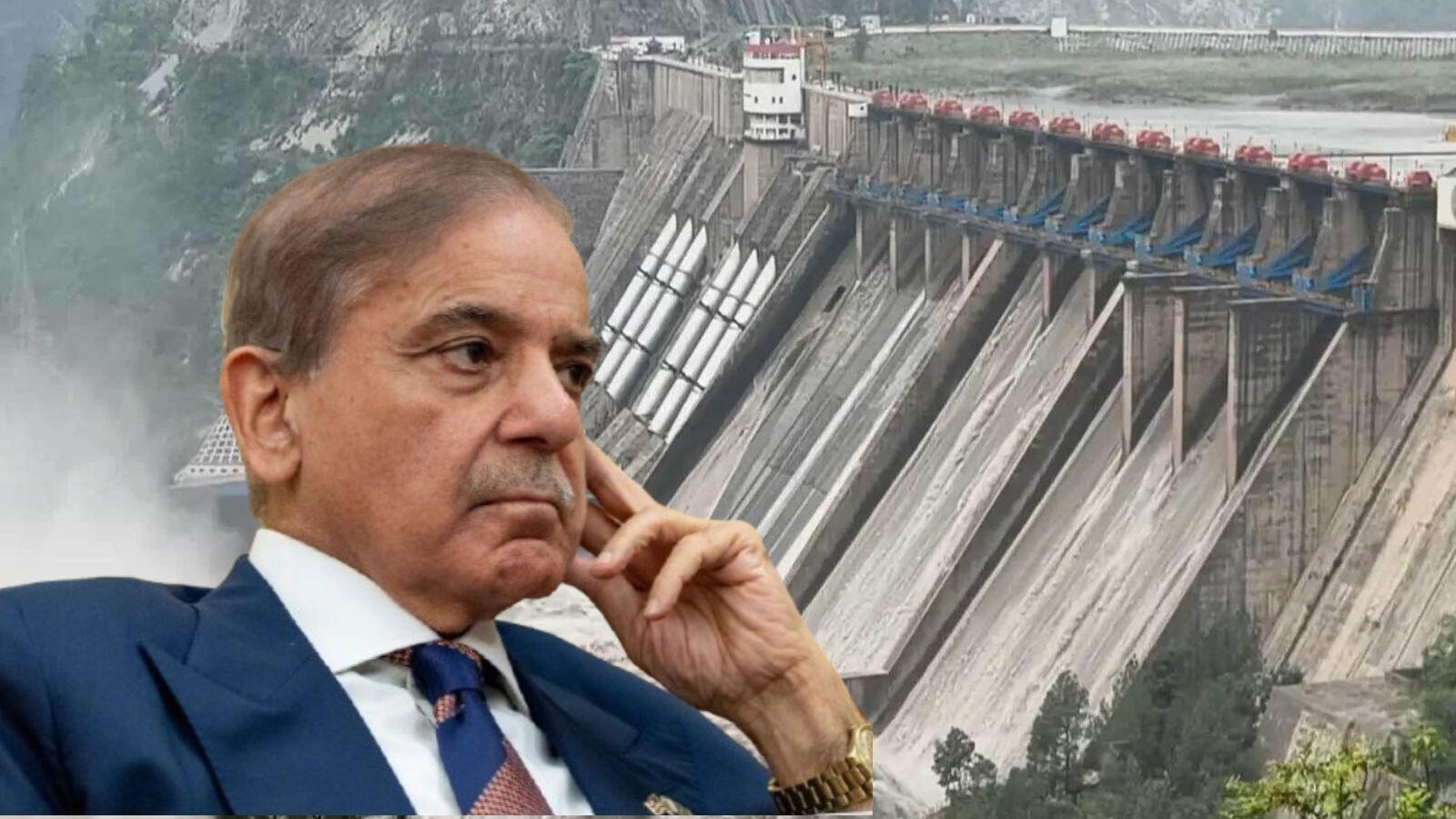
The tension between India and Pakistan over the Indus Water Treaty deepened when Pakistan approached the Hague-based Permanent Court of Arbitration objecting to the design of India’s hydroelectric projects, especially projects like Kishanganga and Rawal. Pakistan’s main complaint was that India was controlling the water flow of the Indus River Basin through these projects, which is in violation of the provisions of the Indus Water Treaty signed with the mediation of the World Bank in 1960. Pakistan tried to spread propaganda in international forums that India was flouting international rules and disrupting the natural flow of western rivers. But India has insisted from the very beginning that the arbitration court itself has been constituted illegally by going against the rules of the treaty, hence any decision given by it or arbitration has no legal basis for India.
Pakistan tried every possible diplomatic and legal trick to corner India on global forums, but every move proved to be a complete failure in front of India’s strong and steadfast foreign policy. Islamabad was continuously trying to force India to stop work on its hydro power projects through international pressure. In response, India made it clear that a definite bilateral mechanism exists to resolve the technical and legal aspects of the Indus Water Treaty and there is no need for any third party or mediator. The Indian government also made it clear that until Pakistan stops supporting terrorism and curbs cross-border activities, unilateral talks on sensitive issues like water are not possible. This tough stance of India ruined the plans of Pakistan under which it wanted to gain international sympathy.
India’s legal and technical teams have proven at international forums that all its hydropower projects are being designed and operated strictly within the framework of the Indus Water Treaty rules. Under the treaty, the waters of the eastern rivers (Sutlej, Beas and Ravi) are for the sole use of India, while some limited rights to use the waters of the western rivers (Indus, Jhelum and Chenab) are given to India in the form of run-of-the-river projects. India also rejected the claims of the International Court which were made out of sympathy in favor of Pakistan. India’s stand has been that the treaty provides for the appointment of a ‘Neutral Expert’ to settle disputes, and India is ready to follow that legal path, and not through an arbitral court that is created without India’s consent. This blunt legal strategy has weakened all the claims of Pakistan.
India’s demand for amendment in the Indus Water Treaty and ignoring the decisions of the International Court has created panic in the Pakistani rulers and the economy there. Pakistan is already facing serious economic crisis, energy shortage and water crisis, hence the continuous defeat on the water diplomacy front with India has given sleepless nights to the policy makers there. Experts believe that India is now in a very strong position diplomatically and it is fully capable of giving a befitting reply to every provocative action of Pakistan. India has made the message very clear that terrorism and talks cannot go together, and if Pakistan has to make any legitimate point on the water deal, it will first have to dismantle its internal terrorism infrastructure and come to the bilateral platform.
In the coming days, this dispute over Indus Water Treaty may prove to be a turning point in the geopolitics of South Asia. The way India is refusing to bow down to international pressures while keeping its national interests paramount, it presents a picture of a strong and self-reliant India. In this era of climate change and scarcity of water resources, India’s approach is completely in line with its future energy and agricultural security needs. All the complaints by Pakistan and paper decisions of international courts have not been able to shake India’s determination that the country’s water policies will be determined solely on the basis of New Delhi’s national interests and not under pressure from Islamabad or any external court.