 look news india

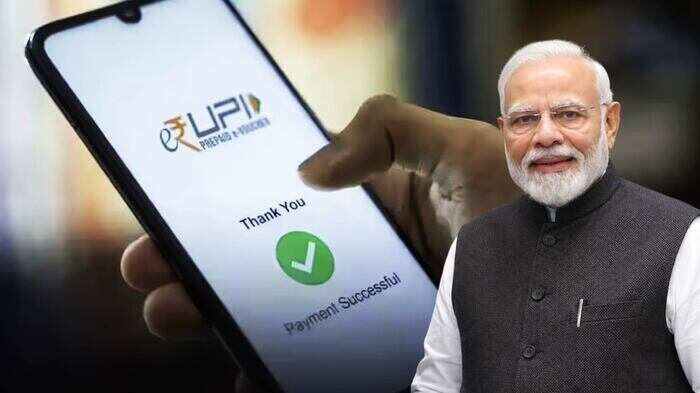
India’s Unified Payments Interface (UPI) is on the lips of every child of the country today and is being used for small to big transactions. Since its launch in 2016, UPI has created an astonishing history in the world of financial transactions. The journey of the last 10 years has seen a historic and record-breaking jump of almost 13,000 times in the transaction volume of UPI. Today, this indigenous digital payment model of India has become an example for the whole world, the echo of which is being heard in international forums and Prime Minister Narendra Modi has also praised this unprecedented success.
This is how UPI was started and the first transaction was done.
UPI was launched in 2016 by the National Payments Corporation of India (NPCI) under the supervision of the Reserve Bank of India (RBI). Initially it was launched with very limited banks and facilities, but its vision changed the destiny of the country. Talking about the first transaction of UPI, this revolutionary system was formally launched in April 2016 under a pilot project in the presence of the then policy makers and banking giants, in which selected 21 banks participated. After this, it was completely opened to the general public in August 2016, and since then till today there has been no looking back. From small shopkeepers to big malls, UPI has made deep inroads everywhere.
Speed and figures increased 13,000 times in 10 years
The leap that financial data has made in the journey of UPI within the last decade is truly astonishing. While the number of annual transactions during the financial year 2016-17 was only 1.78 crore, according to the data of the financial year 2025-26, this number has increased to cross the figure of 24,162 crore. If we talk about the total transaction value, it has increased from the initial Rs 0.07 lakh crore to approximately Rs 314 lakh crore. At present, every day crores of people are transferring money from one bank account to another through their smartphones in the blink of an eye without any restriction.
The growing scope of micro payments and technology
Today, small person-to-merchant (P2M) transactions of less than Rs 500 have a big role to play in the success of UPI. Nearly 86 percent of the total volume comes from small payments, which proves that digital payments have become common everywhere from tea stalls to vegetable vendors. Apart from this, with time many modern features were added to it such as UPI Lite, Autopay, UPI 123Pay for feature phones and biometric authentication, due to which even people sitting in remote areas of the country are able to avail its benefits safely.
Threat of India’s digital payment on global stage
The International Monetary Fund (IMF) and financial institutions around the world have also recognized UPI as the world’s largest real-time payment system. India’s UPI platform alone is expected to process approximately 49 percent of total real-time digital transactions worldwide by 2025. UPI has now become global beyond the borders of India. After France, UAE, Singapore, Bhutan, Nepal, Sri Lanka, Mauritius, Qatar, Cambodia, UPI is now operational in countries like Greece and Maldives and it is operational internationally in a total of 11 countries. Prime Minister Narendra Modi has expressed pride in how India’s technology has today become a powerful digital tool for the Global South and the entire world.