 look news india

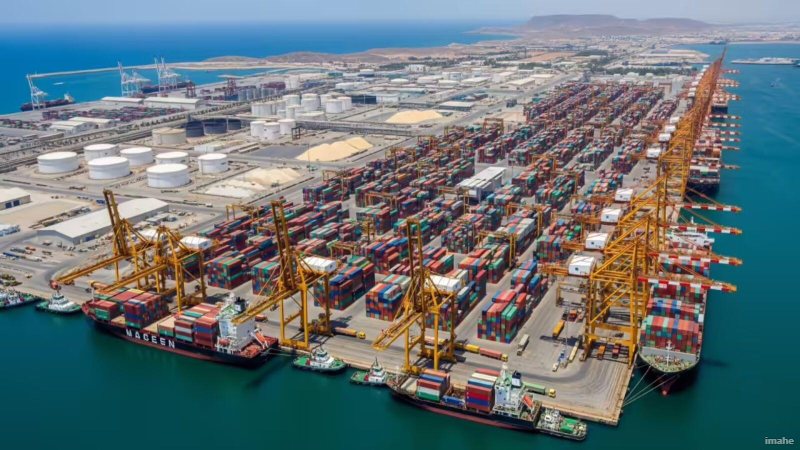
A new turning point has come which will prove to be a huge milestone in the history of India’s strategic and economic diplomacy. Global energy security and trade relations with the countries of the Middle East are going to get a new direction forever. For a long time, India’s dependence and concerns on the strategically sensitive and tense Strait of Hormuz in the Persian Gulf are going to reduce. India has got a very exciting and new alternative corridor to provide uninterrupted, secure and easy access to the Gulf countries and Central Asia. Which country and which special project is behind this masterstroke strategy, which is going to prove to be a game-chaser for India, let us understand each and every aspect of it in depth.
The Strait of Hormuz has been a very important sea route for global trade and especially for India’s energy needs. India imports a large part of its oil and gas needs from the countries of the Middle East, for which ships had to pass through this narrow sea route. But in the last few years, due to geopolitical tensions, regional conflicts and military confrontations, there was always a sword of uncertainty and danger hanging over this route. Even the slightest disturbance could bring India’s energy supply to a standstill. In such a situation, India was in desperate search of a safe and uninterrupted ‘gateway’ which would be completely safe from geopolitical turmoil and could keep the movement of oil and commercial goods going without any hindrance.
India has found an excellent and sure shot solution to this geographical and strategic challenge. Now India is going to be freed from the compulsion of circling Hormuz to reach the markets of Middle East and Western Asia. In collaboration with one of our best friends and trusted allies, an alternative route is being developed that will directly connect the Gulf countries through ports and an advanced rail-road network. This new gateway will not only minimize maritime risks but will also significantly reduce the cost and time of freight transportation. In diplomatic circles, this is being seen as a major success of India’s foreign policy.
In this entire strategic equation, along with India’s evergreen and reliable strategic partners Oman and UAE, another important friendly country of West Asia is playing a key role. India has finalized this new route by learning from the experiences of Chabahar Port and the subsequent International North-South Transport Corridor (INSTC). This major friendly country of the Middle East has taken the initiative to put the bilateral trade and energy corridor on the ground along with India. Under this project, cargo coming from sea route will be transported directly to the destination through safe land routes, thereby completely bypassing the barriers of both Pakistan and Hormuz.
With the launch of this new alternative gateway, India’s energy security will get an impenetrable security ring. When crude oil and Liquefied Natural Gas (LNG) reach India without any hindrance, the risk of inflation and supply chain disruption in the country will become negligible. Additionally, India’s manufacturers and exporters will get a faster and reliable route to ship their products to markets in the Middle East, Europe and Central Asia. In line with the vision of Prime Minister Narendra Modi, this step will prove to be a milestone in making India a major hub of global trade and supply chain, which will also give tremendous impetus to the country’s economic growth rate.