 look news india

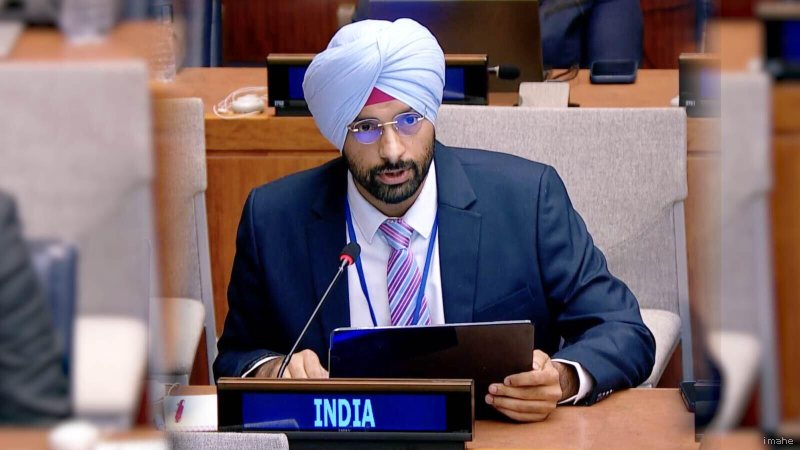
India has once again given a befitting and bold reply to Pakistan’s hollow rhetoric and threats in the United Nations (UN), the biggest forum of global diplomacy. Using the ‘Right of Reply’, the Indian delegation in the United Nations made it clear that India is not going to bow down to Pakistan’s nuclear blackmailing under any circumstances. During the meeting of the UN Committee on Disarmament and International Security, Indian Ambassador Anmol Sher Singh Bedi bluntly said that nuclear weapons cannot be made a normal tool of diplomacy or statecraft. This aggressive and factual stance of India has exposed the nefarious designs of Pakistan on the global stage and has given a clear message to the world that India will not compromise with its national security and sovereignty at any cost.
Whenever Pakistan, as per its old habit, gets cornered in the United Nations, it cannot help but raise the issue of Jammu and Kashmir to divert attention from the topic and to hide its failure, it starts threatening nuclear weapons. But this time the Indian envoy exposed this strategy of Pakistan. The Indian diplomat said that India’s military and nuclear capabilities are completely defensive in nature and have been designed keeping in mind the country’s security environment. India said that countries which spread violence under the guise of non-state actors or terrorist groups cannot run away from their state responsibilities. India’s right to self-defense is completely safe and no country can stop India from protecting its citizens by giving nuclear threats.
The Indian Ambassador to the United Nations presented to the world three major and clear dimensions of India’s new security policy, which has given sleepless nights to the rulers of Islamabad:
-
First rule: Any terrorist attack on India will be given a befitting, prompt and appropriate response.
-
Second rule: India will not succumb to nuclear blackmailing or threats at any cost.
-
Third rule: India will not differentiate between those who harbor terrorism and its masters; Both will have to pay a heavy price for this.
These three principles of India have made it clear to the world that Pakistan’s policy of proxy war is no longer acceptable.
In his address, the Indian diplomat also appealed to the global community and responsible arms suppliers to exercise the highest level of vigilance in the transfer of nuclear materials and advanced military technologies. India indirectly pointed to the nexus between China and Pakistan and warned that dangerous technology reaching irresponsible hands is a serious threat not only to India but to the security of the entire world. When a country turns instability into a means of political gain, global peace efforts suffer. Therefore, the world should not only rein in such countries but should also objectively review their nuclear systems.
This befitting reply given by India in the United Nations has once again proved how firm and mature India’s stance is on global forums. India’s clear policy on the issue of terrorism and nuclear security has further strengthened New Delhi’s credibility in the international community. On the other hand, Pakistan, which is struggling with its economic poverty and internal conflicts, has to face defeat every time it makes unrestrained remarks against India on international forums. This aggressive and forceful style of Indian foreign policy has given a clear message that no country should mistake India’s desire for peace as weakness.