 look news india

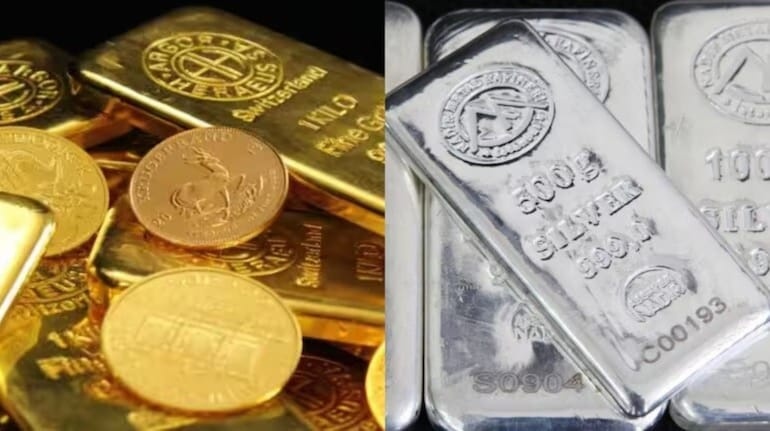
On August 15, 1947, when India broke the shackles of slavery and took its first breath of freedom, the country was faced with the historic challenge of maintaining its sovereignty as well as building a new and self-reliant economy. At that time of independence, there were no mutual funds, stock market or digital bonds as means of savings and investment in Indian society like today. At that time, the biggest, reliable and traditional means of savings for common citizens and Indian families was only ‘Gold’. In this historical journey of 79 years, the country’s economy has seen many stages, huge fluctuations in the value of rupee, gone through global wars and recessions, but gold not only retained its shine in every phase but also gave extraordinary returns to the investors. On this auspicious festival of Independence, a very interesting financial question creates curiosity in everyone’s mind that if a person had invested only ₹ 1,000 in gold in 1947, then what would have been the value of that investment today in 2026? When this figure is investigated through financial calculations and historical data, the results that emerge are enough to surprise anyone.
Price in 1947 was ₹ 88.62 per 10 grams: More than 112 grams of pure gold was sold for ₹ 1000
In the year of independence i.e. 1947, the price of 24 carat pure gold in the Indian bullion market was approximately ₹88.62 per 10 grams (One tola is approximately equal to 11.66 grams) was recorded. At that time, ₹1,000 was a much larger sum than it is today, equivalent to several months of combined earnings or savings of an ordinary family.
If a far-sighted person had invested ₹ 1,000 in gold in 1947, then according to mathematics he would have got approximately 112.84 grams gold (Approximately 11.28 units per 10 grams). This 112.84 grams of gold was equivalent to approximately 9.68 tola of gold, which is considered a huge asset in today’s times.
What is the price of that ₹1000 gold today? This wealth creation will blow your mind
Today in the year 2026, the price of 24 carat pure gold in the Indian bullion market will be approximately ₹72,000 to ₹75,000 per 10 grams Is doing business at Rs. If we take the average price of ₹ 73,000 per 10 grams as the basis and evaluate today’s 112.84 grams of gold of Azadi, then this figure will be approximately ₹8,23,732 (approximately Rs 8.24 lakh) Sits.
Simply put, an investment of just ₹ 1,000 in 1947 has today transformed into a huge asset worth more than ₹ 8 lakh. This is on the original investment More than 820 times (over 82,000%) Shows an incredible total growth of Rs. This figure is the biggest proof that gold has no match in terms of securing and enhancing wealth across generations.
Historical journey of gold prices from 1947 to 2026: When was there a big rise?
The journey of gold prices since Indian independence has been a living document of global geopolitics, currency devaluation and economic policies:
-
1950s to 1970s: In 1950, the price of gold was ₹ 99 per 10 grams, which increased to ₹ 112 in 1960. By the 1970s, gold prices gradually rose to ₹184 per 10 grams.
-
1980s (historical turning point): Amidst the global oil crisis and geopolitical tensions, gold made its first big jump in 1980 and the price reached ₹1,330 per 10 grams.
-
1990s (liberalization and financial crisis): After the economic crisis of 1991 and the opening up of the Indian economy, gold reached the level of ₹4,680 per 10 grams in 1995.
-
2000 to 2010 (golden boom): Gold, which was priced at ₹4,400 in 2000, emerged as a safe investment during the Global Financial Crisis of 2008 and reached a historic level of ₹18,500 per 10 grams by 2010.
-
2020 to 2026 (pandemic, war and new peaks): Gold has reached a new record level of ₹ 50,000 in 2020 and now ₹ 72,000 to ₹ 75,000 per 10 grams in 2026 on the basis of heavy gold purchases by central banks amid the Covid-19 pandemic, Russia-Ukraine war and Middle East tensions.
How did gold beat inflation? Know the real power of compounding and ‘Haven Asset’
In the financial world, gold has never been considered just a metal, but an ‘Inflation Hedge’ i.e. the strongest shield to protect against inflation. There has been a huge decline in the purchasing power of the Indian currency ‘Rupee’ in the last 79 years. The things which could be bought for a few paisa or rupees in 1947, today their price has increased thousands of times.
But the biggest quality of gold was that it completely neutralized the effect of currency devaluation. Today, Rs 8.24 lakh can buy more goods and services than the amount of grains, land or clothes that could be bought with 112 grams of gold in 1947. Gold has given compound annual returns (CAGR) of about 8.5% to 9.5% in the long term, which has beaten the real inflation rate in every period.
Not just jewellery, the age-old financial security blanket of Indian families
India is the second largest consumer of gold in the world. According to World Gold Council (WGC) estimates, more than 25,000 tonnes of gold is privately held in Indian homes and temples, which is more than the combined foreign exchange reserves of the central banks of many major countries of the world.
In Indian culture, gold is considered a symbol of Goddess Lakshmi, but its financial aspect goes even deeper. Gold has always stood as the ‘companion of trouble’ in Indian families during times of emergency, drought, famine, family crisis or medical emergencies. Getting instant gold loan against gold or redeeming it in the market without any paper formalities makes it the most liquid asset in the world.
Modern options for investing in gold today: From physical to digital gold
In 1947, the only way to buy gold was to buy coins, bricks or jewelery from a goldsmith’s shop, which involved worrying about making charges and purity. But today in 2026, the Indian government and financial institutions have made investing in gold completely modern and digital:
-
Sovereign Gold Bond (SGB): This government bond issued by the Reserve Bank of India (RBI) offers a fixed interest of 2.50% per annum along with gains in gold price, and the capital gains tax on maturity is completely zero.
-
Gold ETF: Easy buying and selling of 1 unit or 1 gram of 99.5% pure gold in Demat account through stock exchange.
-
Gold Mutual Funds: Facility to invest in gold with small savings of ₹500 or ₹1,000 every month through direct SIP.
-
Digital Gold: Facility to buy pure gold worth just ₹1 to lakhs of rupees in digital wallet through UPI and mobile apps.
This economic journey of 79 years of independence teaches us this important financial lesson that no matter how many new financial instruments come into the market, the importance of gold for stability in the portfolio, liquidity in times of crisis and to beat inflation in the long term can never reduce. The transformation of ₹1000 in 1947 into ₹8.24 lakh today is a living proof of this eternal truth.