 look news india

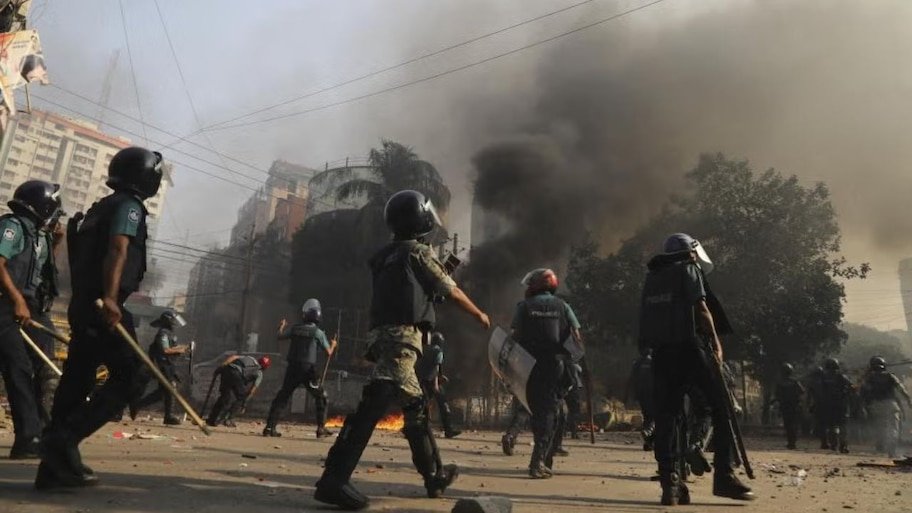
After the political turmoil in Bangladesh and the fall of Sheikh Hasina government, the law and order of the country seems to be completely derailed. The latest data revealed by human rights organizations and local media reports has shocked the entire world. According to statistics, during the last 8 months, at least 154 people brutally murdered (Mob Lynching) Has been done. From streets to workplaces to educational institutions, the situation has become as if the mob has declared itself a court—where charges are framed against anyone on mere suspicion, verdicts are passed without any police investigation and death sentences are given on the spot.
According to reports, in most of these mob lynching incidents, the victims were not even given any chance to prove their innocence or seek protection from the police.
-
False suspicion of theft and robbery: In many cases, cases of petty theft, cattle theft or mutual rivalry were turned into ‘Kangaroo Court’ by the mob on the spot.
-
Alleged blasphemy and religious allegations: Minorities and helpless civilians were targeted in the name of hurting religious sentiments or on fabricated charges of blasphemy. In recent months, several such cases have been reported in areas like Mymensingh, Rangpur and Chittagong where people were beaten to death and even their bodies were burnt without any preliminary investigation.
-
Betrayal of colleagues and acquaintances: The reports of the investigating agencies have also revealed that in many cases the managers of factories and offices, under the pressure of the angry mob, handed over their own employees to the mob so that the property could be saved from damage.
Experts and human rights activists believe that the policing system in Bangladesh has become completely passive and fearful. There has been a huge decline in the morale of policemen since the student agitation and violent rebellion of July-August 2024.
-
During many incidents, when the police reached the spot, seeing the angry and violent crowd, they either retreated or remained mere mute spectators.
-
Taking advantage of the inability of police stations and security forces, extremist elements, anti-social gangs and fundamentalist organizations are taking the law into their own hands.
-
Such an atmosphere of distrust in the judiciary and the legal process is being created that the general public is losing faith in the constitutional institutions.
This figure of lynching of 154 people in 8 months is not limited to ordinary crimes only, but has raised serious questions on the safety of the country’s minority Hindu community, other religious groups and people associated with the previous regime. Human rights commissions say that when mobs get free rein in society to punish, the first victims are the weaker and minority sections of the society. Human rights organizations globally and the United Nations have also appealed to the interim administration to immediately take strict action and restore the rule of law.
Despite all the claims and strict statements of the interim government led by Mohammad Yunus, there is no reduction in the incidents of mob violence at the ground level. Although in some selected high-profile cases, prompt action has been taken and arrests have been made, due to widespread lack of prompt punishment and fear of law, such barbarities are being repeated again and again. Political analysts say that if the interim government does not ensure speedy justice, police reforms and strict punishment through fast-track courts against elements involved in mob lynching, Bangladesh will completely turn into an anarchic and lawless ‘mobocracy’.