 look news india

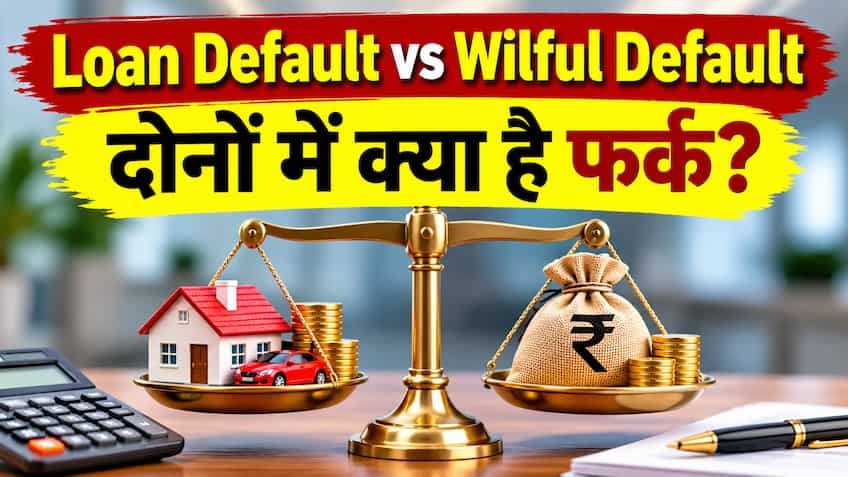
In today’s era, paying home loan, auto loan, personal loan or credit card monthly installment (EMI) has become an important part of the financial budget of every middle class and working person. But life is never the same; Many times it is not possible to pay EMI on time due to unexpected job loss, serious illness, severe recession in business or family crisis. As soon as a person has two or three EMI bounces in a row, he has the fear of legal action, going to jail and the biggest fear that the bank may declare him a ‘willful defaulter’ i.e. one who willfully does not repay the loan. According to the legal rules of the Indian banking regulator Reserve Bank of India (RBI), no borrower directly becomes a willful defaulter if he is unable to pay the EMI due to any financial helplessness or compulsion. The Central Bank has made a very clear, transparent and strict legal distinction between ‘inability to repay the loan’ and ‘willful refusal to repay the loan or committing fraud’. If your intentions are pure and you are not able to pay the installments merely because of worsening financial circumstances, then the law considers you as a normal ‘loan defaulter’ and not a financial delinquent or willful defaulter.
There are two different categories of defaults in the banking and financial system, which are judged on the basis of their nature, the intentions of the borrower and the use of funds. A simple ‘loan default’ simply means that the borrower wants to fulfill his financial obligation but is unable to pay the installments due to unexpected financial crisis, loss of source of income or stoppage of cash flow. Here the borrower’s ‘Ability to Repay’ is affected, but there is no flaw in his ‘intention’. In contrast, ‘willful default’ is a serious corporate or individual financial misconduct. According to the RBI master circular, willful default is considered when the borrower has sufficient cash, liquid assets and income in his bank account to repay the loan, yet he flatly refuses to repay his liability. Apart from this, if a person diverts the money taken from the bank instead of using it for any benami property, illegal business or personal luxuries (siphoning and diversion of funds), falsifies the financial statements given to the bank, or sells the property mortgaged to the bank secretly without the written permission of the bank, then he is legally considered a willful defaulter.
-
Intention vs Ability to Pay: In a normal loan default, the person’s paying capacity becomes zero or extremely weak, but he contacts the bank, asks for time and wants to return the money. At the same time, in willful default, despite the borrower having sufficient resources and assets, he flatly refuses to pay with the intention of defrauding the bank.
-
Diversion and Siphoning of Funds: A normal defaulter uses the money borrowed from the bank for the same sanctioned purpose (like building a house, running a factory or buying a car). On the contrary, a willful defaulter, instead of investing the loan money in the relevant project, transfers it to fake shell companies, invests it in some other business without permission or withdraws it for personal gain.
-
Nature of Legal Action – Civil Recovery vs Criminal Action: In case of normal loan default, the bank can recover its dues only by seizing and auctioning the mortgaged property through civil recovery laws such as SARFAESI Act 2002 or Debt Recovery Tribunal (DRT). But in case of willful default, along with civil recovery, the bank files a police FIR and criminal case under the sections of Indian Justice Code (BNS) and IPC for fraud, breach of trust and forgery.
-
Credit eligibility and restrictions from the banking system (CIBIL Score vs RBI Blacklist): In case of simple default, the CIBIL and credit score of the borrower falls badly, but in future when he repays or settles the loan, his credit score can gradually improve. At the same time, as soon as the person is declared a willful defaulter, the name of the person and his companies goes in the public willful defaulter list of RBI and all the credit bureaus (CIBIL, Experian, Equifax); After this, no bank or NBFC in the entire country can issue any new loan or credit facility to him for the next 5 years.
-
Corporate Governance and Legal Restrictions: A normal defaulter can work as a director in a company and there is no personal restriction on him. On the other hand, being declared a willful defaulter makes the person ineligible for the post of director of any company under the Company Law, he may have to face a lifetime ban on raising funds from the capital market (SEBI) and in serious cases, a Look Out Circular (LOC) can be issued against him and his passport can be confiscated to prevent him from fleeing the country.
No bank or financial institution can declare a customer a willful defaulter overnight on its own will or at the behest of any one bank manager. For this, RBI has laid down a very strict, transparent and multi-stage process so that no honest customer is exploited. First of all, an internal investigation committee (Identification Committee) of the bank conducts a forensic audit of the borrower’s accounts, balance sheet and bank transactions. If the committee finds strong evidence that funds have been misused or payments have been deliberately stopped, a detailed ‘Show Cause Notice’ is sent to the borrower. The reasons are clearly stated in this notice and the customer is given a mandatory time of 15 to 30 days to present his case, financial evidence and reply. If the client wishes to present his case in person, he gets full opportunity of a fair hearing. Thereafter, a high-level independent ‘Review Committee’ headed by the Managing Director (MD) or Executive Director of the bank re-evaluates the entire case and the customer’s response. Only when the Review Committee is fully satisfied by all the evidence that the default is willful and malicious, the person is formally classified as a willful defaulter.
If you are unable to pay your loan installments due to any genuine financial exigency, job loss or business losses, the safest course of action is to take a proactive approach rather than hiding in fear of bank notices or switching off your phone. First of all, immediately contact your home branch manager or the loan recovery department of the bank with authentic documents of your financial condition (like job termination letter, medical report or statement of losses). Make a written request to the bank for loan restructuring, under which the bank can significantly reduce the monthly EMI by increasing the tenure of your loan. If the crisis is temporary, you can ask for a ‘moratorium’ or EMI holiday of 3 to 6 months, which gives you time to find a new job or source of income. If the situation is such that you are completely unable to repay the loan, ‘One Time Settlement’ (OTS) can be discussed with the bank. Remember that the law always provides relief and protection to an honest but distressed debtor; Unless there is any dishonesty or fraud in your intention, you can never be categorized as a willful defaulter.