 look news india

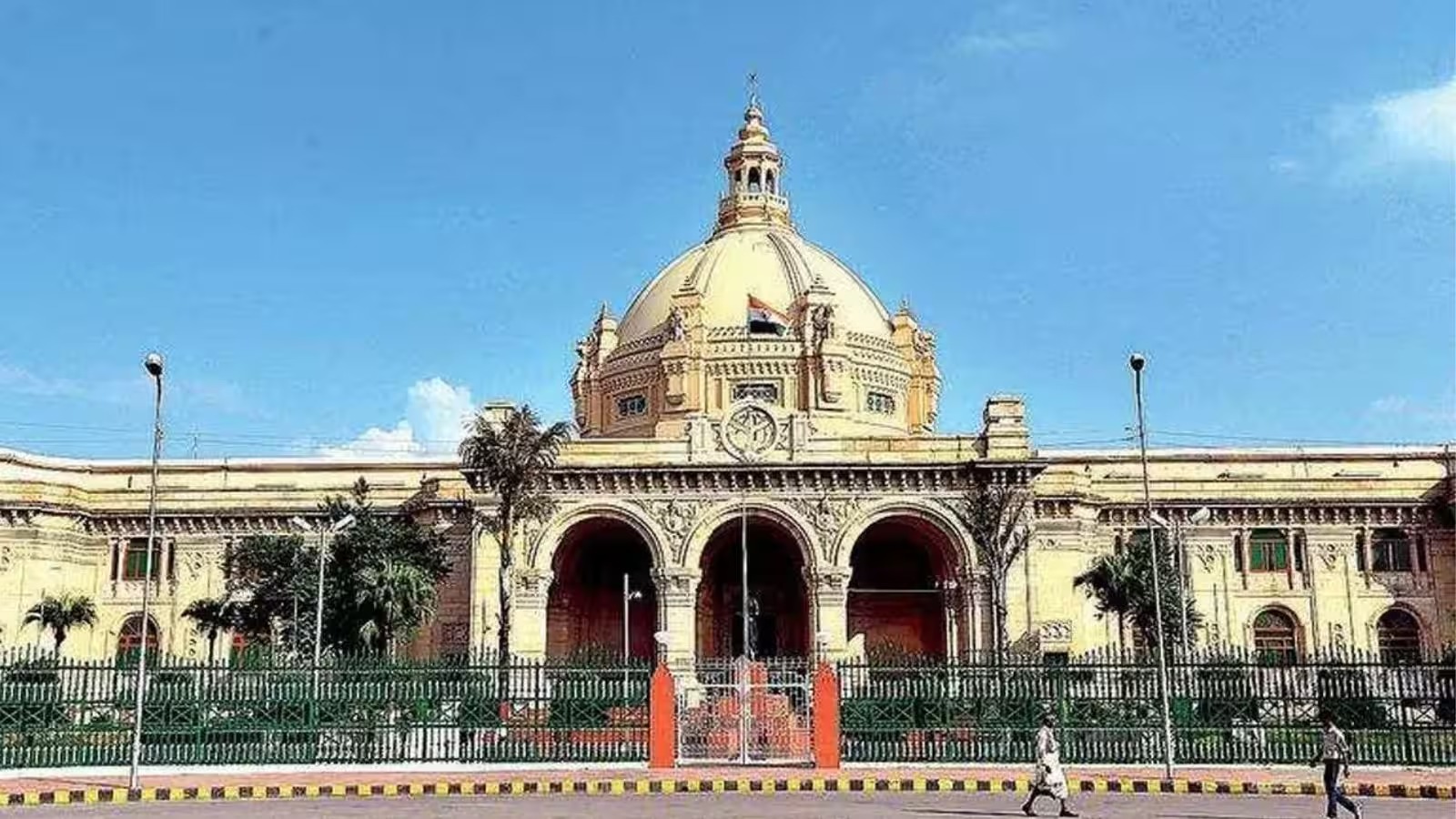
Along with the Legislative Assembly, the Legislative Council is also considered to be of utmost importance in the politics of Uttar Pradesh. Voting has recently concluded for 11 seats (5 graduates and 6 teachers constituencies) of the 100-member Legislative Council, the upper house of the state. The fate of 152 candidates will be decided with the counting of votes to be held on Tuesday, October 27. Both the ruling BJP and the main opposition party SP have their eyes fixed on this election result. But do you know what is the entire process of becoming an MLC (MLC i.e. Legislative Council member) in Uttar Pradesh, which people vote in their elections and what are the rules fixed for it in the Constitution? Let us know the complete mathematics of UP Legislative Council elections, its various quota systems and preference voting system.
Under Article 171 of the Indian Constitution, the framework for the formation and operation of the Legislative Council in the states has been decided. The Legislative Council in Uttar Pradesh is a permanent house, which means that it is never dissolved, but the tenure of its members is 6 years. Every two years, one-third (1/3) of its members retire and new members are elected. To contest MLC elections in UP, a candidate must be a citizen of India and must be at least 30 years of age (whereas the minimum age for Assembly is 25 years). Apart from this, it is necessary for the candidate to be mentally healthy and not hold any office of profit.
There are a total of 100 seats in the Uttar Pradesh Legislative Council, which is the highest in any state in the country. These 100 members are selected through 5 different categories and election boards:
-
By Assembly MLAs (38 seats): The 38 MLCs are directly elected by the 403 MLAs (MLAs) of the Uttar Pradesh Assembly on the basis of the proportional representation system.
-
By local bodies (36 seats): 36 members are elected by District Panchayat members, Area Panchayat (BDC) members, public representatives of Municipal Corporations, Municipal Corporations and Nagar Panchayats.
-
Graduate Constituency (8 seats): 8 members are elected by those citizens of the state who have obtained graduation degree at least three years ago. (At present elections have been held on 5 of these seats).
-
Teacher Constituency (8 seats): 8 members are elected by voting from registered teachers who have been teaching in secondary and higher educational institutions for at least three years. (At present elections have been held on 6 of these seats).
-
Nominated by the Governor (10 seats): 10 members are nominated directly by the Governor of the state from the fields of literature, arts, science, cooperative movement and social service.
The ‘first past the post’ system does not work in graduate, teacher and local body elections like in the normal general elections. Here ‘Single Transferable Vote System’ is followed. Voters record preferences like 1, 2, 3 against the names of candidates on the ballot paper. During counting of votes, a minimum quota is set for victory. If a candidate does not achieve the prescribed quota of first priority votes, then the candidate getting the fewest votes is thrown out of the race and his second priority votes are transferred to other candidates. This is why the results of MLC elections often come late at night.
In the UP MLC elections held on October 23, around 55.24% voting was recorded on 11 seats of graduate and teacher quota. The fate of 152 candidates will be decided after the counting of votes begins in the morning on Tuesday, October 27. These results are being considered as a big measure to gauge the political atmosphere among the educated class, intellectuals and teachers before the upcoming Uttar Pradesh Assembly elections of 2027. While the ruling party is trying to maintain its supremacy, the opposition parties are also trying their best to prove their dominance.